China is accelerating its plan to build a massive hydroelectric dam on the Brahmaputra River in Tibet, a move that threatens water security and environmental stability in India.
- China is investing 1.2 trillion Yuan in a mega-hydroelectric project on the Yarlung Tsangpo.
- The project's 60GW capacity is triple that of the Three Gorges Dam.
- India fears significant disruptions to water flow and increased flood risks.
- The project's location near the Indian border raises critical security concerns.
Despite recent anxieties caused by landslides and flash floods on the Nepal-China border, China appears undeterred in its mission to construct a mega dam on the Brahmaputra River. According to reports, Beijing is fast-tracking the Yarlung Tsangpo Lower Reaches Hydro Power Project, situated in an ecologically sensitive and seismically active zone near the Indian border. This project is poised to become one of the largest hydroelectric installations in human history.
A Project of Unprecedented Scale
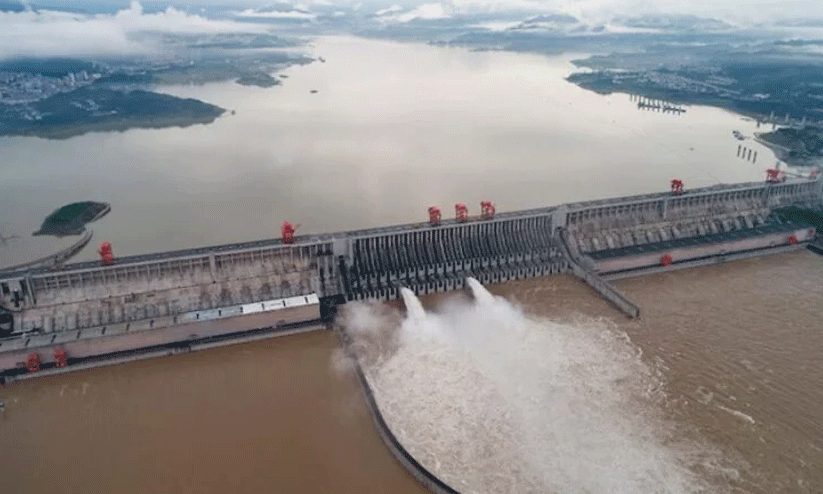
Chinese Premier Li Qiang has hailed this initiative as a "project of the century." To realize this vision, the Chinese government has announced a staggering investment of 1.2 trillion Yuan (approximately ₹14 lakh crore). Engineering experts estimate the installed capacity will reach 60 GW, producing 300 billion kWh of electricity annually. To put this in perspective, this capacity is more than three times that of the Three Gorges Dam, currently the world's largest hydroelectric plant.
The scale of this project suggests that China is looking to dominate the regional energy landscape and control the river's hydrological cycle.
Why This Matters
BozokMedia analysis shows that China's control over the upper reaches of the Brahmaputra grants it significant geopolitical leverage over India. By managing the flow of one of Asia's most vital river systems, Beijing gains the potential capability to influence water availability in India's Northeast through controlled release or withholding of water.
India's Strategic and Environmental Concerns
India has raised serious alarms regarding the potential impact on downstream water availability and environmental integrity. The primary concern lies in the lack of transparency regarding the reservoir size and the impact on seasonal water flows. While China maintains the project follows a "run-of-the-river" model, reports suggest the inclusion of large reservoirs that could significantly alter the river's natural rhythm, potentially leading to catastrophic flash floods in India during heavy release periods.
Frequently Asked Questions
1. How will the dam affect India's water supply?
The dam could potentially reduce water flow during dry seasons or cause sudden, uncontrollable flooding during monsoon seasons.
2. Is this project larger than the Three Gorges Dam?
Yes, the projected capacity of this new project is estimated to be over three times larger than the Three Gorges Dam.