China is witnessing a period of intense diplomatic activity, spanning from the SCO summit to the highly anticipated BRICS summit in New Delhi. Key focus remains on the India-China boundary talks and regional stability.
- The 25th round of Special Representative talks on the India-China boundary issue was held in Beijing.
- The SCO summit in Bishkek emphasized a collective stance against terrorism.
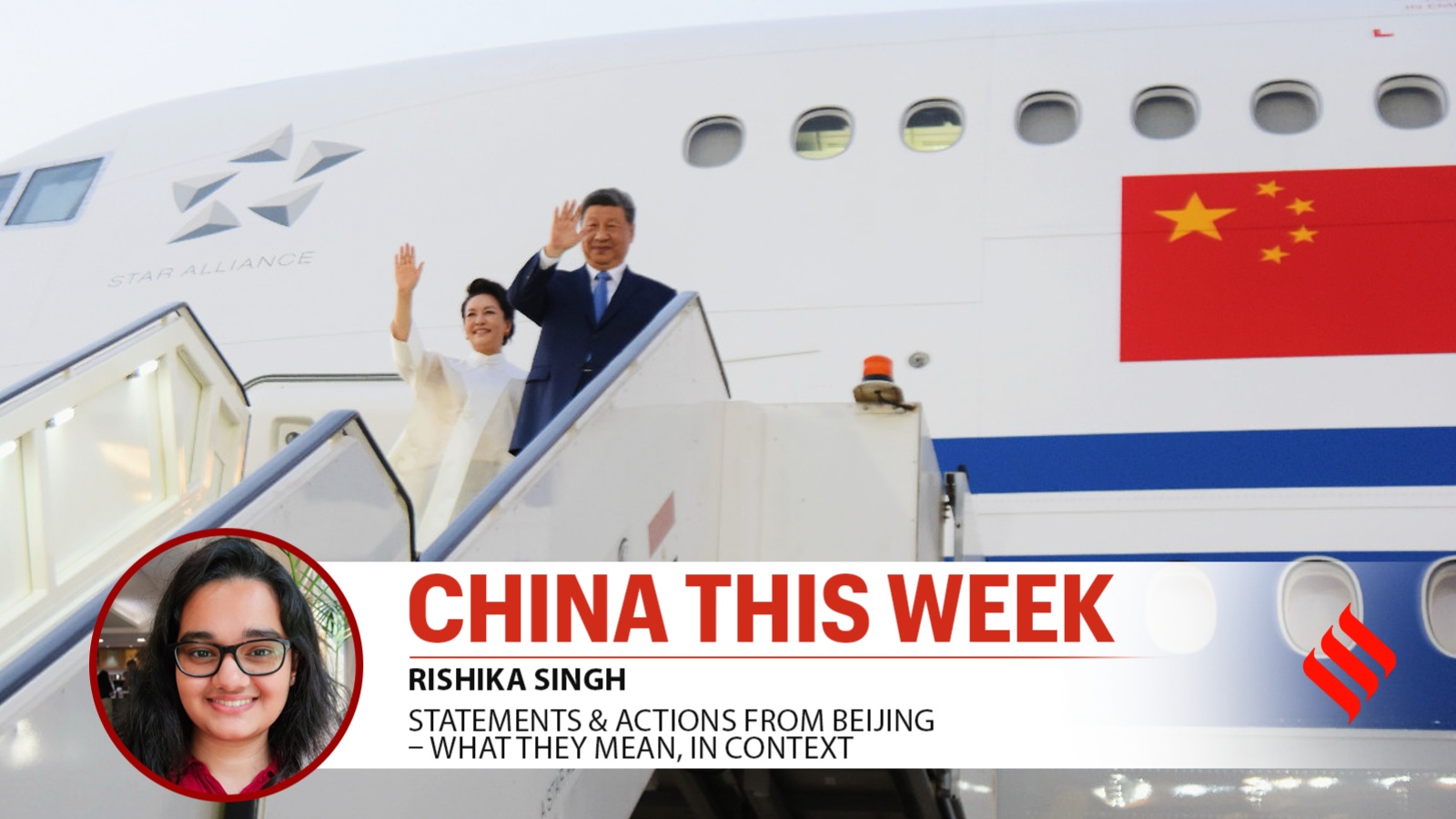
- President Xi Jinping's upcoming visit to New Delhi for the BRICS summit is a major geopolitical milestone.
Over the past few weeks, China has engaged in a flurry of high-stakes diplomatic maneuvers. From recent multilateral summits to the impending visits of President Xi Jinping to India and the United States, Beijing is positioning itself at the center of global geopolitical shifts.
Special Representative Talks and Boundary Framework
In late August, Chinese Foreign Minister Wang Yi met with India's National Security Adviser Ajit Doval in Beijing. This marked the 25th round of discussions between the Special Representatives (SRs) regarding the boundary issue. An 8-point consensus was reached, focusing on advancing a framework for settling the long-standing border dispute.
While the term 'early and substantial harvest' was used in official readouts, analysts note significant discrepancies. For instance, India has pushed for dialogue regarding trans-boundary rivers, a topic that remains largely unacknowledged in Beijing's official communications.
Why This Matters
BozokMedia analysis shows that the normalization of India-China ties is not merely a bilateral necessity but a prerequisite for stability in the Indo-Pacific region. Following the 2020 LAC standoff, the trajectory of these talks will dictate the security landscape of Asia for years to come.
Resolving the boundary question is less about lines on a map and more about rebuilding the fundamental architecture of trust.
The SCO Summit and the Terrorist Narrative
The annual Shanghai Cooperation Organisation (SCO) summit in Bishkek, Kyrgyzstan, saw President Xi Jinping engaging with regional leaders. The summit resulted in the 'Bishkek Declaration,' which addressed security challenges and the ongoing conflicts in the Middle East.
Prime Minister Narendra Modi utilized the platform to deliver a stern message: terrorism cannot be used as a strategic asset by any state. This remark was widely interpreted as a critique of nations that provide shelter to terrorist groups. Conversely, China's emphasis on the 'Belt and Road Initiative' (BRI) continues to face opposition from India due to sovereignty concerns regarding Pakistan-occupied Kashmir (PoK).
The BRICS Summit in New Delhi
The diplomatic spotlight now shifts to New Delhi, where the BRICS summit is scheduled from September 11 to 13. This will mark Xi Jinping's first visit to India since 2019, making it a litmus test for bilateral relations after years of tension, pandemic-related disruptions, and trade wars.
| Feature | SCO (Shanghai Cooperation Org) | BRICS |
|---|---|---|
| Primary Focus | Regional Security & Counter-Terrorism | Economic Cooperation & Global Governance |
| India's Role | Active Member (since 2017) | Founding Member |
| Key Challenge | Internal Cohesion among Members | Countering Western Economic Dominance |
Frequently Asked Questions
1. Why is the upcoming BRICS summit in India so significant?
It represents the first high-level engagement between Modi and Xi since the 2019 Mahabalipuram summit, signaling a potential thaw in relations.
2. What was the main outcome of the SCO summit?
The adoption of the Bishkek Declaration, which focused on combating terrorism and regional security concerns.