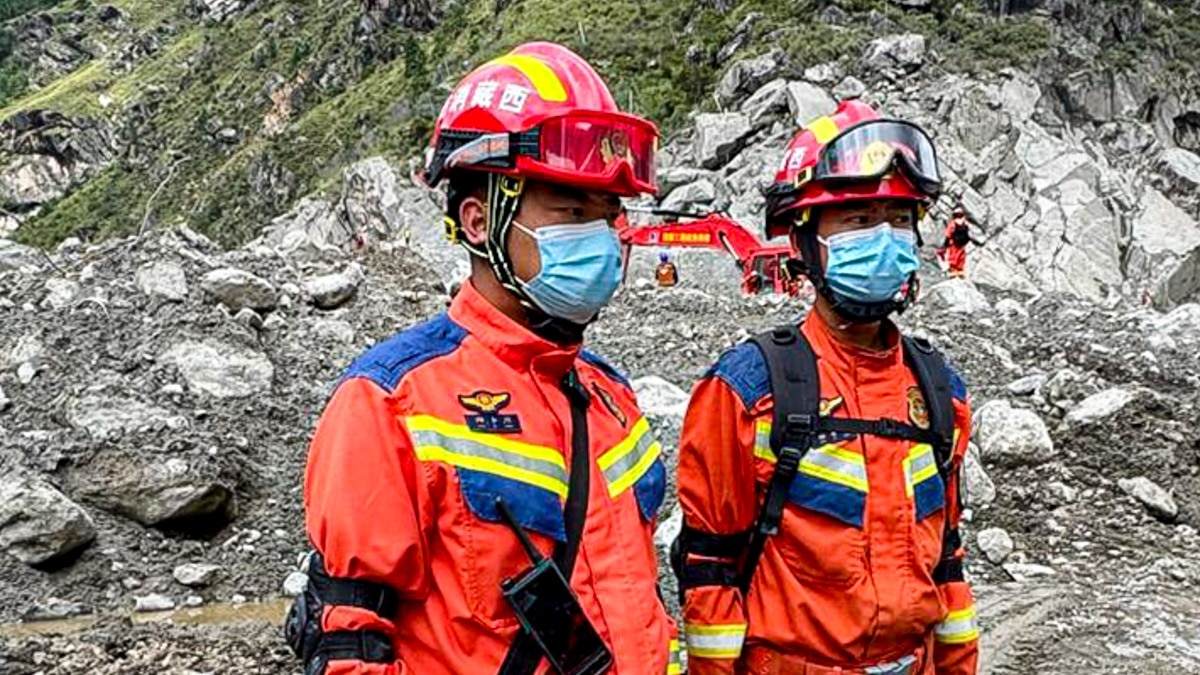
A catastrophic flash flood triggered by a glacial avalanche in Nepal has claimed over 1,300 lives, leaving thousands missing. Rescue operations are struggling against debris and submerged hydropower tunnels.
- The death toll in Nepal has risen to 1,344, with nearly 5,000 people still missing.
- The disaster was triggered by an ice-and-rock avalanche near the Nepal-Tibet border on August 26.
- China confirmed 43 deaths and 519 missing in the Tibet region.
- Rescue teams are utilizing DNA testing to identify fragmented remains.
The devastating impact of flash floods in Nepal continues to escalate, with the death toll now reaching 1,344. As of day 11 of the disaster, approximately 5,000 people remain missing. Search and rescue teams are working tirelessly through massive amounts of debris and flooded hydropower tunnels to locate survivors and victims.
The Genesis of the Disaster
The catastrophe was triggered on August 26 by a massive ice-and-rock avalanche near the Nepal-Tibet border. This event unleashed a colossal surge of water, mud, and debris into the Bhotekoshi River, which acted as a battering ram, sweeping away entire villages, vehicles, roads, and bridges. The surge also caused catastrophic damage to several critical hydropower projects in the region.
Why This Matters
BozokMedia analysis shows that this event is a stark manifestation of the increasing instability of Himalayan glaciers. The rapid movement of debris—traveling 22 kilometers in just seven minutes—highlights the terrifying speed at which modern climate-induced disasters can transform a landscape and wipe out entire communities.
The destabilization of high-altitude glaciers is no longer a future threat; it is a present-day reality that is reshaping the geography of the Himalayas.
Rescue operations have seen both miraculous successes and harrowing challenges. In a remarkable feat, 60-year-old Chandika Shrestha was pulled alive from a collapsed four-storey house in Nuwakot after being trapped in an air pocket for 10 days. Conversely, in the hydropower sector, workers remain trapped in tunnels; while some have been rescued from the Trishuli 3A and Upper Trishuli I projects, many others are still unaccounted for.
The Grim Reality of Identification
Identifying the deceased has become a logistical nightmare for authorities. Among the dead are at least 85 children. Due to the force of the water and the decomposition caused by being submerged in mud, many bodies were recovered in fragments. To combat this, Nepal Police has initiated a massive DNA sampling drive, requesting families to provide samples at the Nepal Police Hospital in Kathmandu to identify unclaimed remains.
Cross-Border Destruction in Tibet
The destruction was not confined to Nepal. Across the border in Tibet, Chinese officials confirmed 43 deaths and 519 missing persons. The Gyirong County area was particularly devastated, with the Gyirong immigration post completely obliterated. The sheer force of the mudslide left only iron rods protruding from the ground where buildings once stood.
Frequently Asked Questions
Question 1: What caused the floods in Nepal?
Answer: The floods were caused by a high-altitude ice-and-rock avalanche near the Nepal-Tibet border.
Question 2: How is the government identifying the victims?
Answer: Due to the difficulty in identifying fragmented remains, Nepal Police is using DNA sampling from relatives to match with unclaimed bodies.

