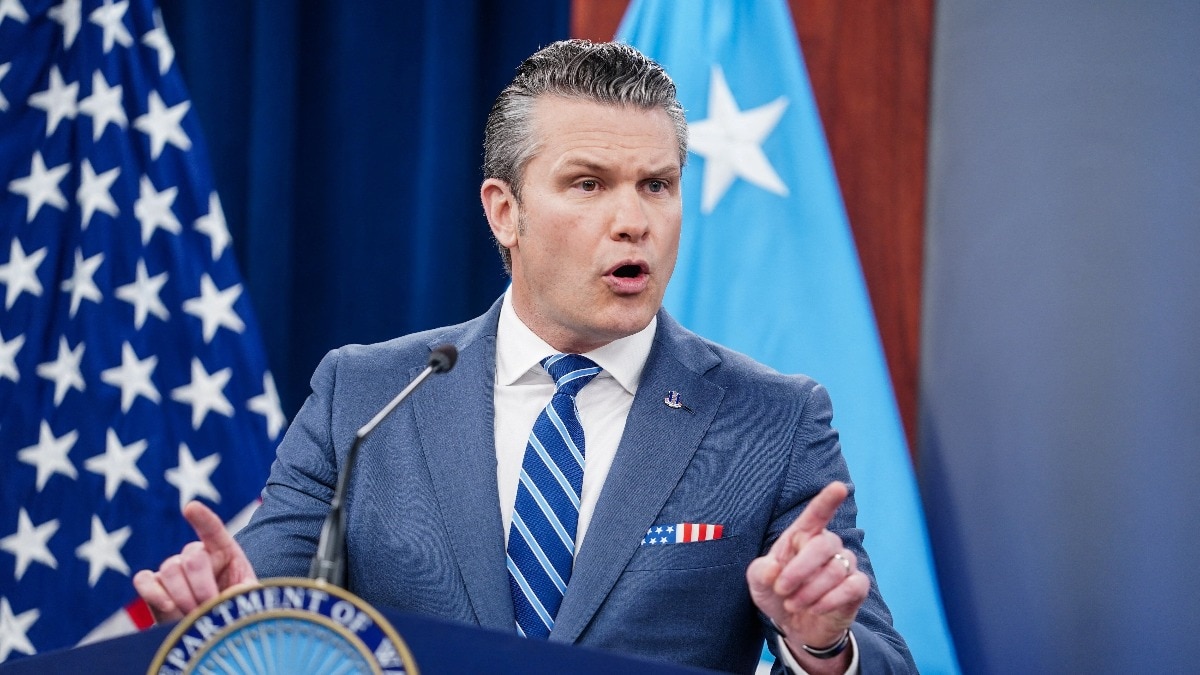
In a high-stakes escalation, US Defense Secretary Pete Hegseth has warned Iran that any attack on US naval vessels will result in the destruction and sinking of Iranian oil tankers.
- US Defense Secretary Pete Hegseth issued a direct ultimatum to Tehran regarding naval security.
- The warning follows ballistic missile attacks by the IRGC against US vessels.
- The US strategy aims to target Iran's economic lifeline—its oil fleet—in response to aggression.
WASHINGTON: The geopolitical landscape in the Middle East has reached a boiling point. US Defense Secretary Pete Hegseth has delivered a blistering warning to Tehran, stating that if Iran fires upon American naval ships, the United States will respond by destroying and sinking Iran's oil tankers. This aggressive stance underscores the hardening military posture of the US in the Persian Gulf.
The escalation follows recent combat operations in the Strait of Hormuz. Hegseth's comments align with recent statements from US Central Command (CENTCOM) Commander Admiral Brad Cooper, who emphasized that Iran must be prepared to pay a devastating economic price for any aggression against American assets. The Secretary made it clear that the US will show no hesitation in defending its personnel and interests.
Why This Matters
BozokMedia analysis shows that this shift in rhetoric signals a move toward 'economic warfare.' By targeting Iran's oil tankers, the US is looking to strike at the very heart of the Iranian economy. Such a move could bypass traditional battlefield combat and instead cripple the regime's ability to fund its military operations, though it risks a full-scale regional war.
'It is quite simple. If Iran shoots at American ships, we will destroy and sink their oil tankers. They are not to fire on the US Navy.' - Pete Hegseth
The immediate catalyst for this tension was a series of strikes reported by CENTCOM. According to official reports, the US conducted strikes on three Iranian oil tankers following ballistic missile attacks launched by the Islamic Revolutionary Guard Corps (IRGC) against two US Navy vessels. One of the targeted tankers was positioned near Kharg Island, a critical hub for Iranian oil exports.
Historically, the Strait of Hormuz has been a global chokepoint. Any sustained military conflict in this corridor threatens to disrupt a significant portion of the world's energy supply, potentially triggering a global economic crisis. Iran has countered these threats by stating that if US naval blockades continue, their retaliatory strikes will become even more severe and widespread.
| Feature | US Stance | Iran Stance |
|---|---|---|
| Primary Objective | Protect Naval Assets | Challenge US Presence |
| Economic Lever | Target Oil Tankers | Control Hormuz Strait |
| Military Action | Sinking Vessels | Ballistic Missile Strikes |
Frequently Asked Questions
1. What triggered the recent US strikes on Iranian tankers?
The US responded to ballistic missile attacks launched by the IRGC against two US Navy ships in the region.
2. How could this affect global oil prices?
Conflict in the Persian Gulf often leads to supply uncertainty, which typically causes an immediate spike in global crude oil prices.