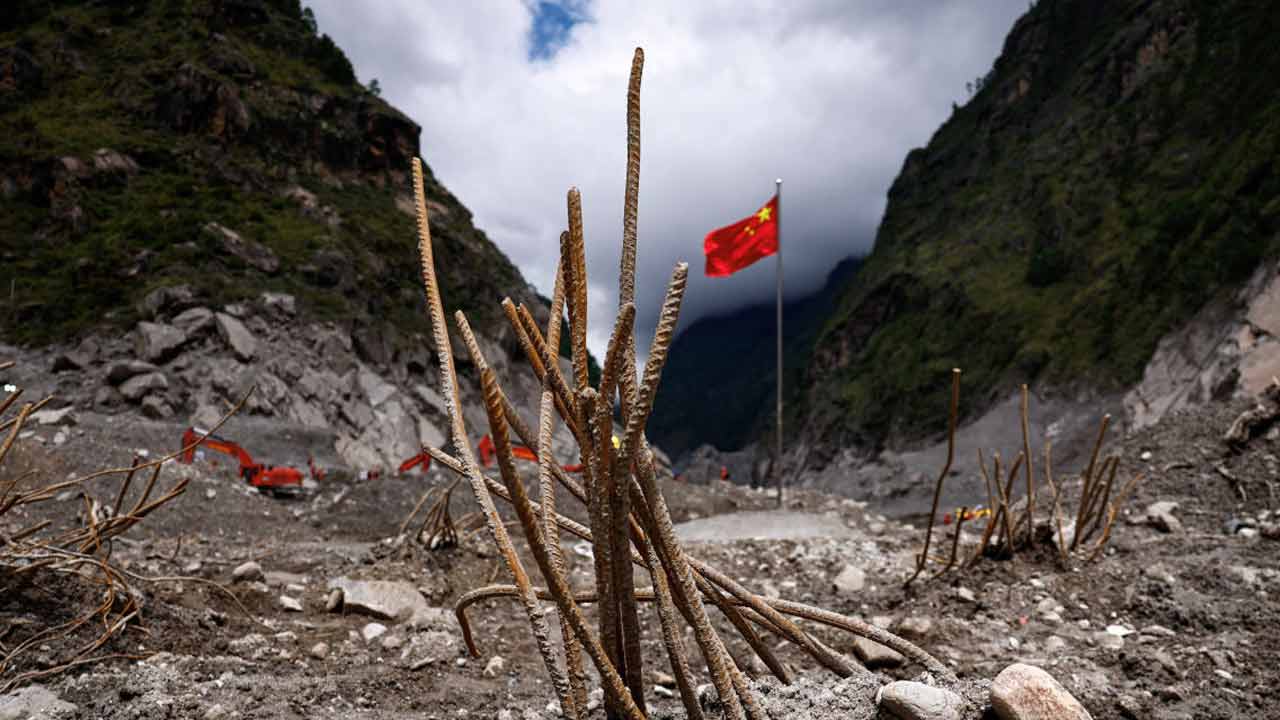
Devastating flash floods in Nepal have decimated critical border infrastructure, casting serious doubt on China's ambitious Belt and Road Initiative (BRI) projects in the Himalayan region.
- Flash floods and landslides have destroyed the Kerung land port, a vital link between Nepal and Tibet.
- China's proposed Tibet-Kathmandu railway faces massive technical and environmental hurdles.
- Environmental experts warn that China's dam projects on the Brahmaputra could exacerbate future flood risks.
The catastrophic flash floods that recently ravaged Nepal have done more than just destroy lives and property; they have struck a significant blow to China's strategic ambitions in South Asia. The Kerung (Gyirong) land port, a crucial artery for trade between Nepal and China's Tibet region, has been virtually wiped out by massive mudslides. This disaster has raised urgent questions about the feasibility of China's grand infrastructure designs in the volatile Himalayan terrain.
The BRI Ambition vs. Himalayan Reality
Under the Belt and Road Initiative (BRI), Beijing has sought to expand its influence across South Asia through massive connectivity projects. A cornerstone of this plan was the proposed railway connecting Kathmandu to Tibet. However, the sheer scale of destruction witnessed after the August 26 disaster highlights the extreme risks of permanent construction in such geologically unstable zones. Despite being announced in 2016, the project remains largely on paper, and this latest calamity may push it even further into uncertainty.
Why This Matters
BozokMedia analysis shows that the destruction of the Kerung port is not just a local logistical failure but a geopolitical setback for China. As Beijing attempts to create a strategic encirclement around India through infrastructure, the unpredictability of the Himalayan climate acts as a natural deterrent. The economic viability of multi-billion dollar investments is now being questioned as climate-induced disasters become more frequent and intense.
The intensifying volatility of the Himalayan ecosystem poses a direct challenge to the long-term viability of China's massive infrastructure investments.
Beyond connectivity, the disaster has reignited tensions regarding China's water diplomacy. Concerns are mounting over China's plan to build the world's largest dam in the Namcha Barwa area, where the Brahmaputra enters India. Experts warn that without transparent sharing of hydrological data, such massive projects, combined with climate instability, could lead to catastrophic flooding in the downstream regions of South Asia.
Frequently Asked Questions
Question 1: How has the flood affected China-Nepal relations?
Answer: While the disaster is a humanitarian crisis, it has disrupted the vital economic corridor at the Kerung port, stalling bilateral trade and complicating China's regional connectivity goals.
Question 2: What is the main risk of the BRI in the Himalayas?
Answer: The primary risks are the extreme geological instability, the high cost of maintaining infrastructure against landslides, and the increasing frequency of climate-related disasters.