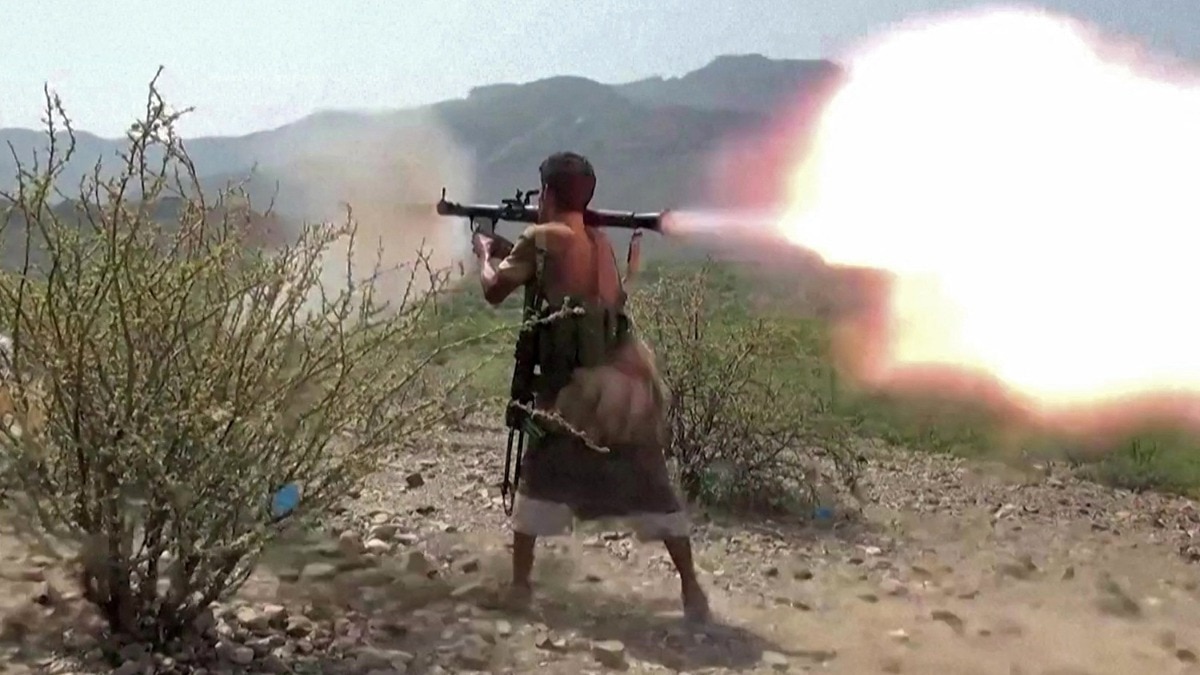
Yemeni Houthi rebels launched massive drone and missile strikes against Saudi Arabia's southern regions, hitting key aviation hubs and Aramco energy infrastructure. This escalation serves as the ultimate litmus test for the newly formed 'Mecca Defense Pact'.
- Houthi rebels targeted Abha Airport, King Khalid Airbase, and Aramco refineries.
- At least 73 civilians, including women and children, were reported injured.
- Global oil prices surged immediately following the strikes.
- The attack challenges the collective defense clause of the Saudi-Turkey-Pakistan Mecca Pact.
The Middle East is on the brink of a major escalation as Houthi rebels from Yemen launched a coordinated series of strikes across southern Saudi Arabia. The targets included civilian and economic hubs in Abha, Khamis Mushait, Jazan, and Najran, signaling a shift toward 'deep inside' operations within Saudi territory.
Nasiruddin Amer, Deputy Head of the Houthi Media Office, praised the operations, stating that the era of committing crimes against the Yemeni people without facing consequences is over. The use of the term 'deep inside' by Houthi officials suggests a sophisticated capability to penetrate high-security zones previously considered safe from direct rebel incursions.
Why This Matters
BozokMedia analysis shows that this conflict has moved beyond local skirmishes to a direct threat to global energy stability. The Aramco refinery in Jazan, capable of processing 400,000 barrels per day, is a cornerstone of the global energy market. Following the strikes, Brent crude futures jumped by $1 to $98/BBL, while U.S. crude futures rose by over $2, demonstrating how regional instability dictates global economic health.
The Houthi strategy has evolved from maritime harassment to systematic strikes on the economic and military backbone of the Saudi state.
The most significant geopolitical implication involves the Mecca Defense Pact. Signed on August 7, this tripartite agreement between Saudi Arabia, Turkey, and Pakistan established a collective defense principle: an attack on one member is an attack on all. This strike serves as the first real-world test of this alliance's resolve.
The world now watches to see if Turkey and Pakistan will honor the pact's commitment or treat this as a localized conflict. With the Houthis receiving significant support from Iran, any failure of the Mecca Pact to trigger a collective response could fundamentally reshape the security architecture of West Asia.
| Targeted Asset | Category | Strategic Importance |
|---|---|---|
| Abha International Airport | Civilian/Aviation | Regional Connectivity |
| King Khalid Airbase | Military | Air Defense & Operations |
| Jazan Aramco Complex | Economic/Energy | Global Oil Supply |
Frequently Asked Questions
1. What is the Mecca Defense Pact?
It is a security agreement between Saudi Arabia, Turkey, and Pakistan based on the principle of mutual defense.
2. How did the attack affect oil markets?
Oil prices saw an immediate spike, with Brent crude reaching approximately $98 per barrel.