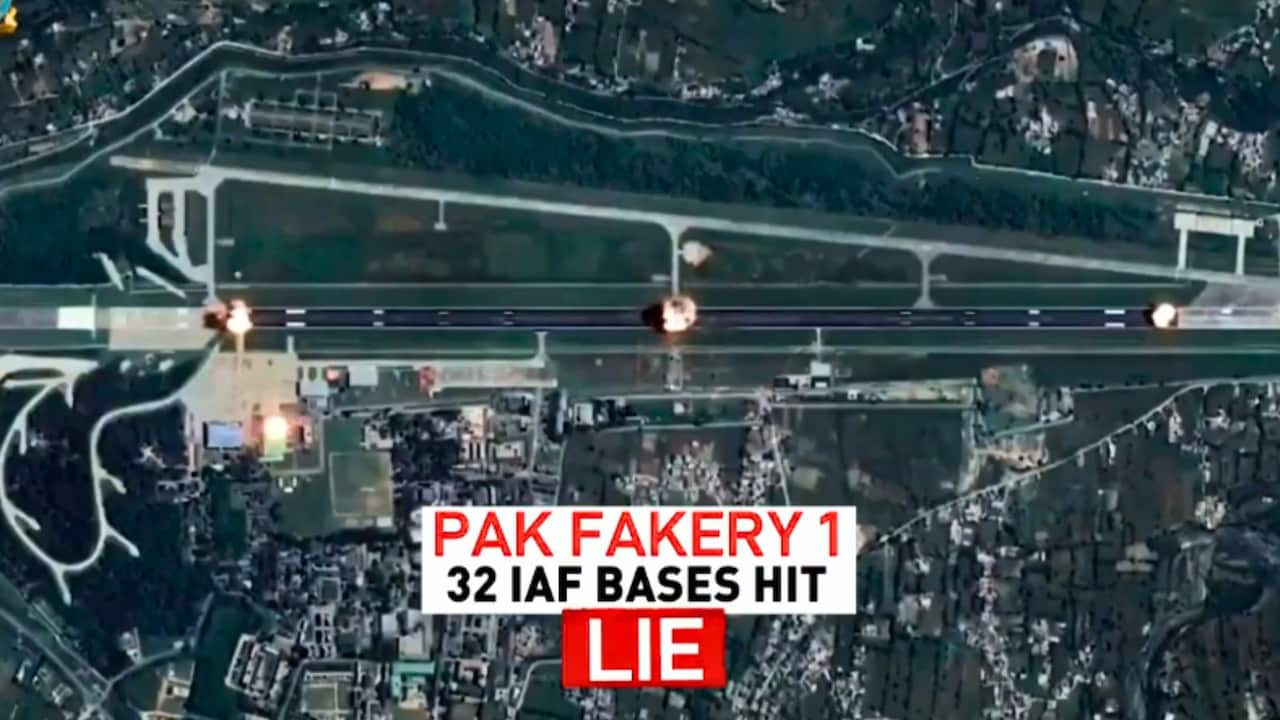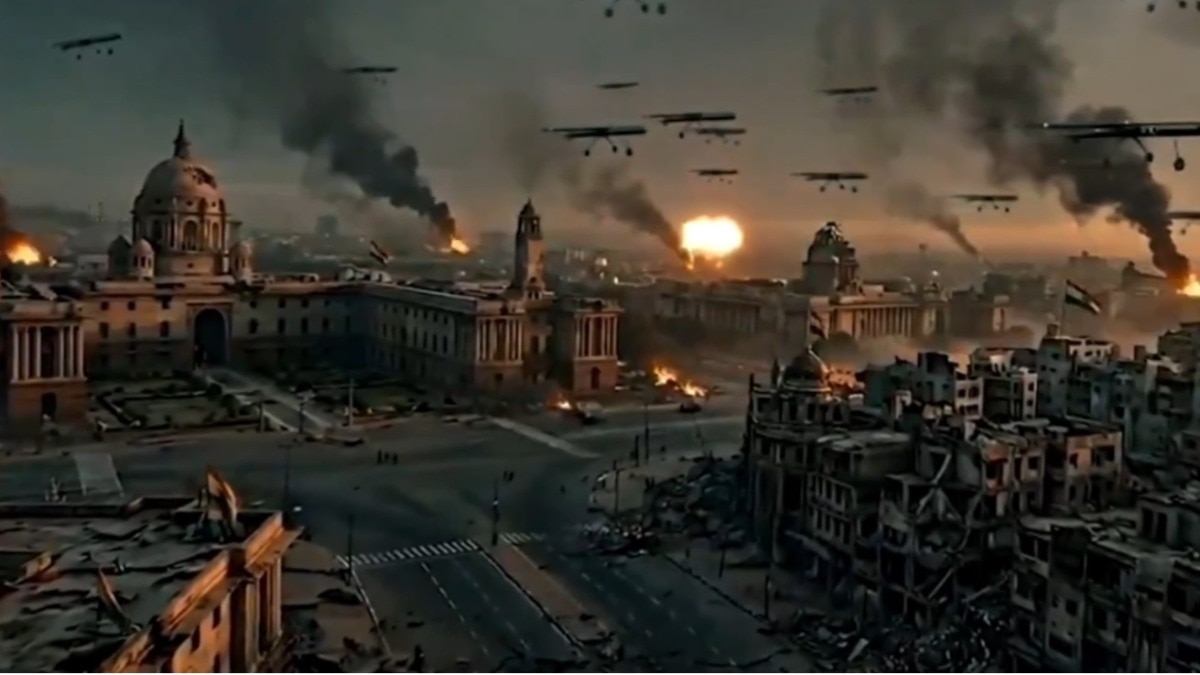
A highly controversial AI-generated video originating from Pakistani social media circles has surfaced, falsely depicting strikes on the Indian Parliament and 32 military bases. The video has been widely debunked and roasted by netizens for its blatant use of artificial intelligence to spread disinformation.
- Viral AI-generated video falsely claims strikes on Indian Parliament.
- Video depicts imaginary attacks on 32 military installations.
- Fact-checkers and netizens quickly identify the content as synthetic media.
In a disturbing trend of digital disinformation, a video circulating on various social media platforms has claimed that the Indian Parliament was struck and 32 military bases were targeted. However, upon closer inspection, it has been revealed that the footage is entirely fabricated using advanced Artificial Intelligence (AI) tools, offering no basis in reality.
The video, which appears to be linked to a narrative labeled 'Sindoor,' uses hyper-realistic yet physically impossible cinematic visuals to create a sense of chaos. The sheer scale of the destruction depicted—ranging from explosions near government buildings to massive strikes on military zones—is a hallmark of AI-generated fantasy rather than actual combat footage.
Why This Matters
BozokMedia analysis shows that the rise of generative AI has lowered the barrier to entry for state-sponsored or rogue-actor disinformation campaigns. By creating 'synthetic reality,' actors can attempt to manipulate public perception, incite panic, or damage the international standing of a nation without firing a single real shot.
The weaponization of AI-generated content represents a new frontier in hybrid warfare, where perception is manipulated as much as territory.
Security analysts warn that such videos are designed to trigger emotional responses, making them highly effective for viral spread. The ability of these tools to mimic real-world lighting and textures makes it increasingly difficult for the average user to distinguish between a real news event and a digital fabrication.
Historical Background
The evolution of 'Deepfakes' and synthetic media has moved rapidly from simple face-swaps to complex, full-scene generation. In the context of regional geopolitics, the use of digital propaganda has become a standard tactic to influence domestic and international audiences through social media echo chambers.
Frequently Asked Questions
Question 1: Is there any truth to the claims of attacks on the Parliament?
Answer: No. The claims are entirely false and based on a computer-generated simulation.
Question 2: How can I spot an AI-generated video?
Answer: Look for unnatural movements, blurring in fast-moving objects, or inconsistencies in shadows and lighting.