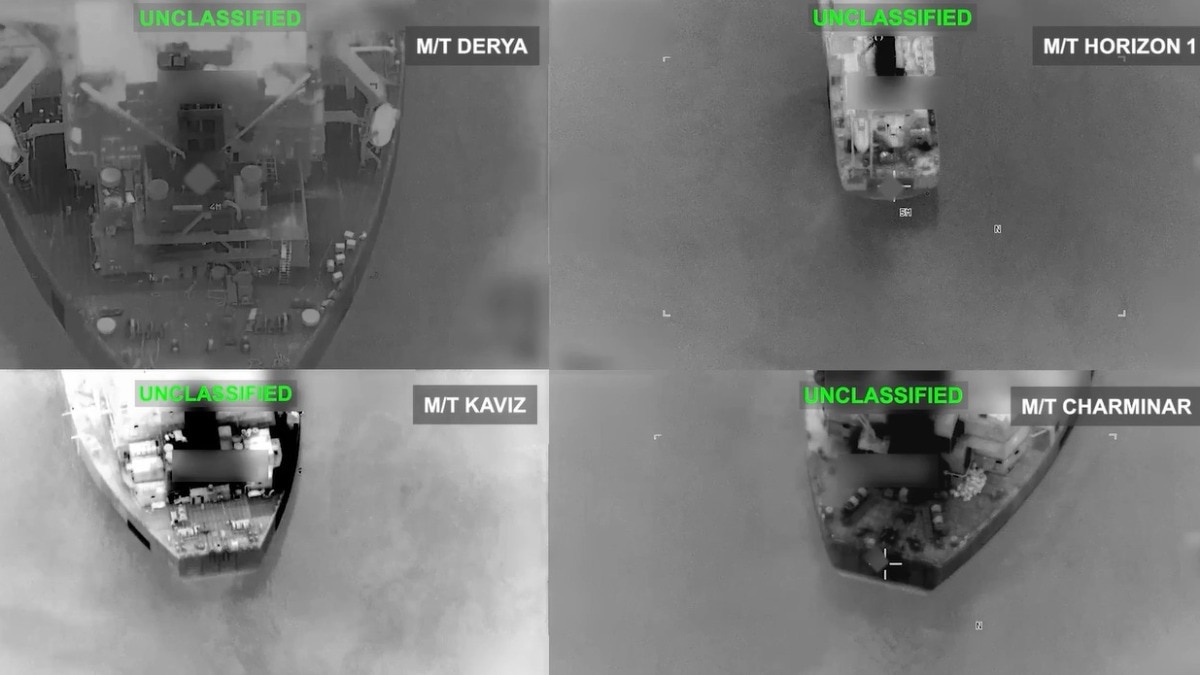
Tensions between the US and Iran have reached a boiling point in the Gulf as Iran's IRGC claims to have attacked 10 vessels, including two US warships, in retaliation for the destruction of five Iranian tankers by CENTCOM.
- Iran's IRGC claims attacks on 2 US naval ships and 8 oil tankers.
- US CENTCOM destroyed 5 Iranian crude oil carriers in a preemptive/retaliatory strike.
- Iran issued warnings to crews in Kuwaiti and Bahraini ports associated with US presence.
- A US underwater drone was reportedly captured by Iranian forces.
The Strait of Hormuz, the world's most critical oil chokepoint, has once again become a battlefield. The Islamic Revolutionary Guard Corps (IRGC) of Iran has announced a massive retaliatory operation, claiming to have targeted 10 vessels in a single day. According to Tehran, the targets included two US naval destroyers and eight oil tankers that were allegedly traversing "restricted and unsafe" waters.
This surge in hostilities follows a decisive strike by the US Central Command (CENTCOM), which reported the destruction of five Iranian crude oil carriers: M/T Kaviz, M/T Charminar, M/T Horizon 1, M/T Riesco, and M/T Derya. The US military justified the action as a response to multiple ballistic missile attempts by the IRGC to strike a US Navy warship patrolling the regional waters.
Why This Matters
BozokMedia analysis shows that this escalation transcends a bilateral military spat; it is a direct threat to global energy stability. Any prolonged conflict in the Strait of Hormuz could lead to a catastrophic spike in global oil prices, triggering inflation and economic instability worldwide. Iran's strategic warning to tankers in Kuwait, Jordan, and Bahrain indicates a desire to pressure regional allies of the US, potentially expanding the conflict zone.
"The militarization of the Strait of Hormuz is a high-stakes game of chicken where the global economy is the primary collateral damage."
The conflict has also extended to underwater warfare. Iran released footage claiming to have captured a US unmanned submersible vehicle. The Pentagon countered this claim, stating the drone was an obsolete model that had malfunctioned a day prior and contained no classified sonar or radar equipment.
Furthermore, the IRGC specifically claimed successful missile strikes on the US destroyers DDG-119 and DDG-53. While these claims remain unverified by independent international observers, the rhetoric suggests a willingness to engage in direct kinetic warfare.
| Entity | Action/Claim | Target |
|---|---|---|
| USA (CENTCOM) | Destroyed 5 Tankers | Iranian Crude Carriers |
| Iran (IRGC) | Attacked 10 Vessels | 2 US Destroyers + 8 Tankers |
Frequently Asked Questions
1. What triggered the current conflict in the Strait of Hormuz?
The conflict was triggered by a cycle of retaliatory strikes involving Iranian oil tankers and US naval warships, compounded by missile attacks.
2. How does this affect the global economy?
Since a huge portion of the world's oil passes through this strait, any disruption can lead to a surge in oil prices and global economic volatility.
