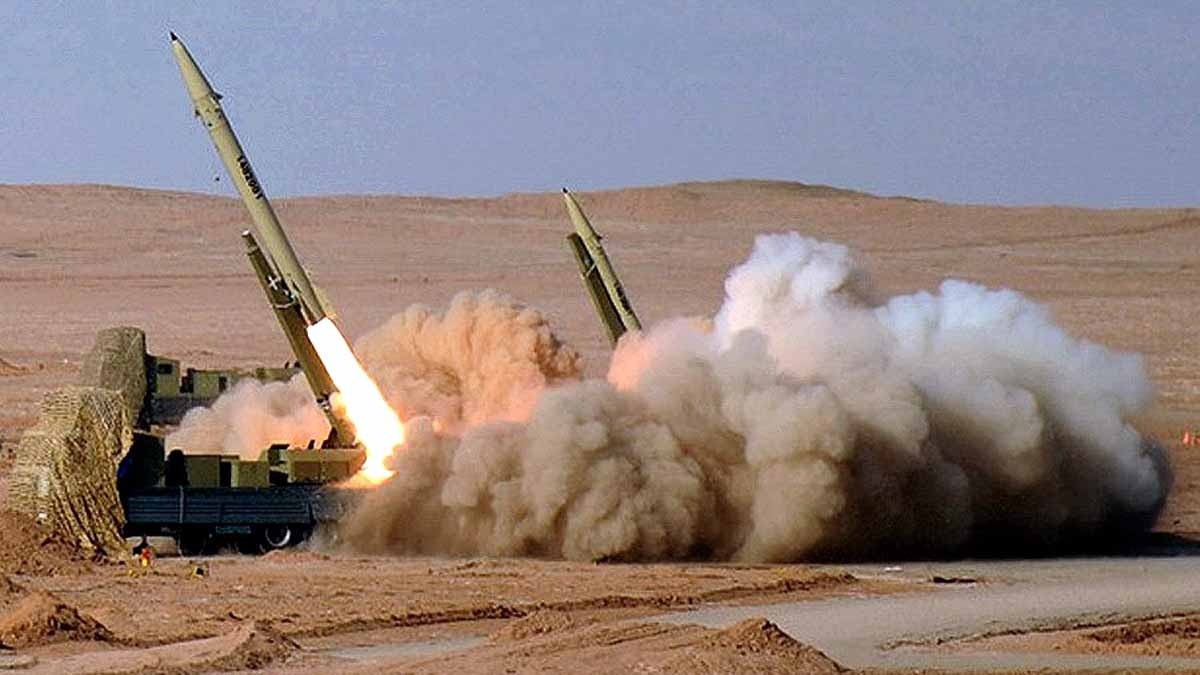
Iran's advanced missile and drone technology has shifted the global security paradigm, creating unprecedented challenges for US allies. Defense experts warn that traditional interception methods are becoming increasingly ineffective.
- Iran's drone and missile proliferation has destabilized regional security balances.
- Western air defense systems are struggling to counter swarm-style attacks.
- The supply of Iranian tech to proxies has increased geopolitical volatility.
In the complex geopolitical landscape of the Middle East, Iran has established a dominant influence through its strategic investment in drone and ballistic missile technology. The primary concern for the United States and its allies is that Iranian weaponry has evolved to be more precise, diverse, and scalable.
The Iranian-made 'Shahed' drones and various missile tiers have become pivotal assets in modern conflict zones. The most alarming aspect of these weapons is their cost-effectiveness compared to the exorbitant price of Western interceptor missiles. When deployed in 'swarms,' these drones can overwhelm even the most sophisticated radar and defense grids.
Why This Matters
BozokMedia analysis shows that this is not merely an arms race but a shift toward 'Asymmetric Warfare.' Iran has demonstrated that it can threaten strategic targets without needing a traditional, high-cost air force. This directly challenges the perceived military superiority of US-aligned nations.
"Iran's drone strategy has fundamentally altered the concept of modern air defense, initiating a conflict of 'cheap technology versus expensive security.'"
Historically, Iran shifted toward military self-reliance following the 1979 Revolution when US arms supplies were severed. This forced the development of a domestic missile program that has now become both a strategic shield and a sword for the regime.
Furthermore, Iran has exported this expertise to non-state actors such as Hezbollah in Lebanon and the Houthis in Yemen. This proliferation means that US allies, particularly in the Gulf, now face multi-front threats that are difficult to predict and intercept.
Frequently Asked Questions
Q1: Why are Iranian drones considered so dangerous?
A: Their low cost allows them to be launched in massive quantities, which can saturate and exhaust expensive air defense systems.
Q2: Is there a counter-measure to these attacks?
A: The US and its allies are developing laser-based weaponry and AI-driven defense systems, though a foolproof solution remains elusive.