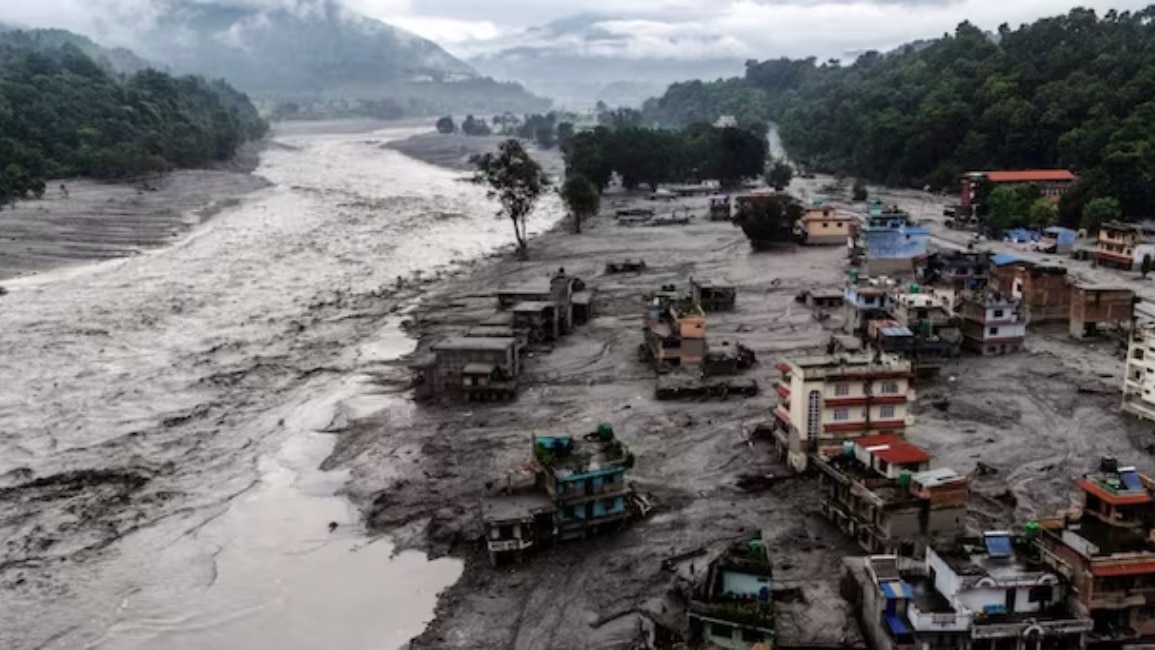
The devastating flash floods that hit Nepal on August 26 have claimed 1,365 lives. With over 5,300 people still missing, including foreign nationals, the scale of the disaster continues to grow.
- Official death toll from the Nepal flash floods has reached 1,365.
- 5,326 people remain missing, including 589 foreign citizens.
- Chitwan and Nawalparasi districts are the hardest hit.
- DNA sampling has been initiated to identify thousands of unknown bodies.
The aftermath of the catastrophic flash floods that struck Nepal on August 26 has become increasingly grim. On Wednesday, authorities confirmed that the death toll has surged to 1,365 as more bodies are recovered from debris and riverbeds. The tragedy has not only devastated local communities but has also claimed the lives of numerous foreign tourists, leaving thousands of families in a state of agonizing wait.
Regional Impact and Casualty Distribution
According to the Nepal Police, Chitwan has emerged as the worst-affected region, with 363 bodies recovered. Other heavily impacted areas include Eastern Nawalparasi (226 deaths), Western Nawalparasi (222 deaths), and Nuwakot (197 deaths). Additional casualties were reported in Rasuwa, Gorkha, Dhading, and Tanahun. Due to the grueling identification process, only 102 bodies have been handed over to their relatives so far.
| Affected District | Number of Bodies Recovered |
|---|---|
| Chitwan | 363 |
| Eastern Nawalparasi | 226 |
| Western Nawalparasi | 222 |
| Nuwakot | 197 |
| Rasuwa | 174 |
Why This Matters
BozokMedia analysis shows that this disaster is a stark manifestation of climate change and the fragility of the Himalayan ecosystem. The sudden collapse of ice and rock masses creates a 'debris flow' that acts as a juggernaut, wiping out everything in its path. This incident underscores the critical need for advanced early warning systems in high-altitude regions of South Asia.
"The increasing frequency of GLOFs (Glacial Lake Outburst Floods) in the Himalayas is transforming seasonal rains into unpredictable death traps."
The Challenge of Identification
The sheer violence of the floods has left many bodies unrecognizable. Security forces have secured 1,147 unidentified remains. To provide closure to the families, the government has resorted to DNA profiling, collecting samples from both the deceased and the relatives of the missing to match identities.
Historical Context
The disaster was triggered by a massive landslide of ice and rock near the Nepal-Tibet border, causing a sudden surge in the Bhote Koshi and Trishuli rivers. The resulting wall of water obliterated villages, markets, roads, and bridges in areas like Timure and Syafrubesi, turning thriving hubs into wasteland within minutes.
Frequently Asked Questions
Q1: How many people are still missing in the Nepal floods?
A: Currently, 5,326 people are reported missing, including 589 foreign nationals.
Q2: Which district suffered the highest number of casualties?
A: Chitwan district was the most affected, with 363 bodies recovered.