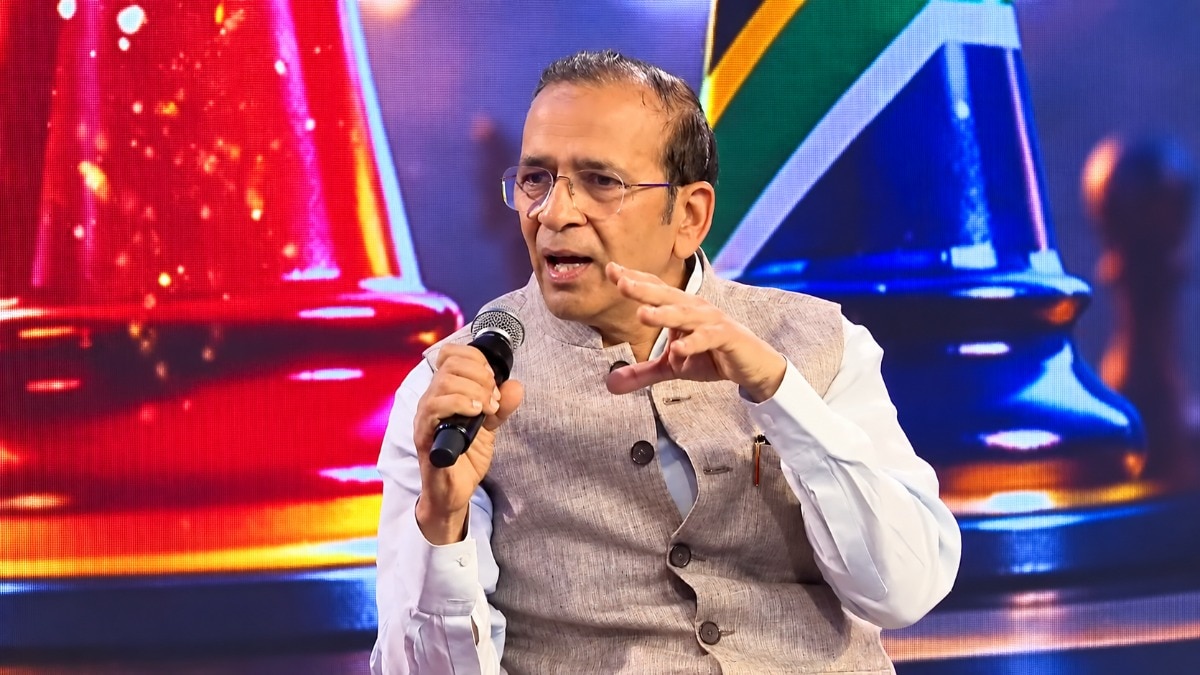
Former diplomat Ajay Bisaria warns that the volatile nature of Donald Trump could lead the US to view the upcoming BRICS summit as an anti-Western alliance, despite India's efforts to frame it as a non-Western platform.
- Former diplomat Ajay Bisaria warns of US misinterpretation of the BRICS summit due to Donald Trump's volatility.
- India is actively rebranding BRICS as a 'non-Western' rather than 'anti-Western' grouping.
- Russia and China push for a geopolitical identity, while India emphasizes economic and developmental goals.
- Expanded membership (including Iran and Saudi Arabia) makes political consensus more challenging.
As the 18th BRICS Summit prepares to convene in New Delhi, concerns have surfaced regarding how the United States, under the leadership of Donald Trump, will perceive the gathering. Former diplomat Ajay Bisaria, speaking at the India Today BRICS Roundtable, cautioned that there is a distinct danger of the US interpreting the summit as explicitly anti-Western.
Bisaria attributed this risk to a "very volatile White House" and the inherent unpredictability of President Trump. He noted that the active engagement of Russia and China within the platform further exacerbates the risk of the summit being viewed through a lens of confrontation with the West. However, he emphasized that India will not be "batting on the back foot" and will firmly defend its strategic autonomy.
Why This Matters
BozokMedia analysis shows that India is walking a diplomatic tightrope. By shifting the narrative from 'anti-Western' to 'non-Western,' New Delhi is attempting to maintain its critical partnerships with the G7 while leading the Global South. Any misstep or misinterpretation by the Trump administration could lead to trade frictions or diplomatic tension, especially given Trump's previous threats regarding tariffs on nations moving away from the US dollar.
"India has successfully worked to change the branding of BRICS to a non-Western grouping focused on economic and developmental issues, rather than an anti-Western one."p>
Geopolitical analyst Ashok Malik added that the original BRICS has always been caught between two competing visions: one as an economic forum and another as a geopolitical tool. While Russia and China have attempted to nudge the group toward the latter, India has consistently resisted this push, arguing that an anti-Western stance does not serve Indian national interests.
Furthermore, Malik pointed out that the expanded membership of BRICS—now including nations like Saudi Arabia, the UAE, and Iran—makes a unified political position nearly impossible. With such divergent national interests, the group is more likely to find common ground in supply chains, climate change, and economic resilience rather than forming a cohesive geopolitical front against the West.
| Perspective | Russia & China Vision | India's Vision |
|---|---|---|
| Nature | Geopolitical & Anti-West | Economic & Non-West |
| Primary Goal | Shift Global Power Balance | Development & Inclusive Growth |
| Strategy | Challenge US Hegemony | Maintain Strategic Autonomy |
Frequently Asked Questions
Q1: Why does India insist on calling BRICS 'non-Western'?
A: To ensure it can advocate for the Global South without alienating its strategic partners in the West, such as the US and EU.
Q2: How does the expansion of BRICS affect the summit's outcome?
A: While it increases the group's global weight, it makes achieving a consensus on contentious political issues (like Ukraine or Iran) significantly harder.
