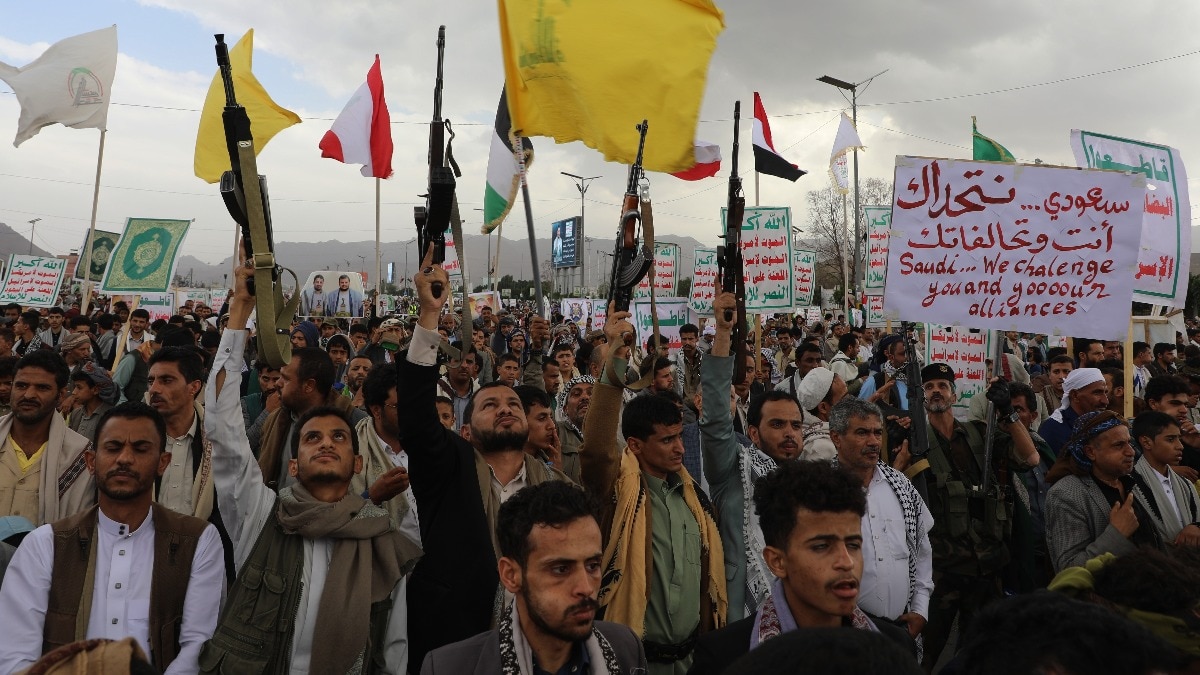
Pakistan has signaled its readiness to launch airstrikes against Houthi rebels to support Saudi Arabia, but experts suggest this may be a calculated diplomatic bluff to pressure Iran.
- Pakistan warns of airstrikes against Houthi rebels under the Mecca Pact's collective defense clause.
- The threats are widely viewed as a strategic signal to Iran to rein in its Yemeni proxies.
- Saudi Arabia and Houthis are engaged in a cycle of tit-for-tat drone and missile attacks.
- Islamabad seeks a diplomatic resolution to avoid being dragged into a prolonged Yemeni conflict.
The geopolitical landscape of the Middle East is witnessing a high-stakes game of brinkmanship as Pakistan threatens to conduct airstrikes against the Houthi rebels in Yemen. This development comes amidst an escalation of hostilities between the Houthis (Ansar Allah) and Saudi Arabia, with the former launching drones and missiles at Saudi airbases and oil infrastructure.
Pakistan's Defence Minister, Khwaja Asif, recently indicated that the collective defense clause of the Mecca Defence Alliance—which includes Pakistan, Saudi Arabia, and Turkey—could be operationalized if the conflict spills over into Saudi territory. This statement, coupled with reports from Istanbul-based outlets suggesting Islamabad is preparing strikes, has sent shockwaves through regional diplomatic circles.
Why This Matters
BozokMedia analysis shows that Pakistan is walking a tightrope between its deep strategic alliance with Riyadh and its complex relationship with Tehran. By threatening military action, Islamabad is not necessarily preparing for war, but is instead utilizing 'coercive diplomacy.' The goal is to warn Iran—the primary benefactor of the Houthis—that continued aggression against the Kingdom could force Pakistan's hand, thereby risking a wider regional escalation that Tehran would prefer to avoid.
"Pakistan's military rhetoric serves as a diplomatic shield, allowing it to honor its commitments to Saudi Arabia without actually deploying boots on the ground in Yemen."
The conflict's roots date back to 2015, when Saudi Arabia led a coalition to restore the Yemeni government after the Houthi takeover. For years, the war has been a proxy battleground for the Sunni-Shia rivalry between Riyadh and Tehran. Recently, the situation has worsened following the outbreak of the US-Iran conflict earlier this year, which has emboldened Houthi operations.
Reports indicate that Pakistan has already delivered a stern warning from Saudi Arabia to Iran, urging Tehran to use its influence to halt the attacks. While Iranian officials claim they do not control the Houthis, intelligence suggests a deeper coordination involving the Revolutionary Guard.
| Entity | Primary Goal | Strategic Alignment |
|---|---|---|
| Saudi Arabia | Territorial Security & Stability | Sunni / Western Allied |
| Houthis | Control of Yemen & Regional Influence | Shia / Iran-Backed |
| Pakistan | Balancing Ties & Alliance Obligations | Neutral Mediator / Saudi Ally |
Frequently Asked Questions
Q1: Will Pakistan actually bomb the Houthis?
Most analysts believe it is unlikely. Pakistan prefers a diplomatic solution to avoid the costs and risks of a long-term military engagement in Yemen.
Q2: Why is Iran involved in the Yemen conflict?
Iran provides weapons and intelligence to the Houthis to create a strategic lever against Saudi Arabia and maintain influence in the Arabian Peninsula.


