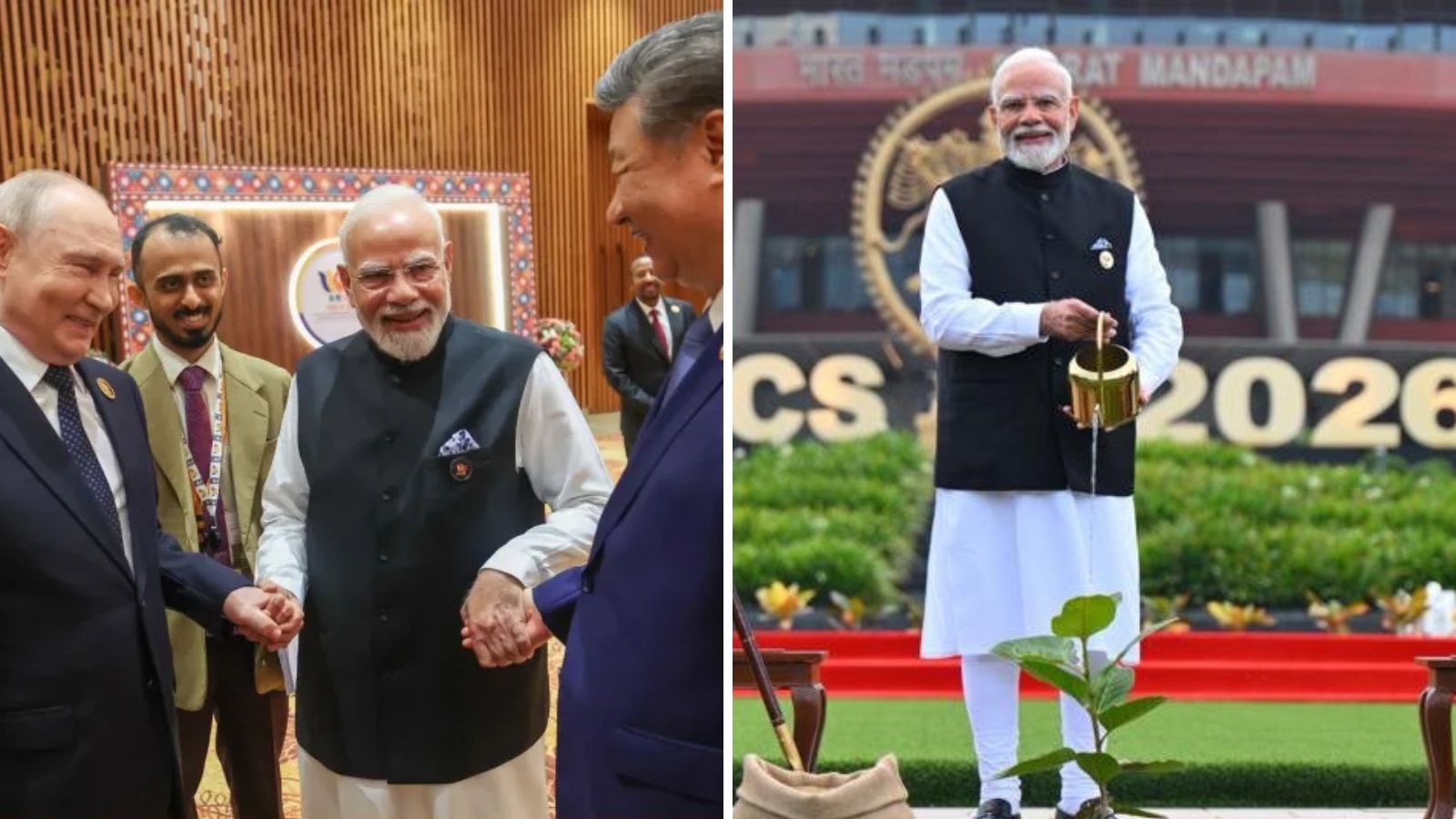
The 18th BRICS Summit in New Delhi witnessed powerful moments of unity, featuring Prime Minister Narendra Modi alongside leaders like Vladimir Putin and Xi Jinping. Explore the key highlights and diplomatic breakthroughs from Bharat Mandapam.
- PM Modi demonstrated diplomatic solidarity by holding hands with Putin and Xi Jinping.
- The 'New Delhi Declaration 2026' was unanimously adopted to empower the Global South.
- High-level bilateral meetings and cultural exchanges marked the summit's success.
The 18th BRICS Summit, hosted at the prestigious Bharat Mandapam in New Delhi, has emerged as a landmark event in modern diplomacy. The summit was characterized by striking visual moments that signaled a shift in the global order. Most notably, Prime Minister Narendra Modi was seen in a display of camaraderie, holding hands with Russian President Vladimir Putin and Chinese President Xi Jinping, a gesture that resonated across the globe.
The Power Frame: A New Era of Multipolarity
One of the most significant images from the summit captured the three leaders walking together, with PM Modi leading the delegation. This visual representation of cooperation between the world's most influential emerging powers suggests a strengthening of the BRICS bloc as it continues its expansion. The summit also saw the presence of Iranian President Masoud Pezeshkian and other key world leaders, reinforcing the group's growing reach.
Why This Matters
BozokMedia analysis shows that these high-profile interactions are crucial for de-escalating regional tensions and fostering a collaborative environment. The visual unity between India, Russia, and China serves as a powerful signal to the West that the Global South is consolidating its influence.
The synergy displayed at the Delhi summit underscores a fundamental transition toward a more inclusive and multipolar global governance model.
Bilateral Reviews and Green Diplomacy: On the sidelines, PM Modi engaged in a critical bilateral review with President Xi Jinping to discuss the complex spectrum of India-China relations. In a move toward environmental stewardship, the leaders participated in a joint tree plantation ceremony. PM Modi highlighted that the planting of a Banyan tree symbolizes the 'deep roots and growing strength' of the BRICS partnership.
Diplomatic Outreach and Cultural Exchange: The summit was not limited to high-level politics. President Droupadi Murmu met with President Pezeshkian to discuss regional peace. Furthermore, the 'BRICS Bazaar' at the National Crafts Museum provided a platform for cultural diplomacy, where Zahra Pezeshkian, daughter of the Iranian President, interacted with local artisans, showcasing the diverse heritage of member nations.
Historical Background
Since its inception, BRICS has evolved from an economic acronym into a formidable geopolitical force. The 2026 summit in New Delhi marks a pivotal chapter, as the expanded membership brings together diverse interests from Africa, Asia, and the Middle East, aimed at reshaping global economic rules.
Frequently Asked Questions
Question 1: What was the significance of the New Delhi Declaration?
Answer: The declaration emphasizes the need for the Global South to become active 'rule-shapers' in international affairs rather than just rule-followers.
Question 2: Where was the 18th BRICS Summit held?
Answer: The summit took place at Bharat Mandapam in New Delhi, India.

