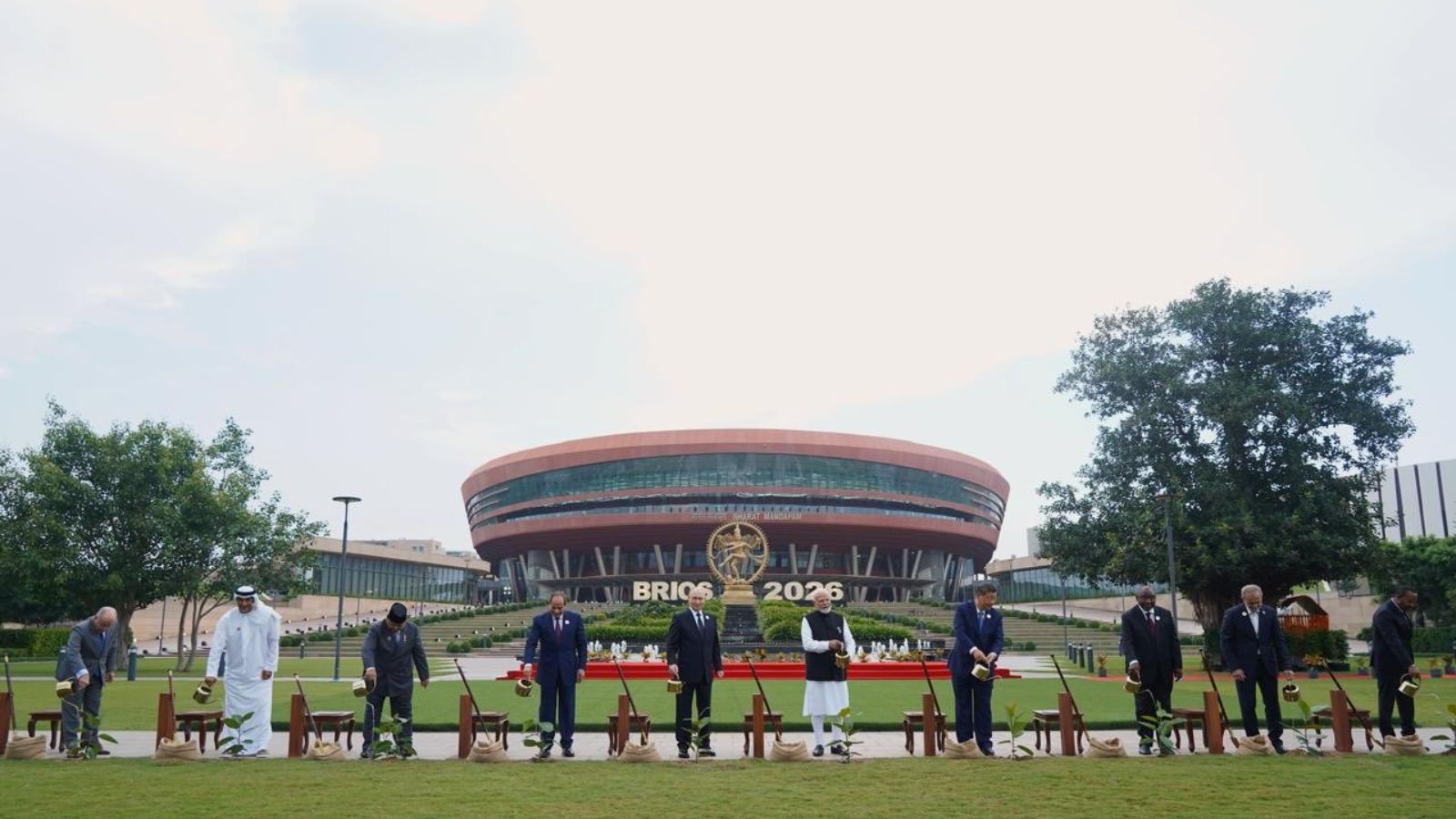
At the Delhi BRICS Summit, India successfully steered the forum away from becoming an ideological crusade against the West, focusing instead on practical cooperation and digital innovation.
- India successfully prevented BRICS from hardening into a radical ideological bloc against the West.
- The summit prioritized practical issues like supply chains, food security, and digital systems over political theater.
- India steered clear of the 'common currency' debate, focusing instead on efficient cross-border payments.
The recent BRICS Summit in New Delhi marks a significant diplomatic triumph for India. Amidst deepening great-power rivalries and global economic uncertainty, New Delhi has managed to keep the forum functional and pragmatic. Rather than allowing BRICS to devolve into a platform for 'fire and brimstone' rhetoric against the West, India has steered the conversation toward meaningful, non-ideological cooperation.
Practical Cooperation Over Ideological Crusade
The Delhi Declaration reaffirms the political diversity within the group, dispelling fears that BRICS is becoming a collective political front against the United States. While the document addresses humanitarian crises and criticisms of unilateral sanctions, it avoids the trap of an ideological straitjacket. The focus has shifted toward resilience, innovation, and sustainability, covering critical sectors such as health, climate adaptation, and food security.
Why This Matters
BozokMedia analysis shows that India's strategy allows it to maintain its strategic autonomy. By keeping BRICS 'boring' and focused on technical cooperation, India can continue to deepen its technological and defense ties with the West while simultaneously championing the interests of the Global South.
India's success lies in ensuring BRICS remains a forum for pluralism rather than an instrument of confrontation.
One of the most consequential aspects of the summit was the handling of the 'de-dollarisation' narrative. While Russia and China seek to reduce their exposure to American financial power, India has resisted the push for a common BRICS currency. Instead, New Delhi has advocated for making cross-border payments faster, cheaper, and more reliable through technical integration.
The Digital Footprint of India
India has also leveraged its leadership in Digital Public Infrastructure (DPI) to influence the BRICS agenda. By emphasizing inclusive digital systems and AI capacity-building, India has provided a blueprint for other developing nations to follow, enhancing its credibility on the global stage.
Frequently Asked Questions
1. Is BRICS aiming to replace the US Dollar?
While some members seek to reduce dollar dependency, the Delhi declaration focuses on improving payment functionality rather than creating a new global currency.
2. What are the main focuses of the New Delhi Declaration?
The declaration focuses on supply chain resilience, food security, digital public goods, and reforming the international order.