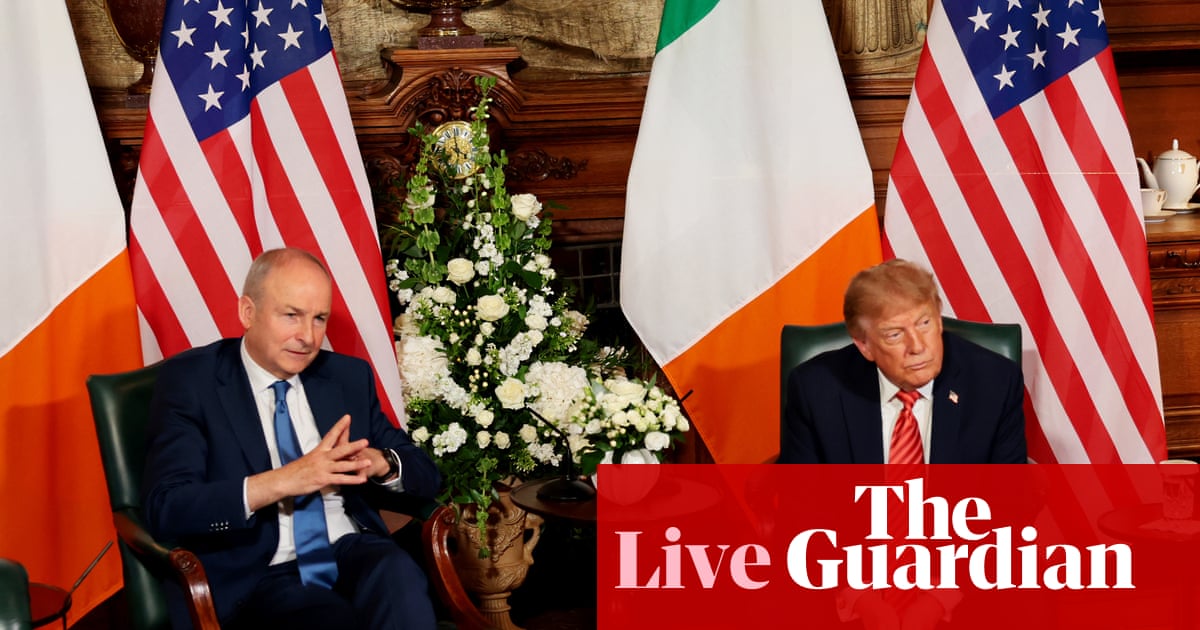
During a high-profile two-day visit to Dublin, Donald Trump weighed in on the sensitive issue of Irish unity, predicting that a unified Ireland is inevitable and should happen sooner rather than later.
- Donald Trump voiced his support for the unification of Ireland during his Dublin visit.
- He identified Micheál Martin as a key figure to drive the process forward.
- Trump acknowledged that the UK would likely oppose the move but maintained it would be a positive outcome.
In a significant diplomatic gesture during his two-day visit to Dublin, Donald Trump met with the Irish President, where he addressed the long-standing and complex question of Irish unity. Trump stated that he would "love to see it unified," suggesting that the eventual unification of the island is an inevitability.
Speaking at Farmleigh House during a meeting with Micheál Martin, the former U.S. President emphasized his affinity for the Irish people. He noted that having friends on both sides of the divide makes the prospect of unity appealing, describing it as a "great feather in everybody's cap."
Why This Matters
BozokMedia analysis shows that Trump's comments transcend mere rhetoric. By publicly supporting unification, Trump is touching upon one of the most sensitive geopolitical nerves in Western Europe. Such statements can influence public opinion in both the Republic of Ireland and Northern Ireland, potentially putting pressure on the UK government's stance on the Good Friday Agreement.
"Trump's endorsement of a united Ireland represents a bold, if unplanned, intervention in a delicate regional balance of power."
Trump went further to suggest that the process "may as well happen now," casting Micheál Martin as the ideal leader to facilitate this transition. However, he remained cognizant of the geopolitical friction this would cause, noting that the United Kingdom would naturally have strong objections to the loss of Northern Ireland.
Historically, the partition of Ireland in 1921 created a deep divide that lasted for decades, leading to the violent period known as "The Troubles." While the 1998 Good Friday Agreement brought a semblance of peace, the debate over whether Northern Ireland should remain part of the UK or join the Republic of Ireland remains a central pillar of local politics.
Frequently Asked Questions
1. Did Donald Trump formally advocate for a united Ireland?
While not a formal policy shift, he expressed strong personal support and predicted that unification is destined to happen eventually.
2. How might the UK government react to these comments?
The UK government typically maintains that the status of Northern Ireland should be decided solely by its people through a democratic referendum, and they may view external political pressure as interference.