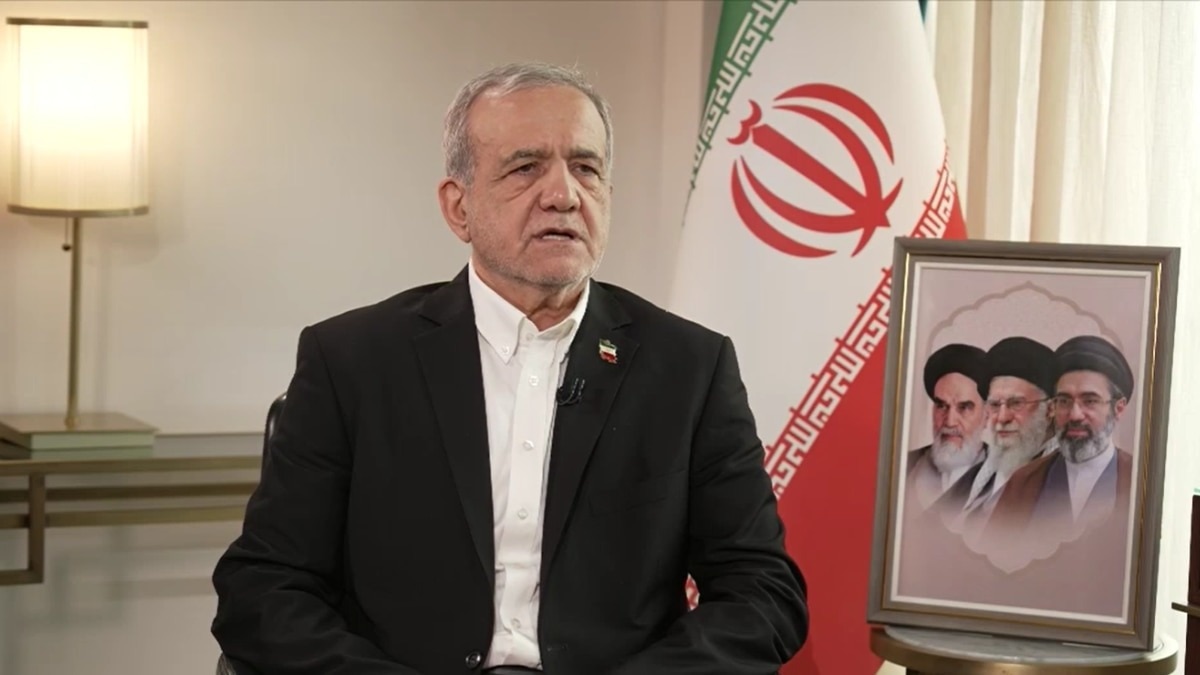
In an exclusive interview with Aaj Tak, Iranian President Masoud Pezeshkian discusses the strengthening ties with India, the strategic importance of Chabahar Port, and the escalating tensions with the United States.
- Deepening bilateral ties between India and Iran based on historical and cultural roots.
- Emphasis on Chabahar Port as a vital gateway for regional and global connectivity.
- Strong criticism of US unilateral sanctions and military actions against Iran.
During his visit to India for the BRICS summit, Iranian President Masoud Pezeshkian engaged in a high-profile exclusive interview with India Today Group's Foreign Affairs Editor, Geeta Mohan. The conversation delved deep into the complexities of Middle Eastern geopolitics, the evolving relationship with India, and the confrontational stance toward the United States.
President Pezeshkian highlighted the significant meeting between him and Prime Minister Narendra Modi, noting that the relationship between the two nations is improving daily. He emphasized that the bond between India and Iran is anchored in thousands of years of shared history and culture, which provides a resilient foundation for modern diplomatic and economic cooperation.
Why This Matters
BozokMedia analysis shows that the strategic partnership between India and Iran, particularly regarding the Chabahar Port, is a cornerstone of India's 'Connect Central Asia' policy. As global supply chains shift, Iran's role as a transit hub becomes increasingly critical for India's long-term economic security and regional influence.
Addressing the concerns of Indian investors regarding the security of the Chabahar Port, Pezeshkian offered reassurance. He described Iran as a geopolitical crossroads that can connect the North to the South and the East to the West. He expressed a strong desire to revive the ancient Silk Route, positioning Iran as a cost-effective and efficient hub for economic and scientific exchange.
The revitalization of historical trade routes through Iran can redefine global economic connectivity for the 21st century.
The interview took a sharp turn when discussing the conflict with the United States. Pezeshkian accused the US of acting without provocation, targeting Iranian scientists, military commanders, and civilian infrastructure. He characterized US-led sanctions as a form of 'dictatorship' and stated that the very purpose of the BRICS alliance is to challenge this unilateral economic hegemony and create a more multipolar world order.
| Feature | India-Iran Relations | US-Iran Relations |
|---|---|---|
| Primary Focus | Trade, Culture, & Connectivity | Sanctions & Military Tension |
| Key Strategic Asset | Chabahar Port | Military Bases in the Region |
| Diplomatic Stance | Collaborative & Strategic | Confrontational |
Frequently Asked Questions
1. How does Chabahar Port benefit India?
It provides India with a strategic maritime route to Afghanistan and Central Asia, bypassing traditional land routes.
2. What is Iran's view on BRICS?
Iran views BRICS as a vital mechanism to counter US unilateralism and build a more equitable global economic system.