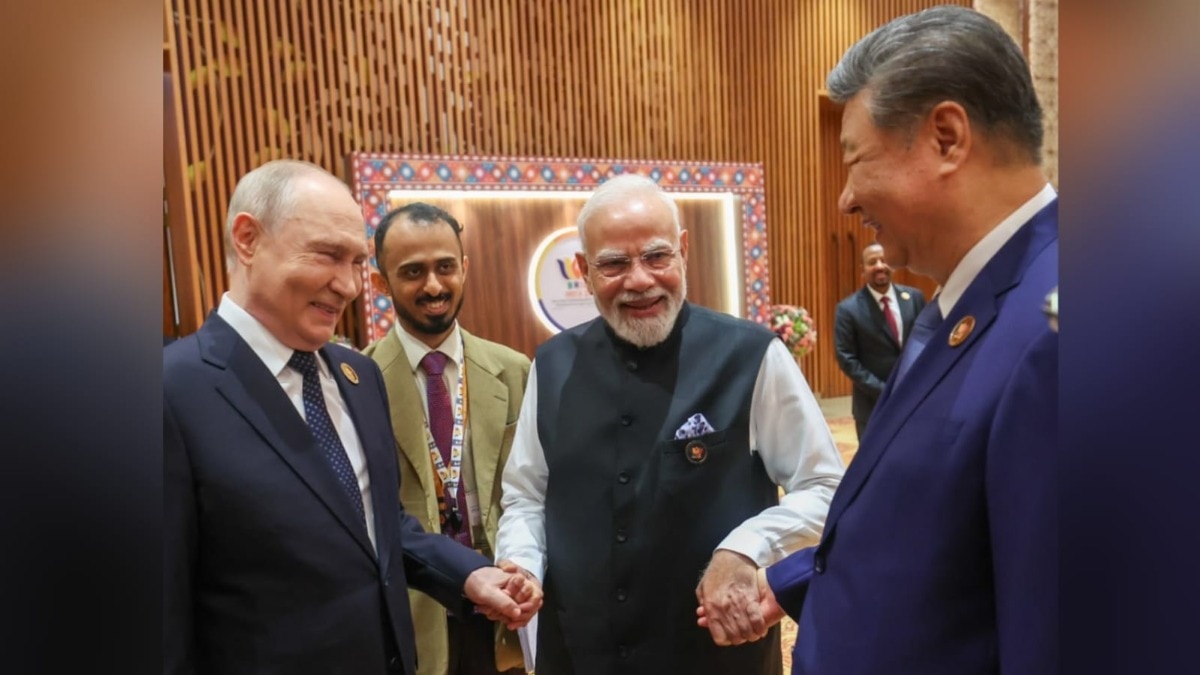
The 18th BRICS Summit has signaled a tectonic shift in global power dynamics through the New Delhi Declaration. By fostering consensus amidst conflict, India has solidified its role as a key balancer for the Global South.
- The summit emphasized reformed multilateralism and global governance reform.
- India facilitated high-level bilateral talks between rivals Iran and the UAE.
- Members resolved to increase intra-BRICS trade using local currencies.
- The declaration called for significant reforms in the UN Security Council.
The 18th BRICS Summit has emerged as a defining moment for the emerging economies of the world. The New Delhi Declaration, issued amidst significant geopolitical volatility, serves as a manifesto for a new era of reformed multilateralism. Rather than being a mere economic forum, the summit demonstrated the group's capacity to challenge traditional power equations dominated by Western hegemony.
Diplomatic Mastery in a Divided World
A standout achievement of this summit was India's ability to bridge deep-seated regional divides. By ensuring that Iran and the United Arab Emirates (UAE)—two major rivals in the West Asian conflict—engaged in their highest-level bilateral meeting since the onset of hostilities, New Delhi has reaffirmed its status as a premier mediator. This diplomatic maneuvering provides much-needed ballast to India's reputation as a balancer between the West and the Global South.
Shifting Economic Paradigms: BozokMedia analysis
BozokMedia analysis shows that the BRICS bloc is increasingly focusing on economic sovereignty. The declaration's emphasis on local currency transactions and the condemnation of unilateral sanctions and tariffs suggests a strategic move toward de-dollarization and a more decentralized global financial system. This economic solidarity is intended to protect member nations from the weaponization of finance.
The consensus achieved in New Delhi proves that despite internal differences, the BRICS nations are united in their desire for a multipolar world order.
The summit also took a firm stance on humanitarian issues, specifically condemning actions in Palestine and Lebanon. While certain sensitive topics regarding direct military escalations in the Middle East were omitted to maintain consensus, the underlying message of supporting the rights of emerging nations remained potent. Furthermore, the call for UN Security Council reform, specifically advocating for increased representation for India and Brazil, underscores the group's collective ambition.
Historical Background
Since its inception, BRICS has evolved from a mere acronym used by economists into a formidable geopolitical bloc. As it enters its 20th year, the expansion of the group and the increasing influence of its members signify a transition from a Western-centric world order to one that reflects the realities of the 21st-century global economy.
Frequently Asked Questions
1. What was the significance of the New Delhi Declaration?
It signaled a collective push for reforming global institutions and increasing the role of emerging economies in global governance.
2. How did India influence the summit's outcome?
India acted as a mediator between conflicting members and successfully navigated diverse political interests to forge a unified joint statement.