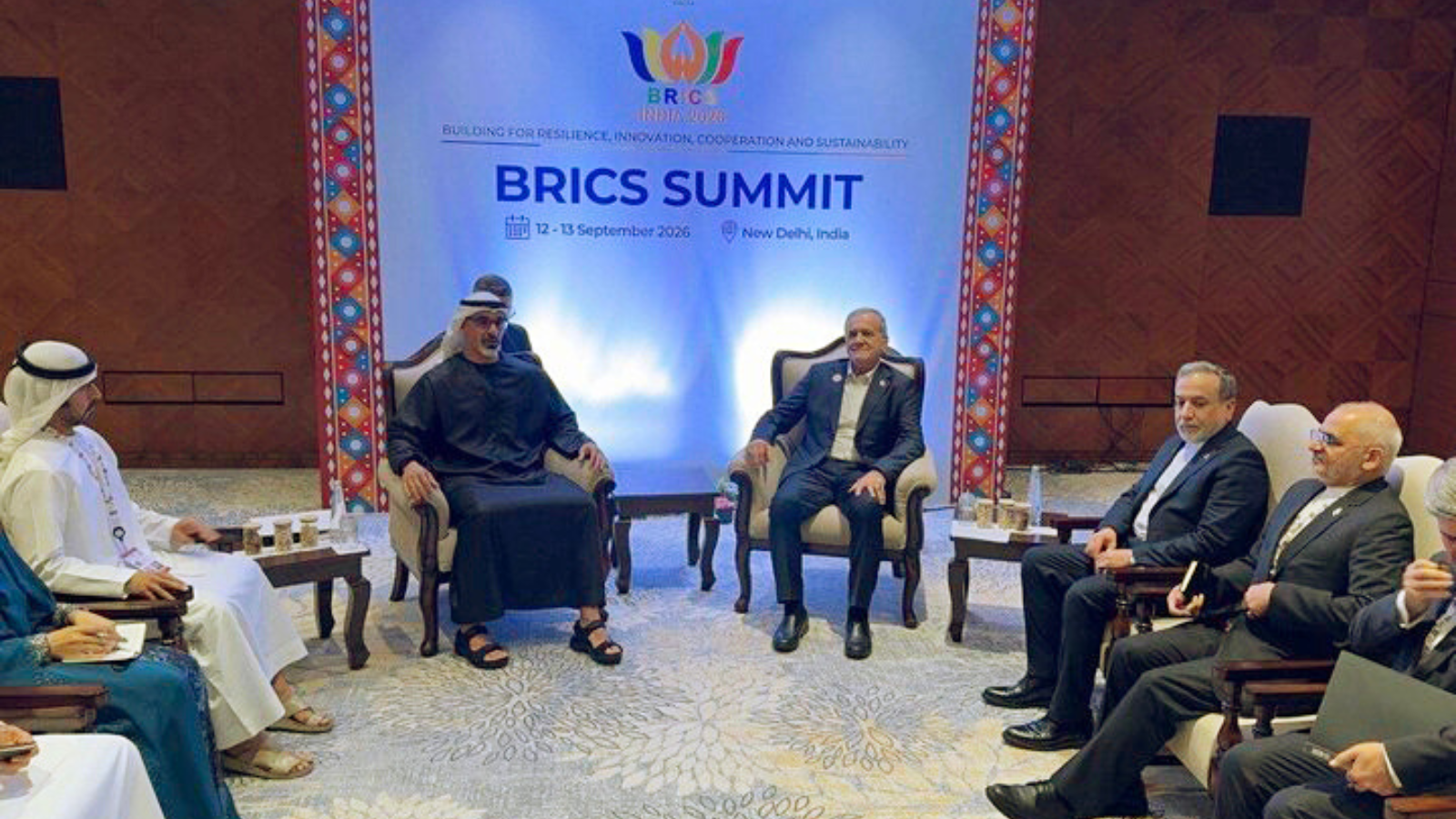
In a major diplomatic triumph at the BRICS Summit in New Delhi, India has facilitated a consensus between Iran and the UAE regarding the escalating tensions in West Asia.
- Historic diplomatic breakthrough between Iran and UAE at the BRICS Summit in New Delhi.
- Both nations called for maximum restraint to prevent further escalation in West Asia.
- The declaration emphasizes territorial sovereignty and the protection of civilian infrastructure.
- India played a pivotal role in bridging the gap between the two new BRICS members.
In a significant diplomatic development during the BRICS Summit in New Delhi, India has successfully navigated a complex geopolitical minefield to achieve a consensus between Iran and the United Arab Emirates (UAE). This comes at a critical juncture, as the six-month-long conflict in West Asia continues to flare up with exchanges of strikes between the US and Iran.
On the margins of the summit, Abu Dhabi's Crown Prince Sheikh Khaled bin Mohamed bin Zayed Al Nahyan met with Iranian President Masoud Pezeshkian. This high-level engagement served as a precursor to the adoption of a joint declaration that addresses the volatile situation in the Middle East.
A Call for Restraint and Sovereignty
The joint declaration, specifically in paragraph 28, expresses deep concern over the escalating tensions in West Asia. The BRICS leaders have called for exercising "maximum restraint" and avoiding any actions that could further aggravate the regional instability. Crucially, the document acknowledges the sensitivities of both nations by emphasizing territorial sovereignty and the absolute necessity of protecting civilians and civilian infrastructure.
The New Delhi Declaration proves that BRICS is evolving from an economic bloc into a significant diplomatic force capable of mediating global conflicts.
BozokMedia analysis shows that this achievement is a direct result of intensive negotiations led by the BRICS Sherpas. Unlike the meeting in May 2026, where significant divergences were noted, the current framework successfully integrates the national positions of both Iran and the UAE, ensuring the smooth flow of global trade and energy supplies.
Historical Context of the Rift
The relationship between Tehran and Abu Dhabi has been strained since the outbreak of hostilities on February 28, following attacks by the US and Israel on Iran. Iran's subsequent targeting of US bases in the Gulf has directly impacted the security landscape of the UAE. While the UAE has faced Iranian strikes, Tehran has frequently labeled the UAE as a proxy for United States interests, creating a deep diplomatic divide.
Frequently Asked Questions
1. What was the main obstacle in the previous BRICS meeting?
In May 2026, the BRICS Foreign Ministers' meeting failed to reach a consensus due to the vastly different national positions held by Iran and the UAE regarding the West Asian war.
2. Why is the 'energy flow' mentioned in the declaration?
Given the proximity of the conflict to major oil transit routes, ensuring the smooth flow of energy is a vital economic interest for all BRICS members and the global economy.