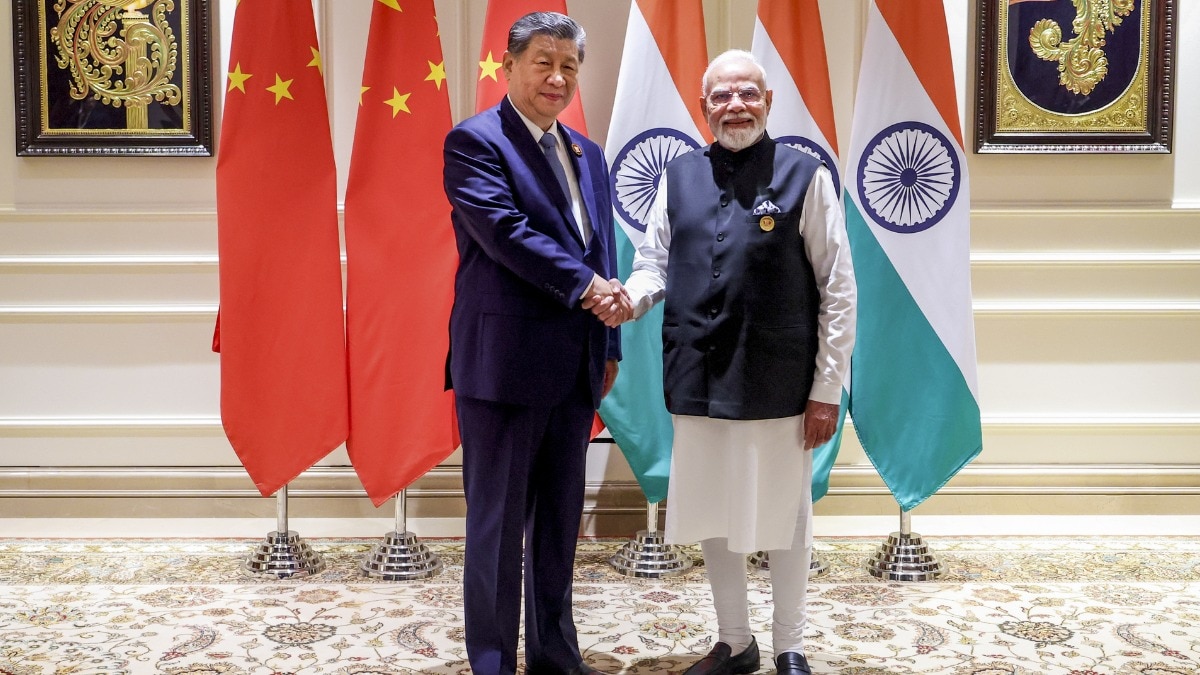
During the BRICS Summit, PM Modi and President Xi Jinping held a 50-minute bilateral meeting. While both nations expressed a desire to improve ties, their official statements reveal a significant gap in how they view border peace.
- PM Modi and President Xi Jinping held a 50-minute bilateral meeting during the BRICS Summit.
- India emphasized that border peace is the fundamental prerequisite for bilateral ties.
- China focused on mutual respect and understanding to overcome obstacles.
- Both nations expressed interest in boosting trade and cultural exchanges.
In a high-stakes diplomatic encounter at the 18th BRICS Summit, Prime Minister Narendra Modi and Chinese President Xi Jinping engaged in a 50-minute bilateral meeting. The discussion aimed to navigate the complex waters of India-China relations, focusing on border stability, trade, and strategic cooperation. However, the subsequent press releases from both nations highlighted a distinct difference in diplomatic priority and framing.
The Chinese Perspective: Partnership over Rivalry
China's official statement attempted to shift the narrative from confrontation to cooperation. Beijing suggested that India and China should view each other as partners rather than rivals. The Chinese communique emphasized a strategic and long-term view, suggesting that both nations should leverage each other's strengths while respecting their unique domestic circumstances. Regarding the border, China advocated for resolving obstacles through 'mutual respect' and 'mutual understanding.'
China's strategy appears to be decoupling border tensions from broader bilateral relations, seeking to maintain a functional status quo.China indicated that while efforts to resolve the border dispute should continue, it should not impede the overall progress of bilateral relations.
The Indian Stance: Peace as a Prerequisite
In stark contrast, India's position was uncompromising and security-centric. The Indian statement explicitly stated that peace and tranquility on the border are the essential foundation upon which the future of India-China relations must be built. Unlike China, India did not separate the border issue from the broader relationship, making it clear that normalcy at the LAC is non-negotiable.
Why This Matters
BozokMedia analysis shows that India is employing a 'stability-first' doctrine. By insisting on the strict adherence to existing agreements and mutual understandings, India is signaling that it will not allow economic or strategic engagement to mask territorial incursions. This clarity is a significant evolution in India's proactive diplomacy on the global stage.
Issue China's Stance India's Stance Basis of Relations Mutual respect and understanding Border peace and stability Border Dispute Continue resolution efforts alongside ties Strict adherence to existing agreements Core Approach Strategic partnership/Cooperation Security-first/Foundational peace During the meeting, PM Modi articulated three 'Mutual' pillars: Mutual Respect, Mutual Sensitivity, and Mutual Interest. This framework serves as a litmus test for any future engagement with Beijing, ensuring that India's sovereignty remains the primary concern.
Did You Know?: This was the first significant bilateral meeting between the two leaders following the tensions in the Galwan Valley.Frequently Asked Questions
1. Has the border dispute been resolved through this meeting?
No, while there was a commitment to maintain peace, the underlying territorial issues remain a subject of ongoing diplomatic engagement.2. What was India's main message to China?
India's core message was that bilateral relations cannot progress effectively without peace and stability on the border.
