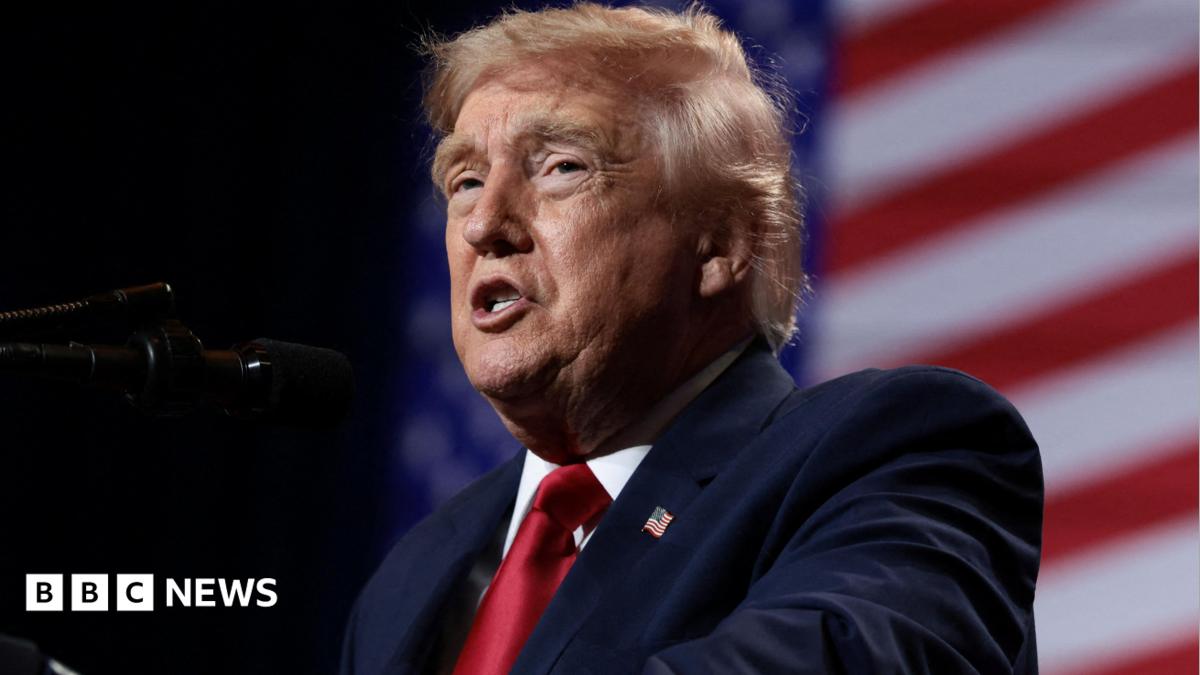
U.S. President Donald Trump's remarks expressing a desire to see a unified Ireland have ignited intense debate. While officials downplay a policy shift, analysts suggest a strategic move to capture the Irish-American vote.
- President Trump expressed a desire to see a 'unified Ireland' during his Dublin visit.
- U.S. officials maintain commitment to the existing Good Friday Agreement.
- The remarks coincide with critical upcoming U.S. midterm elections.
DUBLIN: When a world leader meets Donald Trump, uncertainty is the only guarantee. This was precisely the atmosphere surrounding the President's two-day visit to Ireland. In a move that caught diplomats and locals alike off guard, Trump expressed his desire to see a unified Ireland, a statement that has sent shockwaves across the island and the United Kingdom.
Diplomatic Repercussions and Clarifications
The immediate reaction from Washington was one of cautious damage control. Former Republican Congressman Mick Mulvaney, who served as a special envoy to Northern Ireland, cautioned against overinterpreting the remarks. He emphasized that this does not represent a shift in U.S. foreign policy and that the administration remains committed to the Good Friday Agreement. Similarly, Democratic Congressman Brendan Boyle noted that bipartisan support for the peace deal remains unshakable.
Why This Matters
BozokMedia analysis shows that Trump's rhetoric often serves dual purposes. While his comments appeared to address Irish sovereignty, the timing suggests a calculated effort to resonate with a specific demographic in the United States. By weaving through various topics—from illegal immigration to defense production—Trump utilized his signature 'weave' speaking style to dominate the news cycle.
Trump's remarks may be less about Irish geopolitics and more about the delicate math of the American electorate.
Historical Background: The Peace Process
The stability of the region relies heavily on the Good Friday Agreement, which laid the groundwork for peace between Unionists and Nationalists. Historically, U.S. Presidents have played a role in maintaining this balance, most notably Bill Clinton, who secured significant Irish-American support by engaging deeply in the peace process.
The Electoral Angle: Targeting the Irish-American Vote
With the November midterm elections fast approaching, the Republican Party is under intense pressure. Approximately one-tenth of the U.S. population claims Irish heritage. While not a monolithic voting bloc, Irish-American swing voters are crucial. Analysts suggest that by championing the cause of a unified Ireland, Trump may be attempting to court independent voters who have historically fluctuated between parties.
| Aspect | Official US Policy | Trump's Remarks |
|---|---|---|
| Goal | Maintain Good Friday Agreement | Desire for Unified Ireland |
| Focus | Regional Stability | Potential Voter Engagement |
Frequently Asked Questions
1. Does this mean the US will support a border poll?
While Trump expressed personal sentiment, official U.S. policy remains focused on upholding the existing peace frameworks.
2. How significant is the Irish-American vote?
It is a significant demographic that can influence swing states, making their cultural and political interests highly relevant to presidential candidates.