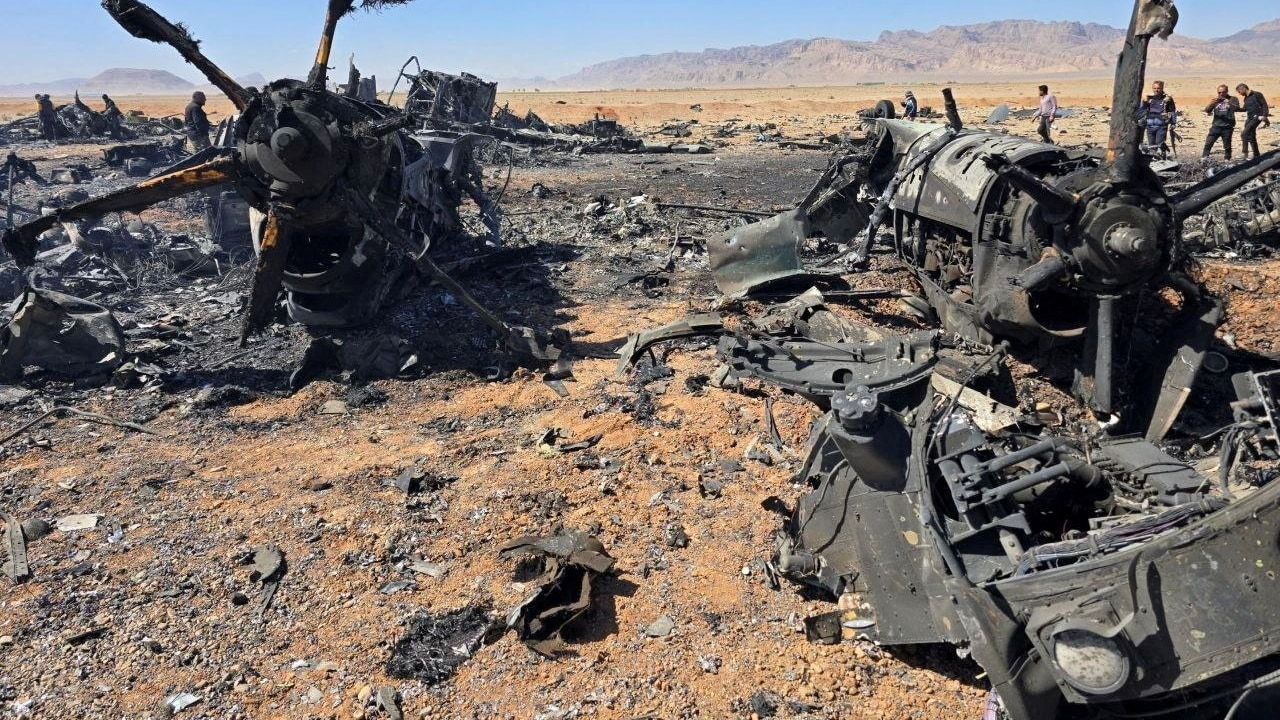
A US fighter pilot's harrowing 50-hour ordeal in Iran has been described as a 'modern-day miracle.' Despite broken bones, he conquered 7,000-foot elevations to survive.
- A US fighter pilot survived a crash in the hostile terrain of Iran.
- Despite suffering broken bones, the pilot completed a grueling 7,000-foot ascent.
- The survival ordeal lasted approximately 50 hours under extreme conditions.
In a gripping interview with CBS' 60 Minutes, a US fighter pilot known as 'Bravo' recounted a survival story that has been hailed as a "modern-day miracle." The incident began when his aircraft crashed within the borders of Iran, placing him in a high-stakes environment where every second counted toward his survival or capture.
The physical toll of the crash was catastrophic. Bravo suffered multiple broken bones, making even the simplest movement an agonizing feat of endurance. However, instead of succumbing to his injuries, he embarked on a desperate journey through the rugged, high-altitude terrain of Iran to find a way to safety.
Why This Matters
BozokMedia analysis shows that this incident transcends simple military survival; it highlights the extreme psychological resilience required in modern warfare and the critical importance of survival training in hostile geopolitical zones.
Bravo's ability to navigate 7,000 feet of vertical terrain while physically broken is a testament to the limits of human endurance.
Over the course of 50 grueling hours, the pilot battled dehydration, extreme temperatures, and intense physical pain. His ability to scale 7,000-foot peaks with shattered bones remains one of the most astonishing feats of individual survival recorded in recent military history.
Historical Background
Survival stories of downed aviators in enemy territory have long been a staple of military history, but the specific combination of severe physical trauma and the extreme topography of the Iranian landscape makes this particular case uniquely harrowing.
Frequently Asked Questions
1. How long was the pilot stranded?
The pilot endured a survival struggle lasting approximately 50 hours.
2. What were the pilot's primary injuries?
The pilot suffered from broken bones and had to navigate extreme elevations.