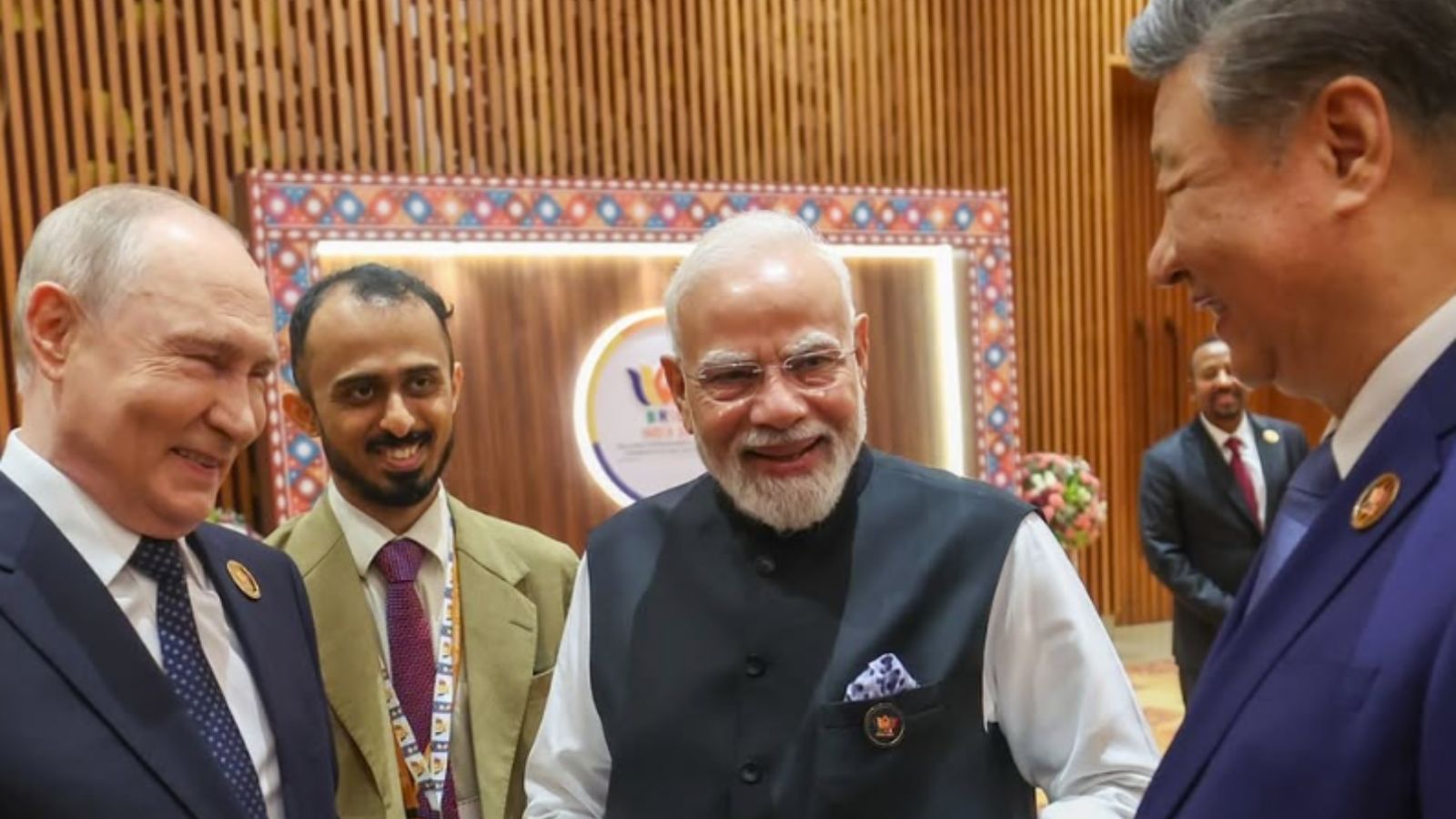
The BRICS summit has showcased a significant shift in global dynamics, with visual evidence of engagement between leaders of India, Russia, and China. As Prime Minister Modi advocates for diplomacy, the group moves toward a more multipolar world order.
- Increased diplomatic engagement observed between India, Russia, and China at the BRICS Summit.
- PM Modi emphasized 'dialogue and diplomacy' as the primary tools for conflict resolution.
- Russia proposed new grain trade and insurance mechanisms to bypass Western sanctions.
The recent BRICS Summit has sent ripples through the corridors of global power. The group photographs featuring Prime Minister Narendra Modi, Russian President Vladimir Putin, and Chinese President Xi Jinping are being analyzed by experts not just as diplomatic formalities, but as indicators of a shifting geopolitical landscape. These images suggest a growing convergence among the leaders of the Global South.
During the summit, Prime Minister Modi reiterated his stance on maintaining peace through 'dialogue and diplomacy.' This position is crucial as India navigates complex relationships, including the ongoing tensions with China and its longstanding strategic partnership with Russia. By emphasizing diplomacy, India is positioning itself as a stabilizing force in an increasingly volatile world.
Why This Matters
BozokMedia analysis shows that the cohesion within BRICS is evolving from purely economic cooperation to strategic political alignment. As the group expands, it challenges the traditional dominance of Western-led institutions. For India, the challenge lies in balancing its growing ties with the West while fostering cooperation within the BRICS framework to ensure its own strategic autonomy.
The visual of the three leaders together signals to the world that the era of unipolarity is rapidly giving way to a complex, multipolar reality.
President Putin's agenda at the summit was notably focused on economic resilience. In an attempt to circumvent international sanctions, he proposed the development of independent BRICS-led systems for grain trade and insurance. This move aims to secure the food supply chain and financial independence for member nations, potentially creating a parallel global economic infrastructure.
Historical Background
Since its inception, BRICS has served as a platform for emerging economies to demand a greater say in global governance. What began as an economic bloc has transformed into a significant geopolitical entity. The inclusion of new members and the strengthening of ties between original members like India and China are pivotal moments in the history of modern international relations.
Frequently Asked Questions
1. What is the significance of the Modi-Putin-Xi interactions?
These interactions signal a potential for dialogue in regions where tensions exist, such as the borders between India and China, and highlight the importance of BRICS in shaping global policy.
2. How does Russia plan to fight sanctions through BRICS?
Russia is pushing for localized trade mechanisms, specifically in agriculture and insurance, to reduce dependency on Western-controlled financial systems.