In a monumental shift in British politics, leaders from Scotland, Wales, and Northern Ireland have signed a historic MoU to break away from Westminster's control and pursue self-determination.
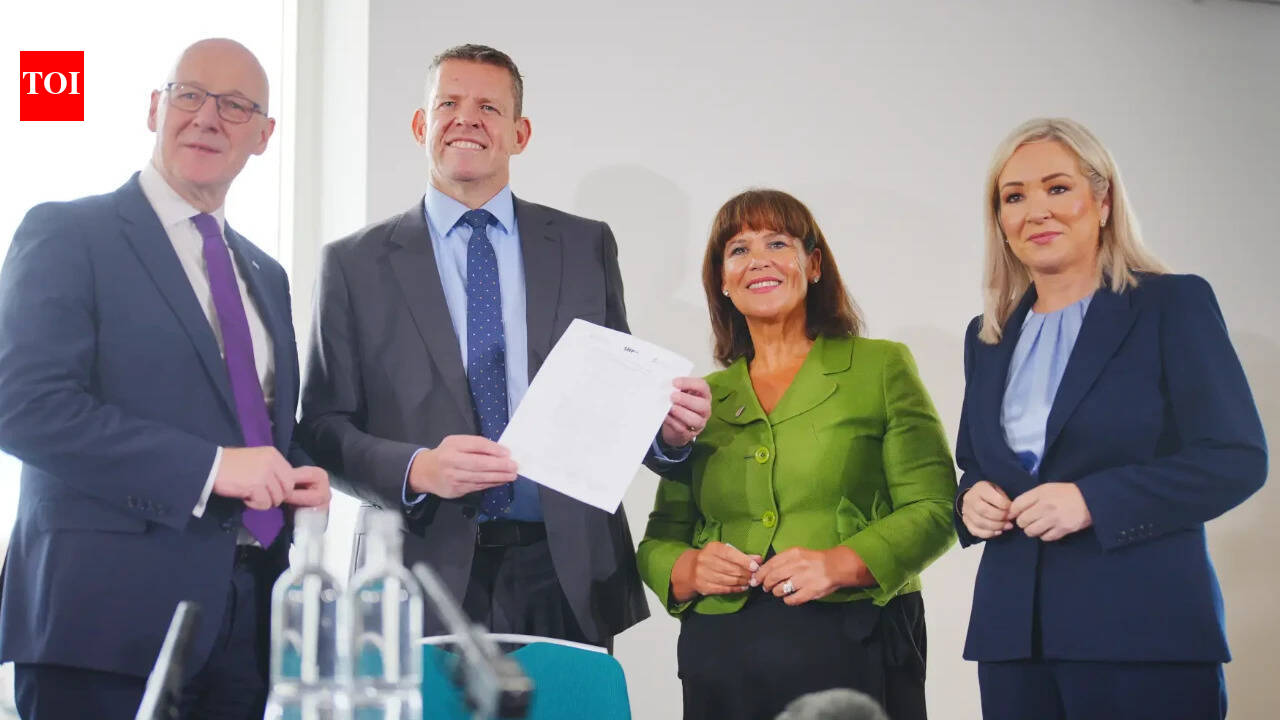
- Elected representatives from Scotland, Wales, and Northern Ireland signed a historic MoU in Cardiff.
- The pact declares intent to break free from Westminster's control and exercise self-determination.
- Key leaders including John Swinney, Rhun ap Iorwerth, and Michelle O'Neill are signatories.
- The nations aim to cooperate on economy and energy, with a goal of rejoining the EU.
LONDON: The political foundations of the United Kingdom are facing an unprecedented challenge. On Monday, elected representatives from three devolved legislatures—Scotland, Wales, and Northern Ireland—signed a landmark Memorandum of Understanding (MoU) declaring their intent to sever ties with Westminster. The summit, held in Cardiff, signals a coordinated movement toward independence that could reshape the British Isles forever.
The historic signing involved Scottish First Minister John Swinney, Welsh counterpart Rhun ap Iorwerth, and Northern Ireland’s Michelle O’Neill. Adding significant weight to the movement, Sinn Féin President Mary Lou McDonald also joined as a signatory. The document explicitly states that the political landscape is shifting, noting that for the first time, the leaders of these nations are collectively committed to independence from the United Kingdom.
Why This Matters
BozokMedia analysis shows that this is not merely a symbolic gesture but a structural threat to the Union. The recent victory of Plaid Cymru in the Welsh Senedd elections has fundamentally altered the balance of power, ending decades of Labour Party dominance and ensuring that the largest parties in all three devolved parliaments are now pro-independence. This alignment creates a formidable political bloc that Westminster can no longer easily ignore.
"The signing of this MoU serves as a definitive signal that the era of centralized Westminster control is facing its most significant existential threat in decades."
The MoU emphasizes the right to self-determination, asserting that no British government has the right to block democracy or undermine the will of the people. Beyond political sovereignty, the signatory nations have committed to strengthening cooperation in vital sectors such as the economy and energy resources, driven by a shared consensus that their future lies within the European Union (EU).
Historical Background
The concept of devolution—transferring power from the central government to regional legislatures—began in earnest in 1999. However, rather than stabilizing the Union, devolution has provided the institutional framework for regional identities to strengthen. The growing desire for independence in Scotland and the complex political dynamics in Northern Ireland have now converged with a newfound momentum in Wales, creating a unified front for secession.
Frequently Asked Questions
Question 1: What is the primary goal of the MoU?
Answer: The primary goal is to establish a framework for Scotland, Wales, and Northern Ireland to pursue independence and self-determination from the UK government.
Question 2: How has the UK government responded?
Answer: While PM Andy Burnham has focused on the cost-of-living crisis, Conservative critics have dismissed the meeting as a 'separatist summit' and a 'performative photo call.'