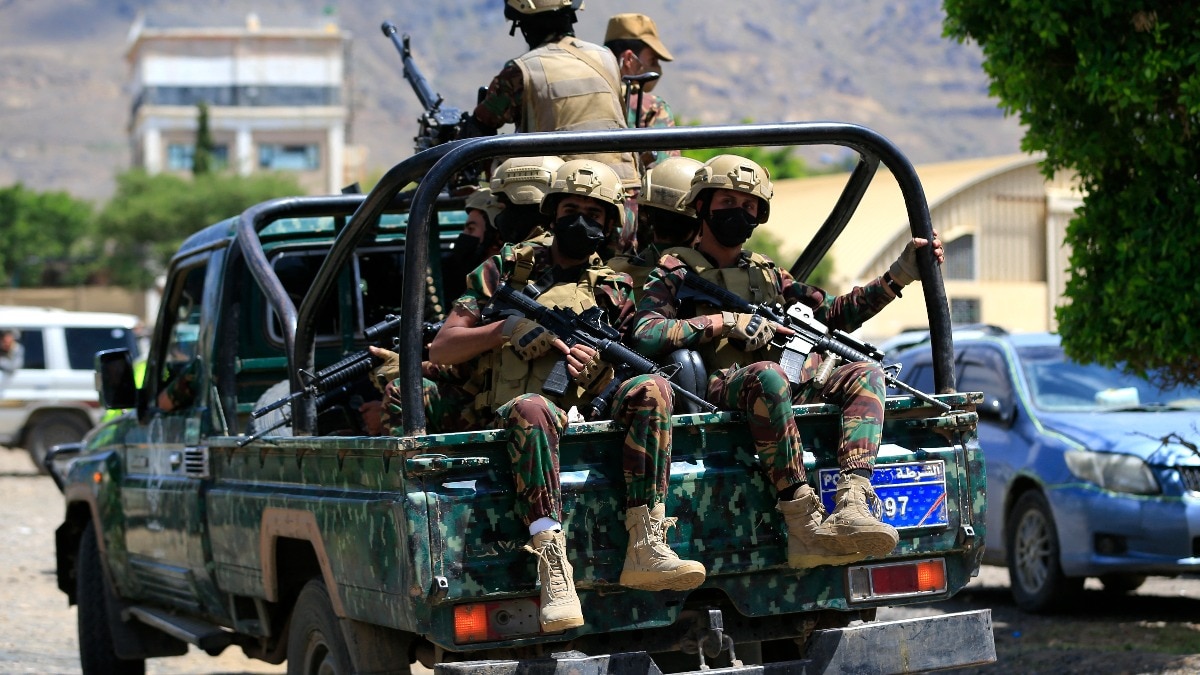
Facing a massive security crisis due to Houthi attacks on the Red Sea, Saudi Arabia has reportedly approached Israel for intelligence assistance via US Centcom.
- Houthi militants have seized control over much of Yemen's Red Sea coast and the Bab el-Mandeb Strait.
- Pakistan, a key Mecca Pact partner, has refused to deploy assets for combat on foreign soil.
- Saudi Crown Prince MBS has indirectly approached Israel for intelligence via US Central Command.
- The US and UK have ruled out direct military strikes against Ansar Allah militants.
The oil-rich Gulf nation of Saudi Arabia is navigating a period of unprecedented geopolitical turbulence. Following a massive offensive by Houthi militants (Ansar Allah) along Yemen's Red Sea coast and the strategic Bab el-Mandeb Strait, Riyadh finds itself in a desperate search for security solutions. The crisis has exposed significant cracks in traditional regional alliances.
In a major diplomatic setback for Riyadh, Pakistan—a vital member of the Mecca Defence Alliance and a long-standing security partner—has reportedly declined to intervene in the Yemeni conflict. While Islamabad has affirmed its commitment to defending Saudi soil, it has drawn a definitive 'red line' against participating in military operations on foreign territory, leaving the Kingdom without its expected regional muscle.
Why This Matters
BozokMedia analysis shows that this move represents a seismic shift in Middle Eastern power dynamics. For years, the refusal to recognize Israel has been a cornerstone of Saudi foreign policy. However, the imminent threat to global maritime trade routes and the Kingdom's own sovereignty is forcing a pragmatic, albeit indirect, pivot toward intelligence sharing with Jerusalem. This highlights a transition from ideological warfare to survival-based realpolitik.
The Houthi blitz has forced Riyadh into a corner where survival necessitates outreach to its most unexpected partner: Israel.
According to reports from The Jerusalem Post and Israel Hayom, the outreach is being conducted through a backchannel mediated by the US Central Command (Centcom). Saudi Crown Prince Mohammed bin Salman (MBS) is seeking high-level intelligence assistance to monitor and counter threats within the Bab el-Mandeb Strait, a critical chokepoint for global oil and trade.
While the Kingdom does not officially recognize Israel as an independent state, the gravity of the Houthi threat has rendered traditional diplomatic barriers secondary to national security. This indirect communication marks a significant evolution in the clandestine security architecture of the Middle East.
Simultaneously, the Kingdom's Western allies have offered limited support. While the United States and the United Kingdom have provided intelligence and military advisors, they have explicitly ruled out direct kinetic strikes on Houthi positions in Yemen, leaving Saudi Arabia to manage the immediate tactical fallout largely on its own.
Historical Background
The Bab el-Mandeb Strait is one of the world's most vital maritime passages. For decades, the stability of Yemen has been intrinsically linked to the security of the Arabian Peninsula. The rise of the Houthi movement has transformed a localized civil war into a global maritime security crisis, affecting everything from insurance premiums to global energy prices.
Frequently Asked Questions
Question 1: Why won't Pakistan fight in Yemen?
Answer: Pakistan has maintained that while it will defend Saudi borders, it will not engage in combat operations on foreign soil, citing its own strategic constraints.
Question 2: Is Saudi Arabia officially recognizing Israel?
Answer: No, the outreach remains indirect and mediated by the US, focused purely on intelligence and security rather than formal diplomatic recognition.