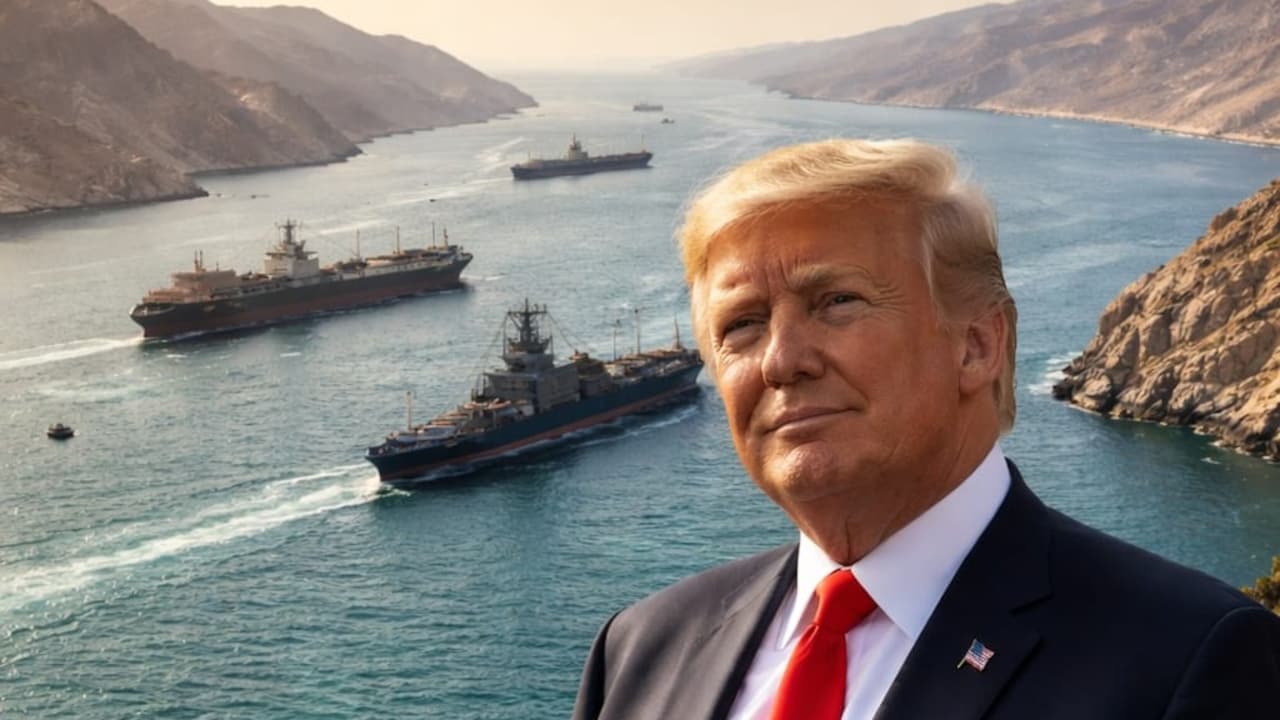
Former President Donald Trump has signaled that the United States should be compensated by other nations for the military costs incurred in securing the critical Strait of Hormuz.
- Trump highlighted the continuous movement of petroleum via the Strait of Hormuz.
- He contended that the US deserves financial reimbursement once military confrontations conclude.
- The statement underscores a transactional approach to US maritime security.
In a series of assertive posts on his platform Truth Social, former President Donald Trump has sparked a global conversation regarding the costs of maritime security. Trump highlighted that despite ongoing tensions, petroleum shipments continue to move through the vital Strait of Hormuz, a chokepoint essential to the global economy.
Trump's core contention is that the United States should not bear the sole financial burden of securing this critical maritime route. He argued that once the military confrontation—implicitly referring to the tensions involving Iran—concludes, America ought to be compensated by the nations that benefit from the secure passage of their energy resources.
Why This Matters
BozokMedia analysis shows that Trump's rhetoric signals a shift toward a highly transactional foreign policy. By framing military protection as a service for which nations should pay, he is challenging the traditional post-WWII security architecture where the US acts as a global guarantor of free trade at its own expense.
Trump's stance could redefine international alliances, moving from collective security toward a 'pay-to-play' model for maritime stability.
The Strait of Hormuz is a geopolitical flashpoint. Any disruption in this narrow waterway can lead to immediate spikes in global oil prices, affecting economies worldwide. Trump's comments suggest that he views the US military's role in this region not just as a strategic necessity, but as a high-cost service that requires direct reimbursement.
Historical Background
The Strait of Hormuz has been a zone of intense geopolitical friction for decades. From the 'Tanker War' during the Iran-Iraq War to modern-day tensions regarding nuclear proliferation, the US Navy's presence has been pivotal in preventing total maritime collapse in the region. The strait connects the Persian Gulf with the Gulf of Oman and the Arabian Sea.
Frequently Asked Questions
1. What is the Strait of Hormuz?
It is a narrow waterway between Oman and Iran that serves as the world's most important oil transit point.
2. Why does Trump want compensation?
He believes the cost of securing global energy routes should be shared by the countries that profit from them, rather than solely by US taxpayers.
