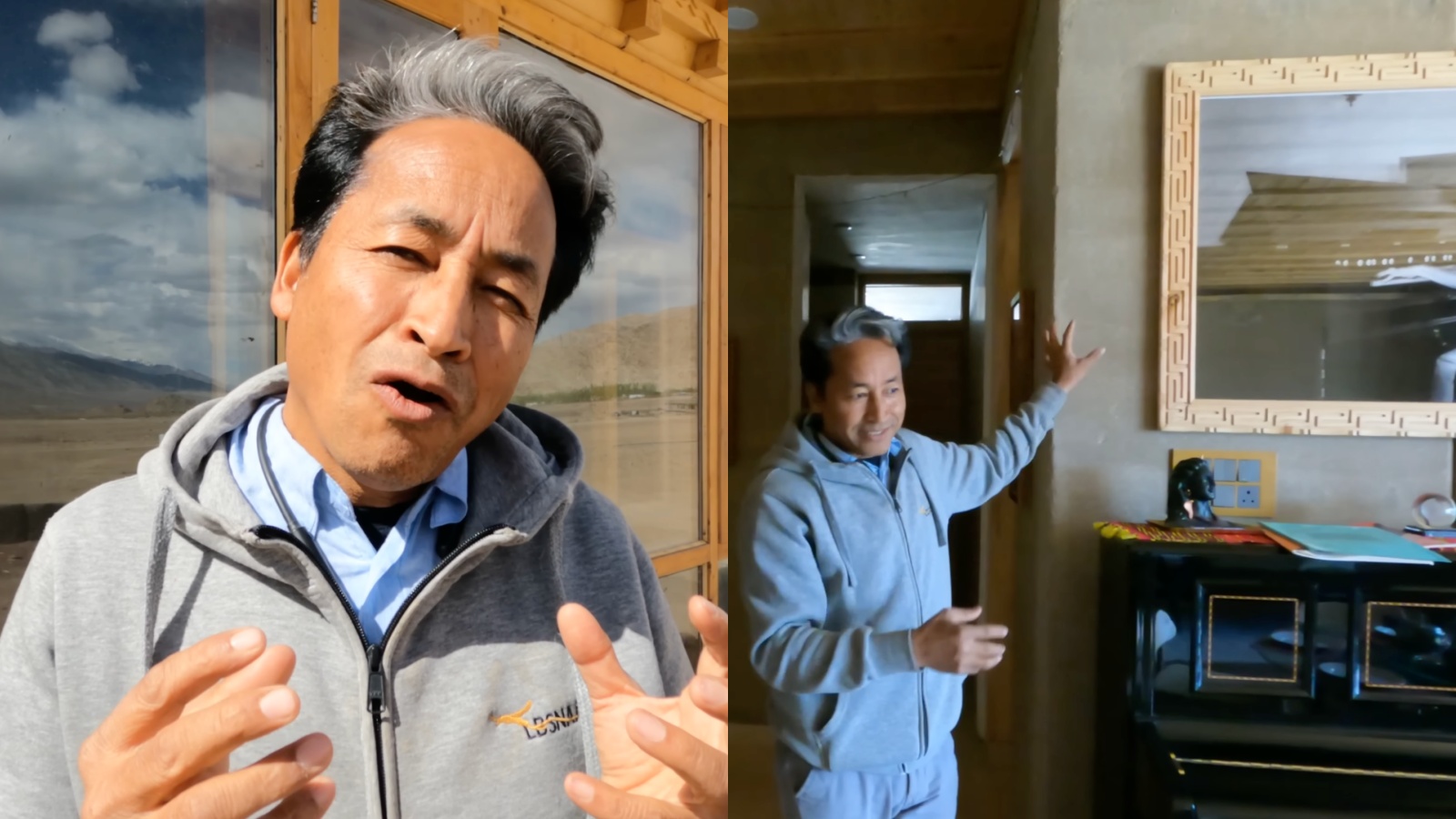
Climate activist Sonam Wangchuk showcases his sustainable Ladakhi residence, blending centuries-old Himalayan rammed-earth techniques with modern comfort and eco-friendly sanitation.
Key Takeaways
- Uses traditional rammed-earth walls for natural temperature regulation.
- Features passive solar heating using recycled water bottles.
- Employs urine-separated composting toilets instead of water-intensive flushes.
- Combines indigenous materials with contemporary modern interiors.
Renowned climate activist and educationist Sonam Wangchuk has provided a rare glimpse into his eco-conscious home in Ladakh. The residence serves as a powerful demonstration of how ancient Himalayan architectural wisdom can be seamlessly integrated with modern-day luxuries.
The construction relies heavily on rammed-earth walls, a method used for centuries across Ladakh, Kinnaur, and Tibet. These thick earthen walls act as natural insulators, keeping the interiors cool during the harsh summers and retaining warmth during the freezing winters.
Why This Matters
BozokMedia analysis shows that as the global community grapples with energy crises and water scarcity, Wangchuk's model offers a scalable solution for sustainable living. His home proves that high-quality living does not require a massive carbon footprint.
Integrating indigenous wisdom with modern necessity is the ultimate blueprint for future-proof architecture.
A standout feature is the passive solar heating system. By placing a black wall made of recycled water bottles behind large windows, the home captures solar energy during the day and releases it slowly at night, maintaining a stable temperature of 18-20°C without burning fuel.
Furthermore, the home addresses the water crisis through its ecological sanitation system. Instead of conventional flush toilets, Wangchuk uses urine-separated composting toilets. This system uses sawdust or mud to prevent odors and converts waste into organic manure, closing the loop of nutrient recycling.
Frequently Asked Questions
1. How does the house stay warm in winter?
It uses passive solar heating via recycled bottles and thick rammed-earth walls to trap and release heat.
2. What is the benefit of a composting toilet?
It drastically reduces water consumption and turns human waste into useful organic fertilizer for farming.