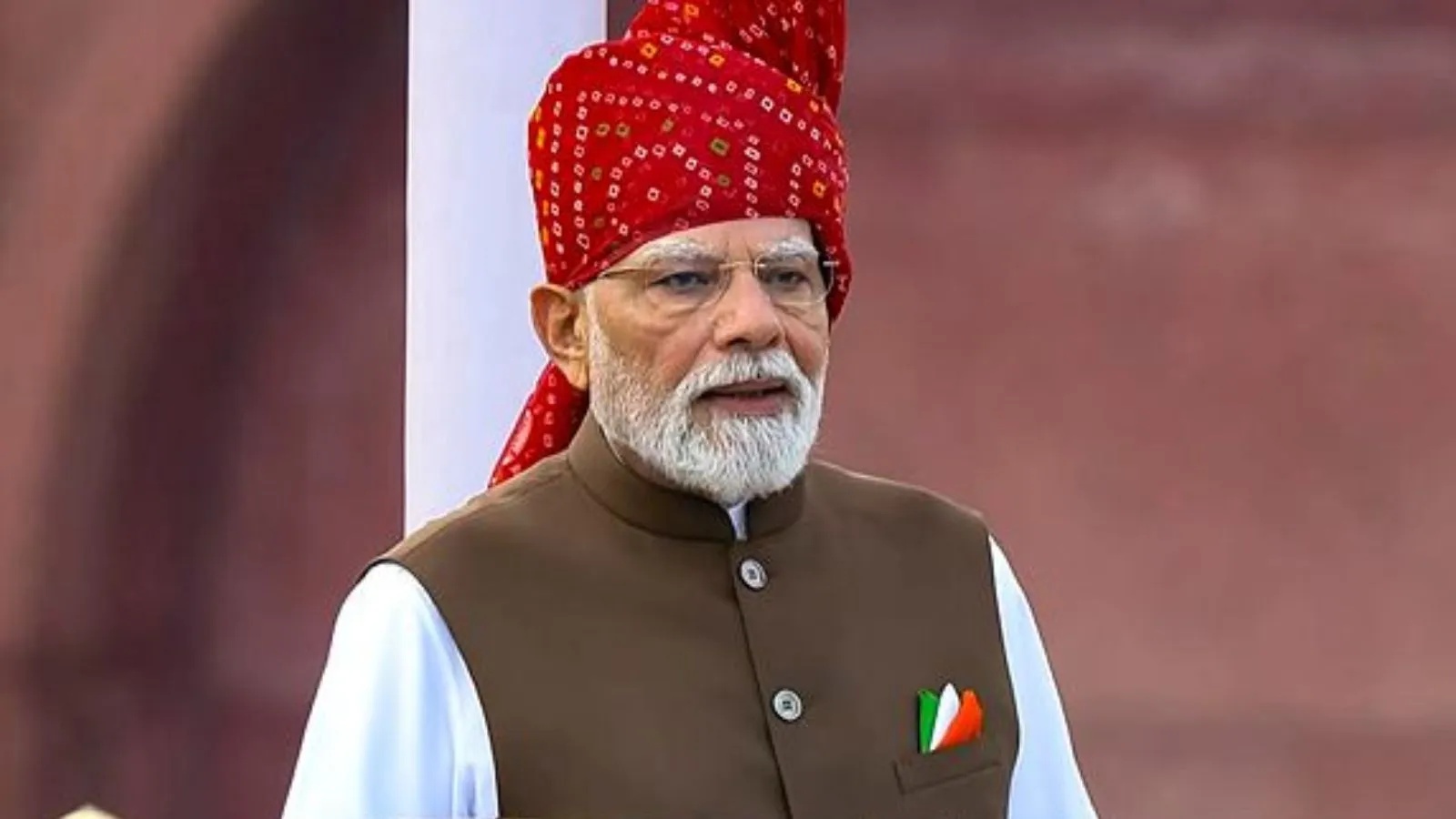
Prime Minister Narendra Modi made a bold fashion statement at the Red Fort this Independence Day with a handcrafted red Bandhani turban. The choice reflects deep cultural symbolism and a nod to his historic 2014 debut.
Key Takeaways
- PM Modi wore a traditional Rajasthani red Bandhani turban for the 80th Independence Day.
- The handcrafted attire promotes the 'Make in India' and 'Vocal for Local' initiatives.
- The look creates a full circle with his first Red Fort address in 2014.
- Bandhani represents honor, courage, and auspicious beginnings in Indian culture.
Prime Minister Narendra Modi addressed the nation from the historic Red Fort on Saturday, marking India's 80th Independence Day. In a characteristic display of cultural pride, the 75-year-old leader sported a striking, handcrafted red Bandhani turban from Rajasthan, featuring a long, elegant trailing end.
Complementing his white kurta-pyjama and chocolate-brown Nehru jacket, the Prime Minister added a patriotic touch with a tricolour pocket square. Fashion experts note that the red turban is not merely an accessory but a symbol of celebration and courage, deeply rooted in the traditions of Rajasthan and Gujarat.
Why This Matters
BozokMedia analysis shows that PM Modi’s sartorial choices serve as a powerful tool for cultural diplomacy. By consistently choosing indigenous textiles, he amplifies the message of 'Vocal for Local', turning every national address into a showcase of Indian craftsmanship and economic empowerment for local weavers.
"The turban is the visual centerpiece of the ensemble, signifying a rooted Indian identity that embraces modern progress."
Interestingly, this year's choice brings his journey full circle. In 2014, during his very first address from the ramparts of the Red Fort, PM Modi wore a bright red Bandhej turban. The 2026 version, a more refined maroon shade, serves as a sophisticated nod to the beginning of his tenure.
Historical Background
Bandhani is an ancient tie-and-dye technique where fabric is intricately tied with thousands of tiny knots before being dipped in vibrant dyes. This labor-intensive process can take weeks to complete, making each piece a unique work of art. Major hubs for this craft include Jodhpur, Jaipur, Udaipur, and Kutch.
Frequently Asked Questions
1. What is the significance of the Bandhani turban?
It symbolizes honor, auspicious beginnings, and represents the rich heritage of Indian handloom.
2. Which regions are famous for Bandhani craft?
The craft is most prominent in Rajasthan and Gujarat, specifically in cities like Jodhpur and Jamnagar.