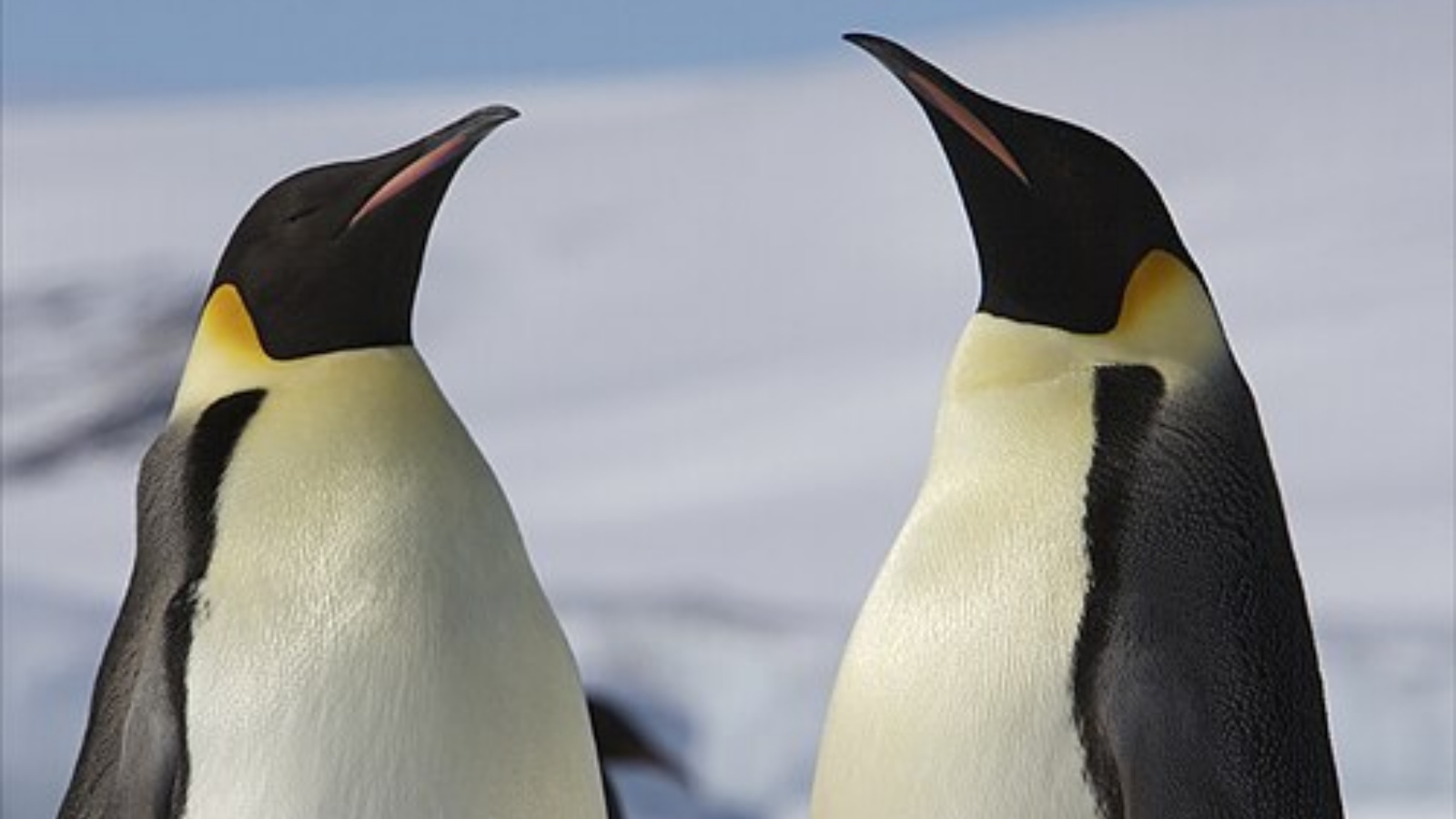
From the towering Emperor penguins to the colossal Blue whales, Antarctica's wildlife has evolved extraordinary mechanisms to thrive in Earth's harshest environment. Discover the animals that call the frozen continent home.
- Antarctic wildlife has evolved unique biological adaptations to survive extreme cold and darkness.
- Antarctic krill serve as the foundational energy source for the entire Southern Ocean food web.
- The ecosystem features a complex hierarchy from tiny crustaceans to the largest mammals on Earth.
Antarctica may appear to be a desolate, icy wasteland, but beneath its frozen exterior and within the surrounding Southern Ocean lies one of the most sophisticated ecosystems on the planet. The continent's inhabitants have mastered the art of survival against brutal winds and temperatures that can drop below -50°C.
The Avian Icons of the Ice
The Emperor Penguin stands as the most iconic resident of the frozen south. As the largest penguin species, they are renowned for their grueling breeding cycle. In a remarkable display of parental devotion, males incubate eggs on their feet for two months during the peak of winter while females forage in the ocean.
In contrast, the Adélie Penguin is the energetic opportunist of the region. Known for their diving prowess—reaching depths of 150 meters—they exhibit fascinating social behaviors, including the habit of stealing pebbles from neighboring nests to build their own.
Apex Predators of the Southern Ocean
The Leopard Seal is the undisputed terror of the ice floes. With powerful jaws and an agile swimming style, it hunts everything from fish to penguins. Meanwhile, the Weddell Seal demonstrates a different kind of mastery, using its teeth to maintain breathing holes in thick sea ice, allowing it to stay submerged for over an hour.
The biological resilience of Antarctic species is a testament to evolution, but their specialization makes them highly vulnerable to rapid environmental shifts.
Why This Matters
BozokMedia analysis shows that the stability of the Antarctic ecosystem is precariously balanced on a single organism: the Antarctic Krill. These shrimp-like crustaceans are the primary food source for almost every larger animal in the region. Any disruption in krill populations due to ocean acidification or warming could trigger a catastrophic collapse of the regional biodiversity.
The giants of the ocean, including the Blue Whale and the Orca, rely on this abundance. Blue whales migrate thousands of miles to feed on krill, while Orcas utilize high-level intelligence and cooperative hunting tactics, such as creating artificial waves to knock seals off ice platforms.
| Animal | Survival Strategy | Primary Diet |
|---|---|---|
| Emperor Penguin | Huddling & Brood Pouch | Fish, Krill |
| Weddell Seal | Ice-hole Maintenance | Fish, Squid |
| Orca | Cooperative Hunting | Seals, Penguins |
Frequently Asked Questions
Q1: Which animal is the most important for Antarctica's ecosystem?
A: The Antarctic krill, as it forms the base of the food chain for whales, seals, and penguins.
Q2: How do animals survive the months of total darkness?
A: Many species migrate to warmer waters, while others rely on stored fat reserves and specialized metabolic adaptations.