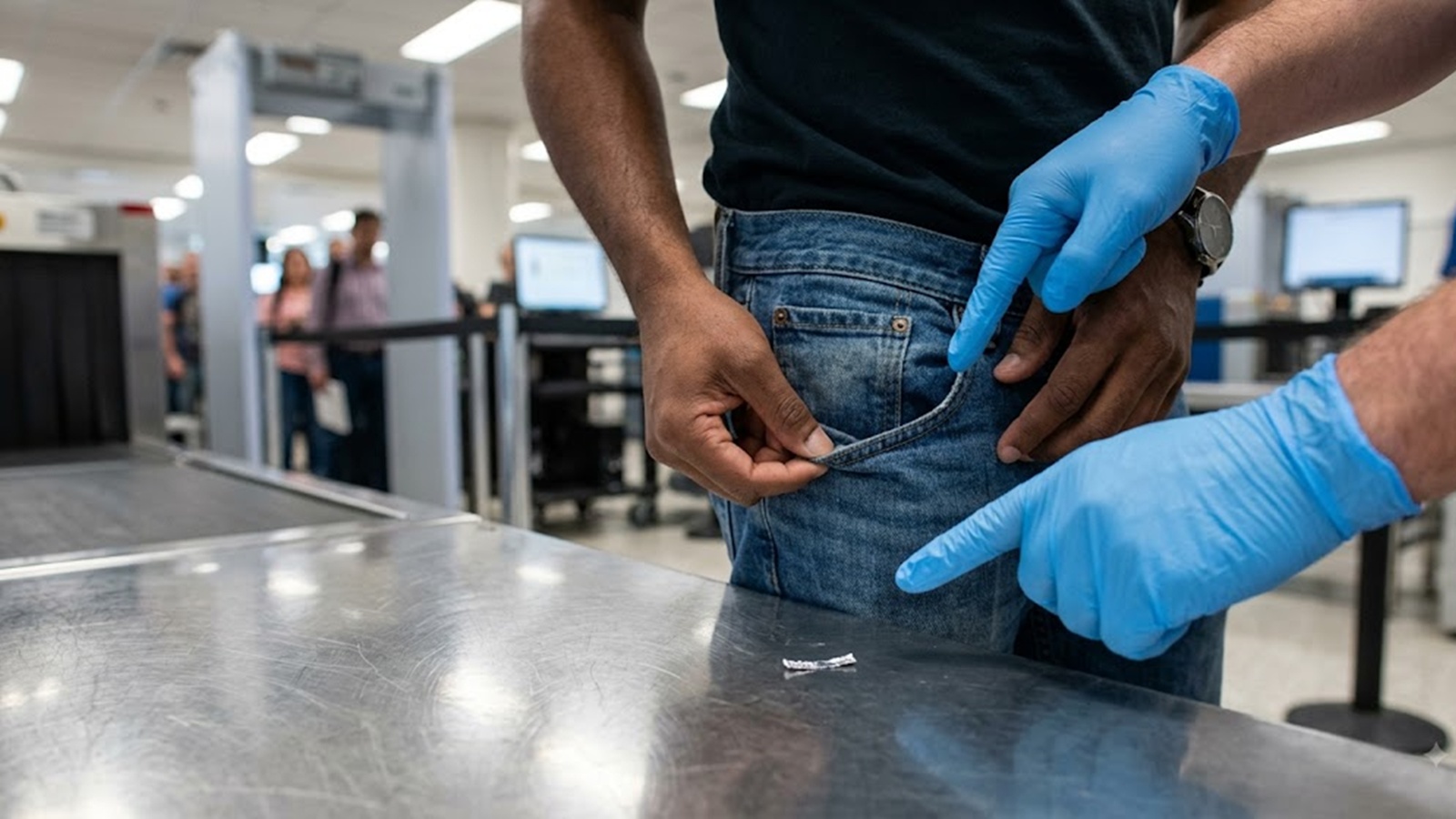
Filmmaker JD Majethia's recent experience reveals how a discarded piece of medicine foil can lead to unexpected security delays and manual pat-downs at airports.
- Small aluminum foil or medicine strips in pockets can trigger metal detectors.
- Such items often lead to manual bag checks or body pat-downs, causing delays.
- Emptying all pockets completely before screening is the most efficient way to avoid delays.
A seemingly harmless leftover in your pocket can lead to an unexpected and stressful delay at airport security. This was the reality for JD Majethia, a renowned director, filmmaker, and actor, who recently shared his ordeal across two different Indian airports, including Hyderabad.
Majethia took to Instagram to warn fellow travelers, revealing that a tiny, discarded piece of a medicine strip hidden deep in his pant pocket was the culprit behind repeated security alerts. While the first airport's security failed to identify the source and eventually let him pass, the second screening resulted in a thorough search that finally uncovered the small metallic fragment.
Why This Matters
BozokMedia analysis shows that there is a common misconception among travelers that only large metallic objects—like keys or coins—trigger alarms. However, aviation security equipment is calibrated for extreme sensitivity. Aluminum foil, despite its size, possesses physical characteristics that reflect electromagnetic waves, triggering the Hand Held Metal Detector (HHMD).
"An alarm simply indicates that the screening equipment has detected a characteristic requiring further assessment; it does not, by itself, indicate that the object is dangerous."
Aviation expert Dhairyashil Vandekar explained that the response of the equipment depends on the sensitivity of the device, the amount of metallic material, and its location on the body. Because the machine cannot distinguish between a piece of foil and a dangerous metallic object, a secondary check is mandatory to resolve the alert.
To avoid such inconveniences, experts suggest that passengers should place all medicine strips and other small metallic personal items in the screening tray. This proactive approach ensures a smoother flow in the security queue and prevents unnecessary scrutiny.
| Item | Security Impact | Recommendation |
|---|---|---|
| Large Metals (Belts/Keys) | Immediate Alert | Place in Tray |
| Medicine Foil (Small) | Intermittent/Additional Check | Empty Pockets Fully |
| Plastic Items | Generally No Alert | Proceed as Normal |
Frequently Asked Questions
Q1: Are medicine strips prohibited at airports?
No, they are not prohibited. However, keeping them in your carry-on bag instead of your pockets prevents security alarms from triggering.
Q2: Should I be worried if the metal detector beeps?
Not at all. It is a routine part of the security process. Personnel simply need to verify that the alert is caused by a benign object.