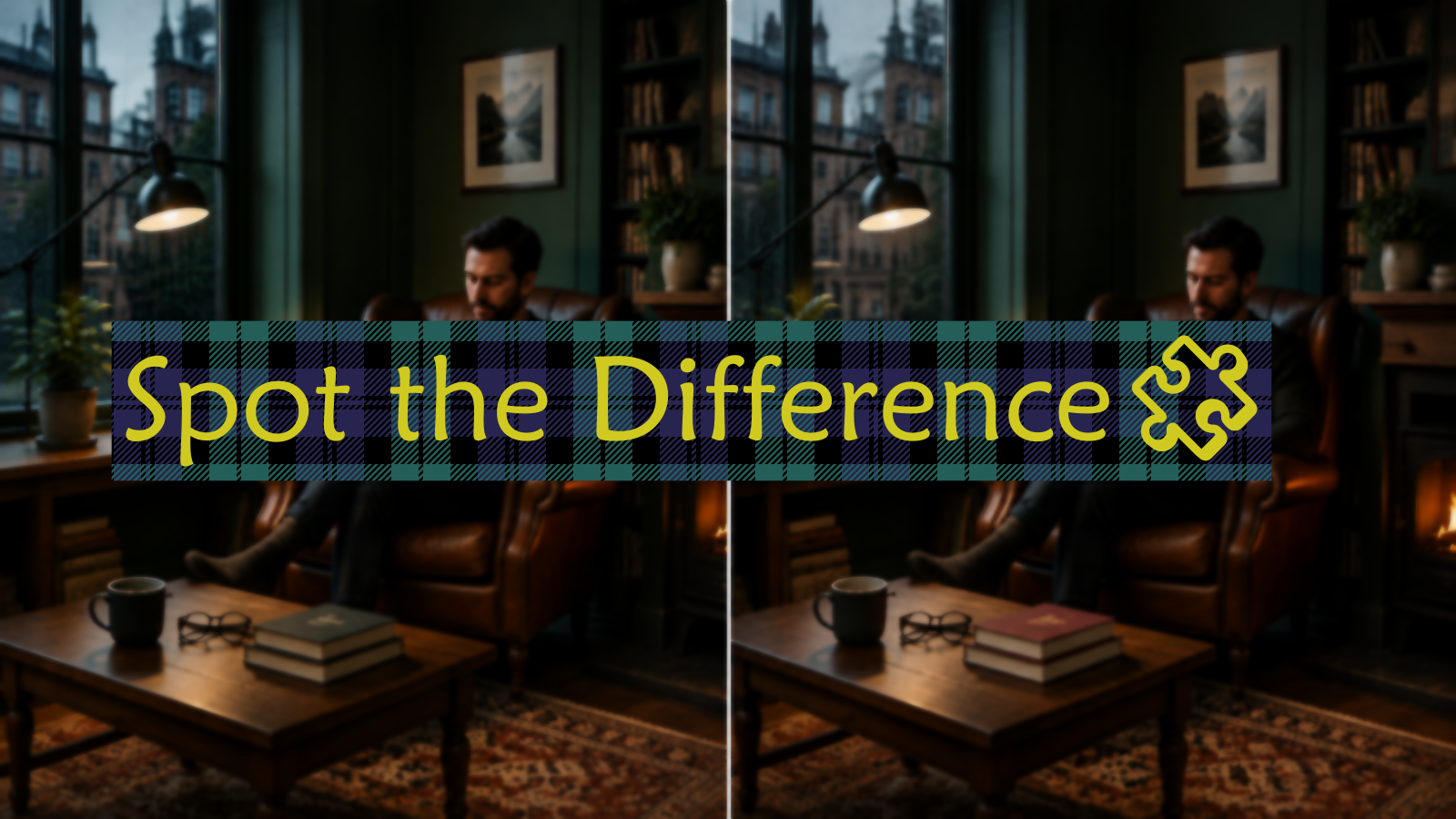
Test your observation skills with this intense 30-second visual challenge. Can you find all 5 subtle differences in the cozy fireplace scene?
- This challenge tests visual acuity and attention to detail.
- Psychologists suggest such tasks boost cognitive engagement.
- The 30-second timer increases focus and motivation.
Think you have a sharp eye? It is time to put your wits to the ultimate test! Today's 'Spot the Difference' challenge is designed to push your observational boundaries. We have presented two seemingly identical images of a man reading peacefully by a fireplace, but don't let the cozy atmosphere fool you.
Hidden within these two scenes are five subtle differences. This isn't your average children's puzzle; you might find yourself squinting to catch the tiny details that have been expertly camouflaged. Put your phone down, resist the urge to zoom in, and start your timer!
Why This Matters
BozokMedia analysis shows that engaging in rapid visual search tasks can significantly improve mental agility. In an era of constant digital distractions, training your brain to focus on minute details is a vital exercise for maintaining long-term cognitive health and concentration levels.
The desire to solve a puzzle correctly or beat a clock can turn a simple activity into a highly engaging psychological challenge.
The science behind the thrill is fascinating. According to Prerna Pant, a Psychologist at ISIC Multispeciality Hospital, Delhi, the brain naturally enjoys the pursuit of a goal. When we encounter a challenge, especially one with a ticking clock, our frustration can actually fuel our determination, leading to a heightened state of focus.
Historical Background: The Evolution of Visual Puzzles
Visual puzzles have been used for centuries to assess cognitive functions. From traditional optical illusions to modern AI-generated spot-the-difference challenges, these exercises have evolved alongside human technology, always serving the core purpose of testing human perception and pattern recognition.
Frequently Asked Questions
1. What is the best strategy to find the differences?
Instead of jumping around, scan the image systematically from top to bottom or left to right.
2. Why does the timer make it harder?
The time pressure activates a stress response that forces the brain to work faster, testing your ability to perform under pressure.