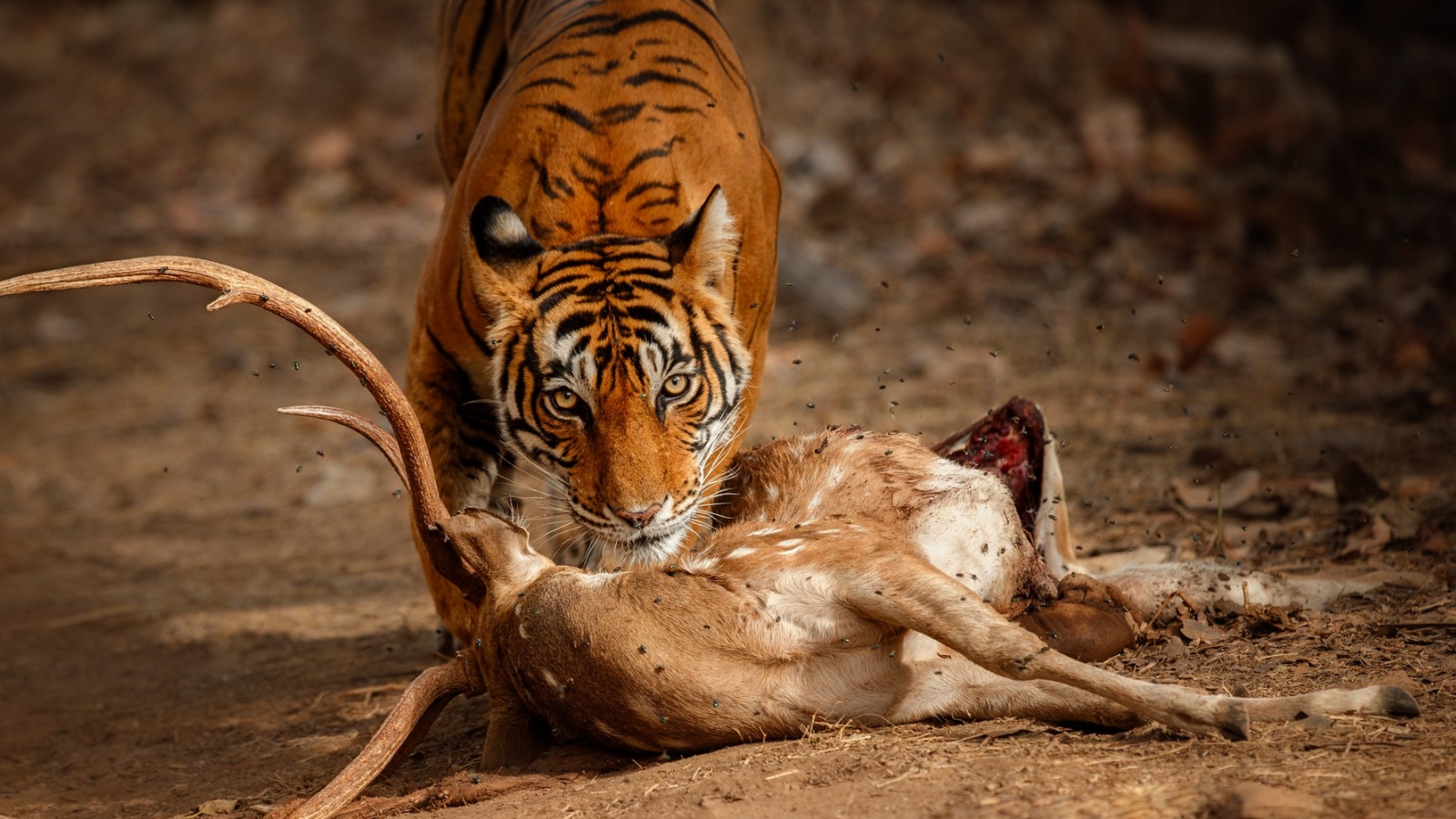
Environmentalists clarify the critical distinction between an animal that attacks in self-defense and a true 'man-eater' that hunts humans as a pattern. Learn why context is everything in wildlife encounters.
- Not every animal that kills a human is classified as a man-eater.
- A true 'man-eater' exhibits a consistent pattern of preying on humans.
- Injury, illness, and loss of natural prey are primary drivers of predatory shifts.
Wild animal attacks frequently dominate news headlines, creating a sense of terror. However, an encounter between humans and wildlife does not automatically mean an animal has developed a taste for human flesh. According to a BBC Future report, these encounters are often triggered by complex factors such as territorial protection, defending young, or responding to perceived threats.
Wildlife photographer and environmentalist Indrajit Ghorpade emphasizes the necessity of distinguishing between an aggressive animal and a genuine “man-eater.” According to Ghorpade, a man-eater is an individual that preys on humans as a consistent pattern of their behavior, rather than a single, isolated incident driven by fear or circumstance.
Why This Matters
BozokMedia analysis shows that mislabeling animals as man-eaters can lead to unnecessary retaliatory killings, which disrupts local ecosystems. Understanding the nuance between defensive aggression and predatory intent is vital for effective conservation and human safety. When we fail to distinguish the two, we lose the opportunity to address the root causes of conflict, such as habitat loss.
Man-eating animals are individuals that prey on humans as a pattern of their behavior.
A historical case study that illustrates this perfectly is the legendary Champawat Tiger. This tiger, famously hunted by conservationist Jim Corbett, had killed hundreds of people. However, the investigation revealed a biological cause: the tiger had lost its upper and lower canines. This injury made hunting natural, fast-moving prey nearly impossible, forcing the animal to rely on easier targets—humans.
Drivers of Abnormal Behavior
Several environmental and biological factors can push a wild animal toward human-centric predation:
- Physical Impairment: Injury or sickness that prevents hunting natural prey.
- Resource Depletion: A significant loss of natural prey species in the territory.
- Habitat Fragmentation: Increasing interaction with human settlements due to shrinking forests.
| Feature | Standard Attacker | True Man-Eater |
|---|---|---|
| Behavioral Intent | Defensive or Accidental | Predatory and Patterned |
| Primary Trigger | Fear, Territory, or Young | Food Source / Habit |
| Frequency | Isolated Incidents | Repeated Targeting |
Experts suggest that human-wildlife conflicts must be handled on a case-by-case basis. Killing an animal should always be the absolute last resort. Authorities must determine if an animal is truly exhibiting habitual man-eating behavior before intervening with lethal force, as many attacks are simply the result of animals being caught in human-dominated landscapes.
Frequently Asked Questions
Question 1: Can an animal become a man-eater due to old age?
Yes, aging can lead to tooth loss or reduced strength, making humans an easier target than natural prey.
Question 2: Is a leopard attacking a hiker always a man-eater?
No, if the leopard was startled or felt cornered, it was likely acting in self-defense, not as a habitual predator.