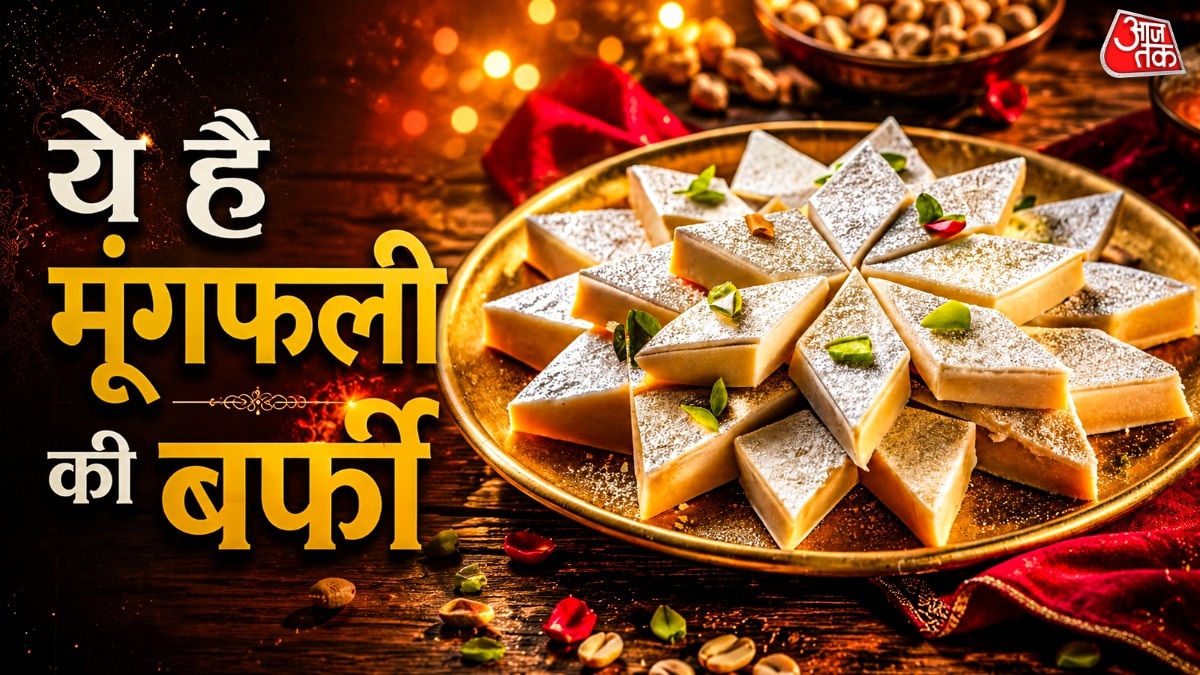
Celebrate Janmashtami 2026 with a healthy, delicious, and budget-friendly peanut barfi that requires no milk or khoya. This easy-to-follow recipe offers a rich, melt-in-the-mouth texture that easily rivals premium kaju katli. Perfect for festive fasting, it ensures purity and taste in every single bite.
- Made using only raw peanuts, sugar, water, and a touch of ghee, completely omitting milk and khoya.
- An excellent, cost-effective alternative to expensive store-bought Kaju Katli with guaranteed purity.
- Perfect for festive fasting (Vrat) during Janmashtami and other holy occasions.
Purity is of paramount importance during the festive season. On the auspicious occasion of Janmashtami 2026, the significance of offering pure, home-cooked sweets to Lord Krishna becomes even greater. Often, during the fasting periods of Sawan and Bhadrapada, the milk and khoya available in the market carry a high risk of adulteration, which can pose serious health hazards. In such times, sweets prepared at home using simple, staple ingredients remain the safest and most sacred choice.
The ultimate and most delicious solution to this concern is Peanut Barfi (Moongphali ki Barfi). This sweet is not only incredibly easy to prepare, but its rich texture and exquisite taste easily rival the premium, expensive Kaju Katli. The defining feature of this recipe is that it requires absolutely no milk, khoya, or condensed milk, making it highly accessible, cost-effective, and quick to prepare with minimal resources.
To make this delectable barfi, you will need a very limited set of ingredients. Gather 2 cups of raw peanuts (approximately 250 grams), 8 to 10 cashews (optional, to impart a royal Kaju Katli-like flavour), 1 cup of sugar, half a cup of water, half a teaspoon of green cardamom powder, 1 teaspoon of desi ghee (for that perfect sheen and smooth texture), and finely chopped almonds and pistachios for garnishing.
The preparation method is wonderfully simple. Begin by dry roasting the peanuts in a heavy-bottomed pan over low heat for about 7 to 8 minutes. Once the skins start peeling off easily, turn off the flame. Place the roasted peanuts on a clean kitchen towel and rub them gently to separate the skin. Next, transfer the deskinned peanuts and cashews into a grinder. Ensure you blend them in pulse mode (stopping every 2-3 seconds) to prevent the peanuts from releasing their natural oils and turning into a paste instead of a fine powder. Sift this powder through a fine sieve to remove any large bits.
To prepare the syrup, combine 1 cup of sugar and half a cup of water in a pan and bring it to a boil over medium heat. Once the sugar dissolves completely and reaches a one-string consistency, lower the heat to the minimum. Gradually add the sifted peanut powder, cardamom powder, and a teaspoon of ghee. Stir continuously using a spatula to ensure there are no lumps. Cook the mixture on low heat for 3-4 minutes until it starts leaving the sides of the pan and gathers into a soft dough-like mass.
Why This Matters
BozokMedia analysis shows that during major Indian festivals, the demand for milk solids (khoya) spikes by over 150%, leading to a massive influx of synthetic and adulterated products in local markets. Preparing sweets at home using non-perishable staples like peanuts not only ensures absolute purity but also promotes healthier, protein-rich dietary choices during fasting periods. This shift marks a positive evolution in how modern households approach traditional festive cooking.
"Using peanuts as a base for festive sweets is a nutritional masterstroke. It provides essential healthy fats and plant-based protein, making it an ideal energy booster for those observing day-long fasts during holy festivals." - Dr. Ananya Sharma, Leading Nutritionist.
When we compare Peanut Barfi with traditional Kaju Katli, it stands out as an exceptional alternative in terms of both nutrition and economy. The table below highlights the key differences between the two festive delicacies:
| Feature | Peanut Barfi | Kaju Katli |
|---|---|---|
| Primary Ingredient | Peanuts (Moongphali) | Cashews (Kaju) |
| Cost-Effectiveness | Highly Budget-Friendly | Expensive / Premium Price |
| Preparation Time | 20-25 Minutes | 30-40 Minutes |
| Protein Content | Very High (Approx 26g per 100g) | Moderate to High (Approx 18g per 100g) |
To set the sweet, grease a tray or plate with a little desi ghee. Transfer the warm mixture onto the tray, spreading it evenly. Sprinkle the chopped almonds and pistachios on top, pressing them down gently with a spoon. Allow it to cool completely for about 20 to 30 minutes, then slice it into classic diamond or square shapes using a sharp knife. Your delicious, soft, and pure Peanut Barfi is ready to be offered as Prasad and enjoyed by the family.
Frequently Asked Questions
Q1: Can we store peanut barfi for a long time?
Yes, because it contains no milk or khoya, it can be stored in an airtight container at room temperature for up to 10-12 days, and in the refrigerator for nearly a month without losing its flavor.
Q2: Why did my peanut powder turn into a paste while grinding?
Peanuts are rich in natural oils. Grinding them continuously generates heat, which releases these oils and turns the powder into peanut butter. To avoid this, always grind them using the pulse mode, running the mixer for only 2-3 seconds at a time.