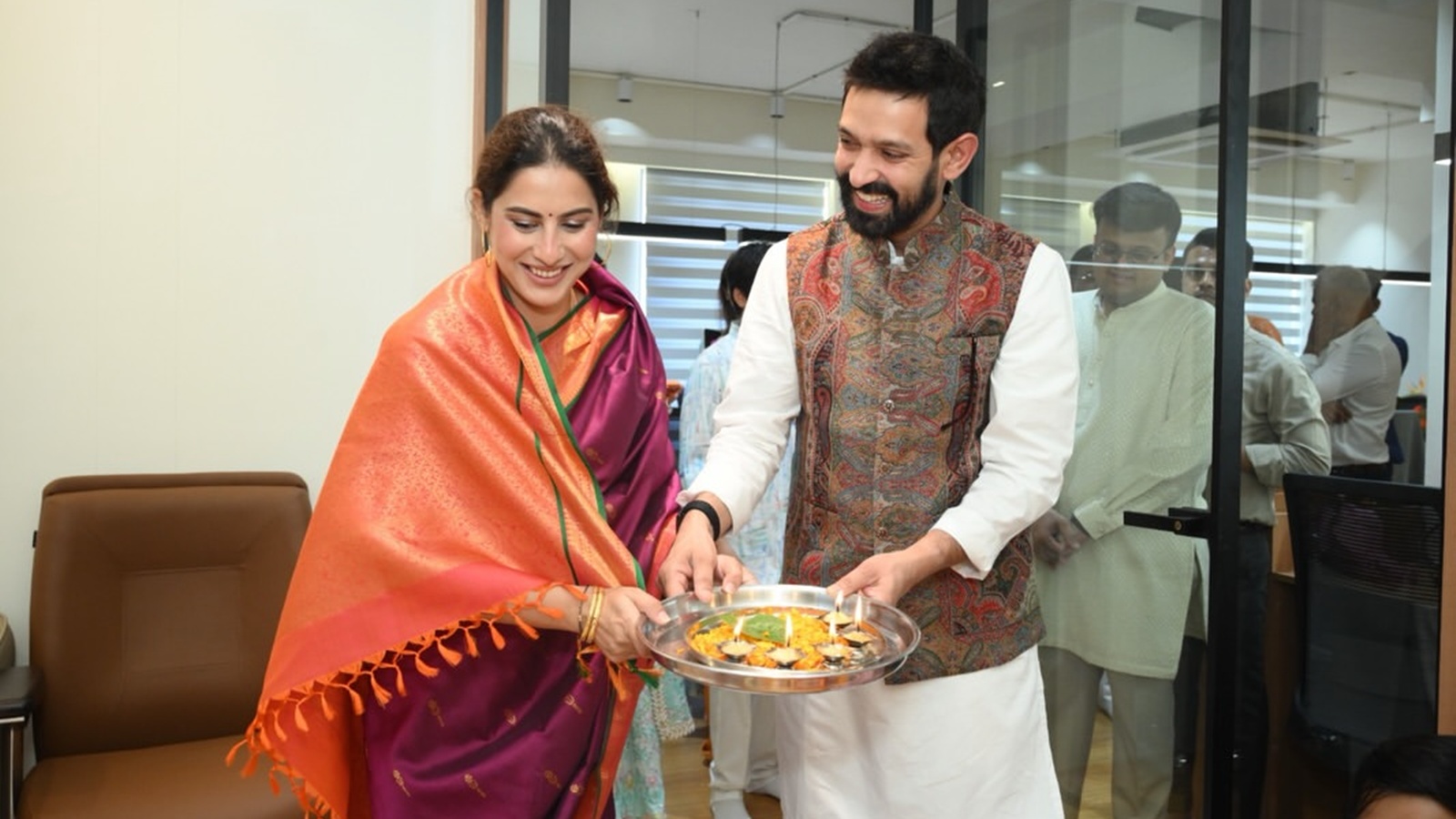
Actor Vikrant Massey has shared a simple yet powerful rule that keeps his marriage with Sheetal Thakur strong: never carry a fight into the next day.
- Successful marriages aren't about a lack of conflict, but how conflict is managed.
- Vikrant Massey advocates for resolving arguments before sleep to avoid carryover stress.
- Psychologists suggest that emotional attunement and non-defensive listening are vital for long-term intimacy.
Bollywood actor Vikrant Massey and his wife, Sheetal Thakur, have been celebrating four years of marriage. While many look for complex solutions to relationship issues, Massey suggests a remarkably simple philosophy. While promoting his upcoming project 'Musafir Cafe', the actor opened up about the 'secret sauce' that maintains the health of his relationship.
The 350/15 Formula
Massey explained that perfection isn't the goal; management is. "Out of the 365 days in a year, 350 need to go well. 15 days we have to manage," Massey shared. His core rule is about boundaries: "When we go to bed at night after a fight or an argument, we should not carry it into the next day. We don’t extend the fight beyond that day, even if we feel like addressing it the next morning."
Not dragging a fight into the next day is a sign of emotional maturity and intentionality.BozokMedia analysis shows that this approach prevents 'emotional residue'—the lingering resentment that can slowly erode trust and intimacy over time.
The Science of 'Sleeping on It'
Psychological experts weigh in on whether Massey's method is scientifically sound. Alishiba Arsud, a clinical psychologist at Mpower (Aditya Birla Education Trust), notes that strong marriages are built on intentional emotional connections. She emphasizes that regular appreciation and 'emotional check-ins' are more predictive of success than a total absence of conflict.
Interestingly, Rutuja Varade, another psychologist at Mpower, provides a deeper neurological perspective on why 'sleeping on an argument' works. She explains that during intense conflict, the amygdala—the brain's emotional center—triggers a fight-or-flight response. "At those times, we might say things on the spur of the moment that we do not genuinely mean," Varade explains. Stepping back or sleeping allows the rational part of the brain to regain control, facilitating a calmer, more logical discussion later.
Key Pillars of Marital Resilience
To maintain a healthy bond, experts suggest focusing on these core disciplines:
- Non-Defensive Listening: Listening to a partner without immediately justifying, explaining, or counterattacking.
- Specific Feedback: Providing limited, specific feedback within a safe context to prevent the partner from feeling overwhelmed by criticism.
- Emotional Attunement: The ability to anticipate a partner's needs and repair conflicts quickly.
Did You Know?: Research in relationship psychology indicates that couples who practice frequent 'emotional check-ins' report significantly higher marital satisfaction.Frequently Asked Questions
1. Is it bad to stop talking during a fight?
Not necessarily. Taking a 'time-out' to calm the nervous system can prevent hurtful words, provided the issue is addressed later.2. What is the biggest predictor of marital dissatisfaction?
According to experts, defensiveness is one of the strongest predictors of separation.

