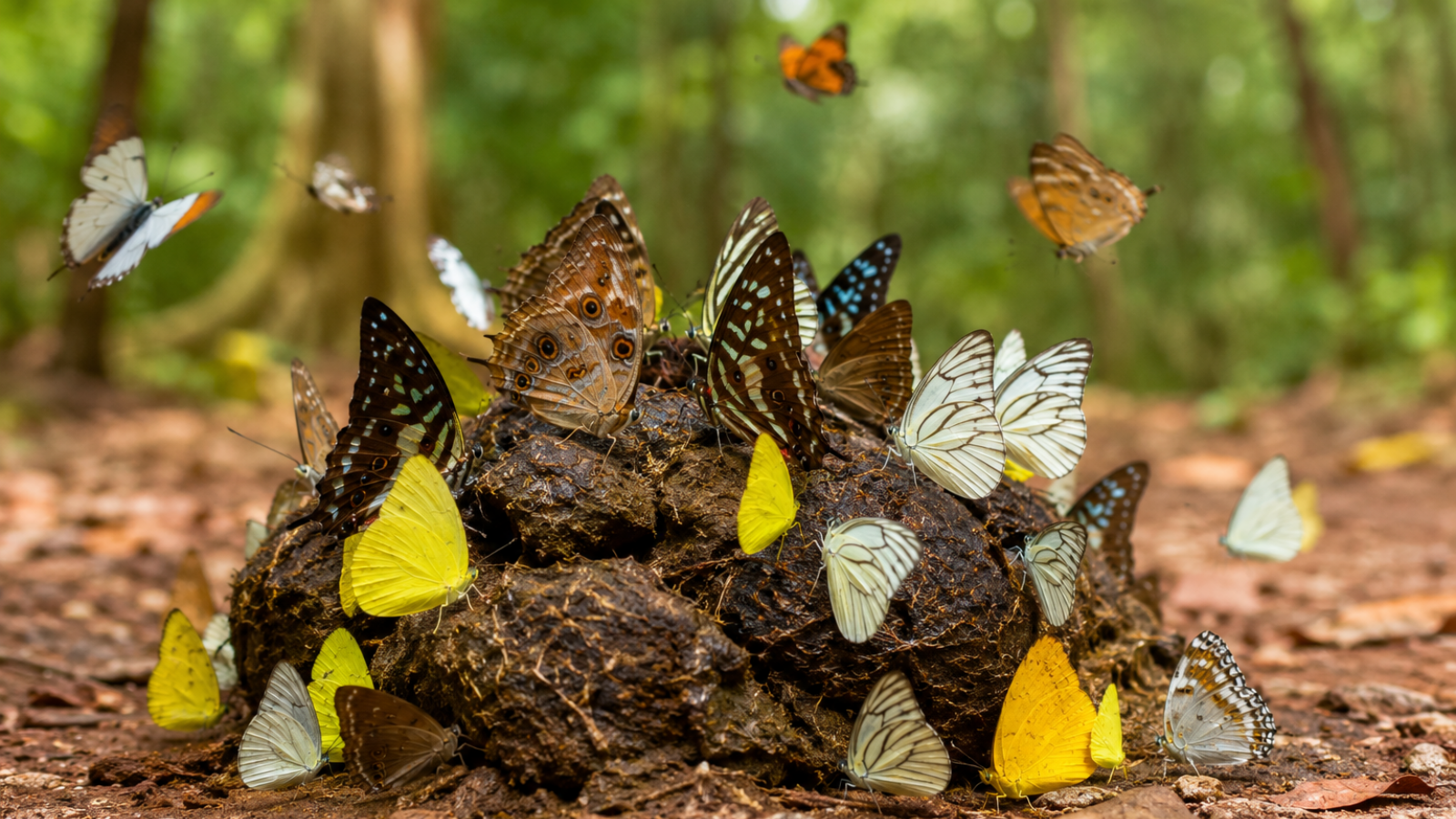
Beyond the nectar of flowers, butterflies often gather around animal waste and damp soil. This phenomenon, known as 'puddling,' is a critical survival mechanism for nutrient acquisition.
- Butterflies seek minerals like sodium and nitrogen that are absent in floral nectar.
- Puddling is predominantly performed by males to enhance reproductive success.
- Research in India's Western Ghats and Arunachal Pradesh confirms the use of elephant dung and carrion as nutrient sources.
When we envision butterflies, we typically picture them dancing around vibrant blossoms and sun-drenched gardens. However, nature often presents surprising contradictions. In various regions of India, these delicate insects have been observed congregating around cow and elephant dung—a sight that might seem repulsive to humans but is biologically essential for the insects.
This specific behavior is scientifically termed 'puddling.' While nectar provides the necessary sugars for adult butterflies to fly and survive, it lacks critical minerals. To compensate for this nutritional deficit, butterflies seek out moist soil, animal urine, dung, and other decaying organic matter to extract essential salts, particularly sodium and nitrogen.
Why This Matters
BozokMedia analysis shows that puddling is not merely a random occurrence but a strategic biological investment. This behavior is most prevalent among males. The minerals gathered during puddling are often transferred to the female during mating as a 'nuptial gift.' This nutrient package is vital for the health of the eggs and the overall fitness of the next generation.
Puddling represents a sophisticated evolutionary adaptation, allowing butterflies to bridge the nutritional gap left by a nectar-only diet.
India has provided significant data on this phenomenon. A 2023 study conducted in the Western Ghats recorded 26 different butterfly species from five families puddling on elephant dung. The findings, published in the journal Food Webs, suggested that such mineral supplementation directly contributes to the insects' reproductive physiology.
Further observations in Arunachal Pradesh have expanded this understanding, documenting butterflies feeding on ash and carrion (decaying flesh). These sources provide amino acids and minerals that are virtually unavailable in flowers. The concentration of these nutrients, combined with the moisture levels of the site, determines why large groups of butterflies often gather in one specific spot.
| Source | Nutrients Provided | Primary Function |
|---|---|---|
| Floral Nectar | Sugars/Carbohydrates | Immediate Energy |
| Dung/Moist Soil | Sodium, Nitrogen, Minerals | Reproduction & Fitness |
Environmental factors, such as temperature, also play a role. For instance, the Common Mormon (Papilio polytes) in India shows a strong preference for specific temperature windows when engaging in puddling activities, highlighting the precision of this biological drive.
Frequently Asked Questions
Q1: Do all butterflies engage in puddling?
While many species do, it is significantly more common and intense among males than females.
Q2: Is puddling harmful to the butterfly?
No, it is a beneficial behavior that provides life-sustaining minerals not found in their primary food source.