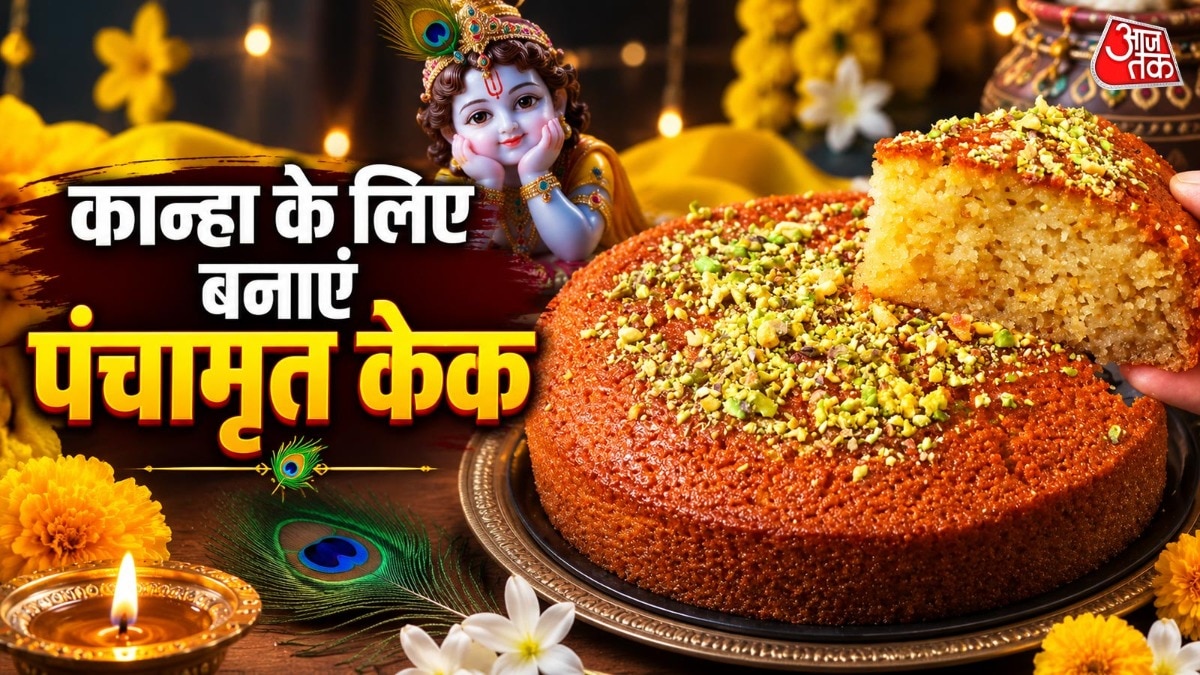
Ditch the processed bakery cakes this Janmashtami. Learn how to make the trending, pure, and delicious Panchamrit Cake at home using sacred ingredients for Lord Krishna's bhog.
- Store-bought cakes often contain maida (refined flour) and harmful chemicals.
- Panchamrit Cake is a sattvic alternative made from milk, curd, ghee, honey, and sugar.
- It is trending heavily on social media platforms like Instagram.
- Perfect for a pure and healthy offering (Bhog) to Lord Krishna.
As the nation prepares to celebrate Shri Krishna Janmashtami with immense fervor, a new culinary trend is taking social media by storm. Traditionally, offerings for Lord Krishna included items like Panjiri, Makhan-Mishri, and fruits. However, in recent years, the practice of cutting cakes to celebrate the birth of Bal Gopal has become increasingly popular. The concern, however, lies in the ingredients of commercial cakes, which are often loaded with refined flour, preservatives, and artificial additives.
To address the need for purity and health, the 'Panchamrit Cake' has emerged as a viral sensation. Unlike conventional cakes, this version is rooted in the sacred concept of 'Panchamrit'—a divine mixture of five elements: milk, curd, ghee, honey, and sugar. This makes the cake not just a dessert, but a 100% pure and sattvic offering suitable for religious rituals.
Why This Matters
BozokMedia analysis shows that modern consumers are increasingly seeking ways to blend contemporary celebration styles with traditional values. The rise of the Panchamrit Cake reflects a growing movement toward 'conscious celebrations,' where devotees refuse to compromise on the spiritual purity of their offerings while still embracing modern festivities.
Replacing processed ingredients with sacred, natural elements transforms a simple dessert into a divine offering.
Ingredients Required: To whip up this delicious treat, you will need 1.5 cups of whole wheat flour or semolina (suji), 1/2 cup fresh curd, 3/4 cup milk, 1/4 cup desi ghee, 2 tbsp honey, 3/4 cup powdered mishri (rock sugar), cardamom powder, baking powder, and baking soda. For garnishing, use Tulsi leaves, roasted makhana, and dry fruits.
Step-by-Step Preparation
Start by whisking the curd, ghee, honey, and powdered sugar in a large bowl until smooth. Incorporate the flour/semolina, saffron, and cardamom powder. Let the mixture rest for 10-15 minutes before adding the leavening agents (baking powder and soda). Pour the batter into a greased tin and bake for 40-45 minutes. Once cooled, decorate it with rose petals and Tulsi leaves before offering it to Lord Krishna.
Frequently Asked Questions
1. Is this cake suitable for fasting (Vrat)?
Yes, by using ingredients like semolina or specific vrat-friendly flours, it can be adapted for fasting.
2. Can I use honey instead of sugar?
The recipe already incorporates honey, which adds a natural sweetness and nutritional value.

