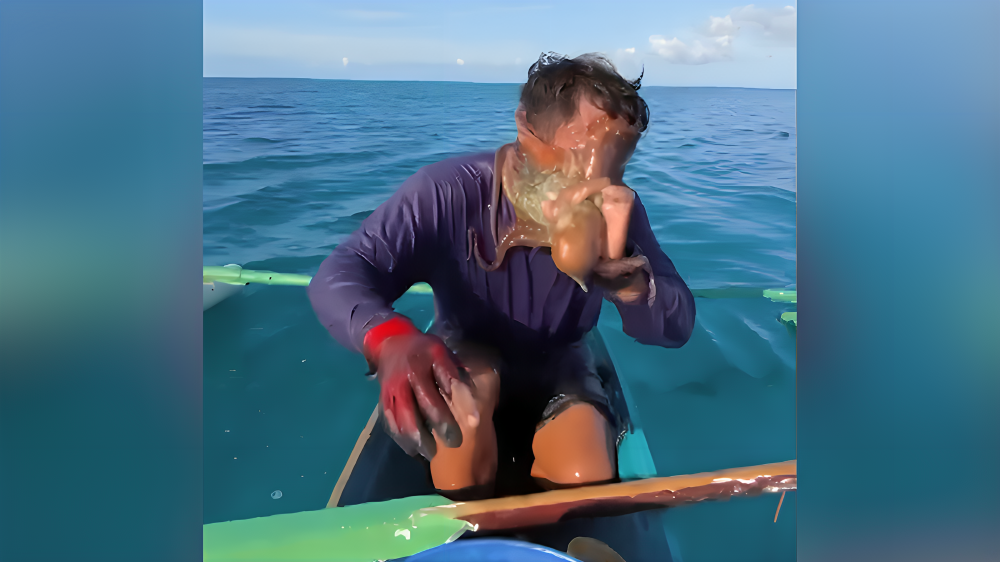
Following a viral incident involving a Filipino fisherman, experts reveal the science behind octopus defensive behavior and the safest ways to remove them without injury.
- Octopuses are generally non-aggressive and act defensively when threatened.
- Forcefully yanking an octopus can cause severe skin lacerations.
- The safest method is to gradually loosen individual suction cups.
- Seek immediate medical attention if a bite or puncture occurs.
A video of Filipino fisherman Jesser Cervantes has recently gone viral, capturing a harrowing moment where an octopus suctioned itself firmly to his face. The cephalopod's tentacles were wrapped tightly around his head, creating a struggle that required unconventional methods to resolve. Cervantes eventually used a piece of bamboo to loosen the grip before releasing the animal back into the ocean.
"The octopus I caught was very hard to handle. It almost ripped my face," Cervantes stated, highlighting the physical intensity of such encounters. This incident serves as a critical case study for marine enthusiasts and professionals alike.
Understanding Defensive Behavior
It is a common misconception that octopuses are predatory toward humans. Dr. Deepraj Prajapati, a senior veterinarian at RD Pet Hospital, explains that these creatures primarily seek to avoid conflict. "Their first response to a perceived threat is usually to hide, camouflage, or retreat. An octopus becomes defensive when it feels cornered or handled," he noted.
When an octopus changes color or releases ink, it is communicating extreme stress and a desire to escape.
Why This Matters: BozokMedia Analysis
BozokMedia analysis shows that human reaction time and panic often exacerbate animal-related accidents. In the case of a suction-based attachment, the instinct to pull away violently is actually counterproductive. Dr. Madan Kompal, a Wildlife Veterinary advisor, warns that yanking the animal can cause significant skin damage and may trigger a tighter grip from the octopus.
To navigate such a crisis, experts recommend the following protocols:
- Incremental Release: Instead of pulling the whole body, focus on gently working at the edge of individual arms or suction cups.
- Maintain Calm: Avoid sudden, jerky movements that could increase the animal's stress.
- Seek Shallow Water: If submerged, move slowly toward the shore to facilitate easier removal.
Historical Context of Marine Encounters
Throughout history, encounters between humans and cephalopods have been documented in maritime lore. While most species are harmless to humans, the biological complexity of their suction mechanisms and the presence of venom in certain species (like the Blue-ringed octopus) make professional medical advice a necessity following any physical contact or bite.
Frequently Asked Questions
Q1: Do all octopuses have venom?
A: No, but some species are highly venomous and can be fatal to humans.
Q2: What is the first thing to do if an octopus attaches to you?
A: Stay calm and avoid pulling forcefully; try to loosen the suction cups one by one.