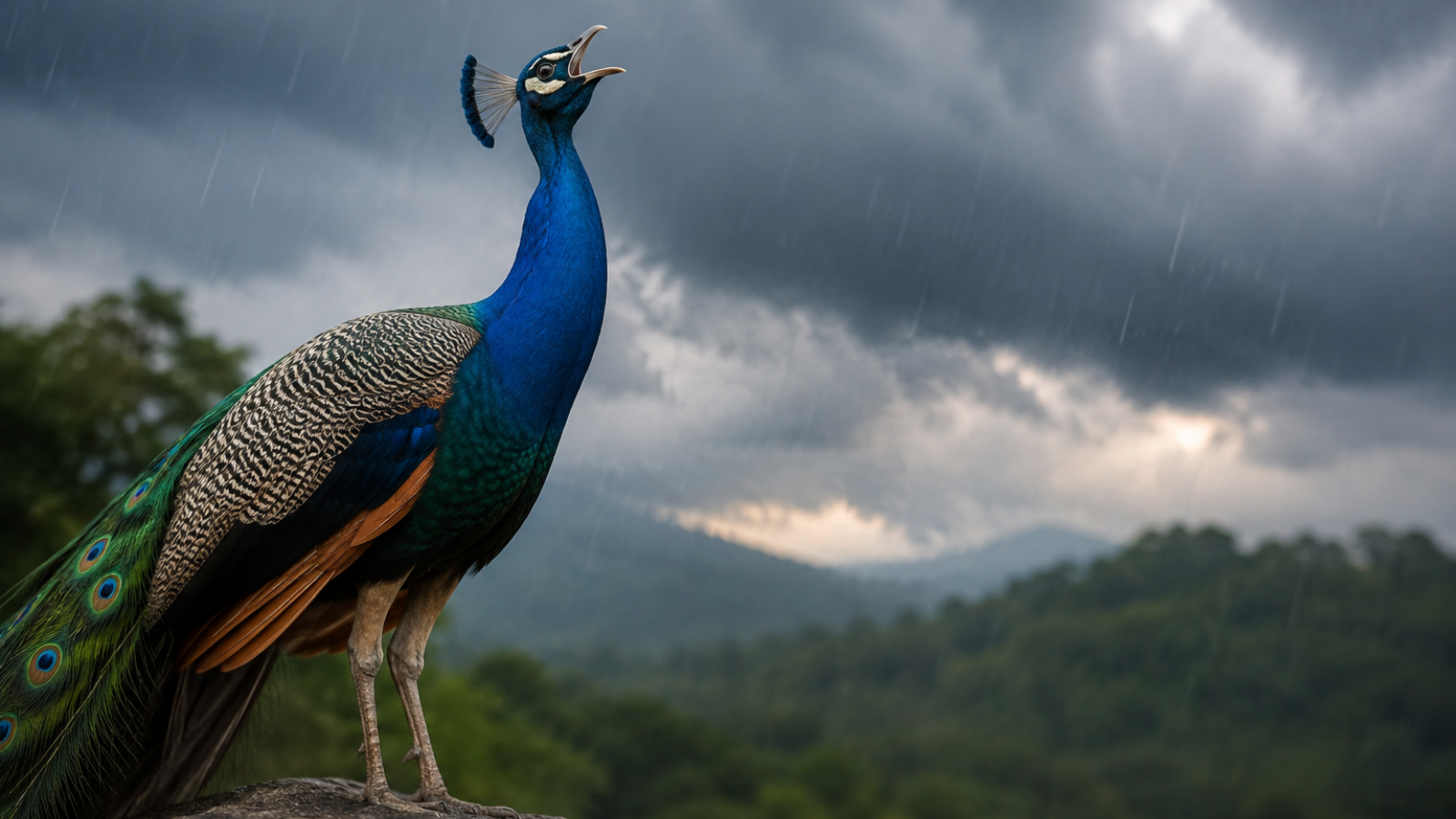
Is the peacock's loud call a natural weather forecast? Scientists debunk the myth and explain the biological connection between peafowl behavior and the monsoon.
- Peacock calls are linked to breeding seasons, not direct weather prediction.
- The monsoon overlaps with peafowl mating periods, creating a perceived connection.
- Environmental factors like humidity can influence bird vocalization patterns.
For generations, a popular belief has persisted that the loud, piercing calls of a peacock serve as a natural warning that rain is imminent. In many parts of the world, especially in the Indian subcontinent, the sudden vocalization of these majestic birds is often taken as a reliable weather forecast. However, does science back this up?
The Indian peafowl (Pavo cristatus) is an inherently vocal species. Male peacocks utilize loud, repetitive calls to communicate across long distances, mark territory, and interact during social displays. These calls are not constant; they fluctuate based on the time of day and, most importantly, the season.
The Monsoon Connection
The perceived link between peacock calls and rainfall is largely a matter of seasonal coincidence. In much of South Asia, the breeding season of the peafowl aligns perfectly with the onset of the monsoon. During this period, males become significantly more active and vocal as they engage in courtship rituals. Because the rain arrives at the same time the birds start calling, a strong psychological association is formed in the human mind.
The correlation between peafowl vocalization and rain is a biological coincidence driven by overlapping seasonal cycles.
Why This Matters
BozokMedia analysis shows that while birds may not 'predict' rain in a meteorological sense, they are highly sensitive to environmental shifts. Changes in barometric pressure, temperature, and humidity can trigger different behavioral responses in avian species. For instance, a 2024 study on cockatoos noted that increased humidity often correlates with higher vocal activity, suggesting that weather influences behavior even if it doesn't trigger a specific 'prediction' call.
Furthermore, the iconic image of a peacock 'dancing in the rain' is also tied to this period. The elaborate display of tail feathers is a courtship behavior intended to attract peahens. Since this occurs during the monsoon, the two events have become culturally intertwined as a singular phenomenon.
| Feature | Popular Belief | Scientific Reality |
|---|---|---|
| Peacock Call | Warning of approaching rain | Breeding and territorial communication |
| Rain Dance | Dancing to welcome rain | Courtship display for mating |
| Timing | Predictive of weather | Coincidental with monsoon season |
Frequently Asked Questions
1. Do peacocks sense atmospheric pressure?
While birds respond to environmental changes like humidity and temperature, there is no evidence peacocks use pressure to predict rain.
2. Why are peacocks more vocal in the morning and evening?
Vocal activity typically peaks during these times as part of their natural circadian rhythm and social interaction patterns.