Khajuraho's bazaars offer a startling blend of traditional crafts and erotic memorabilia. Discover how local vendors navigate the fine line between ancient art and modern social taboos.
- Khajuraho's markets feature a unique mix of erotic souvenirs and traditional handicrafts like Chanderi sarees.
- Local vendors sell explicit items with surprising ease and cultural context.
- The markets serve as a bridge between ancient temple history and modern tourism.
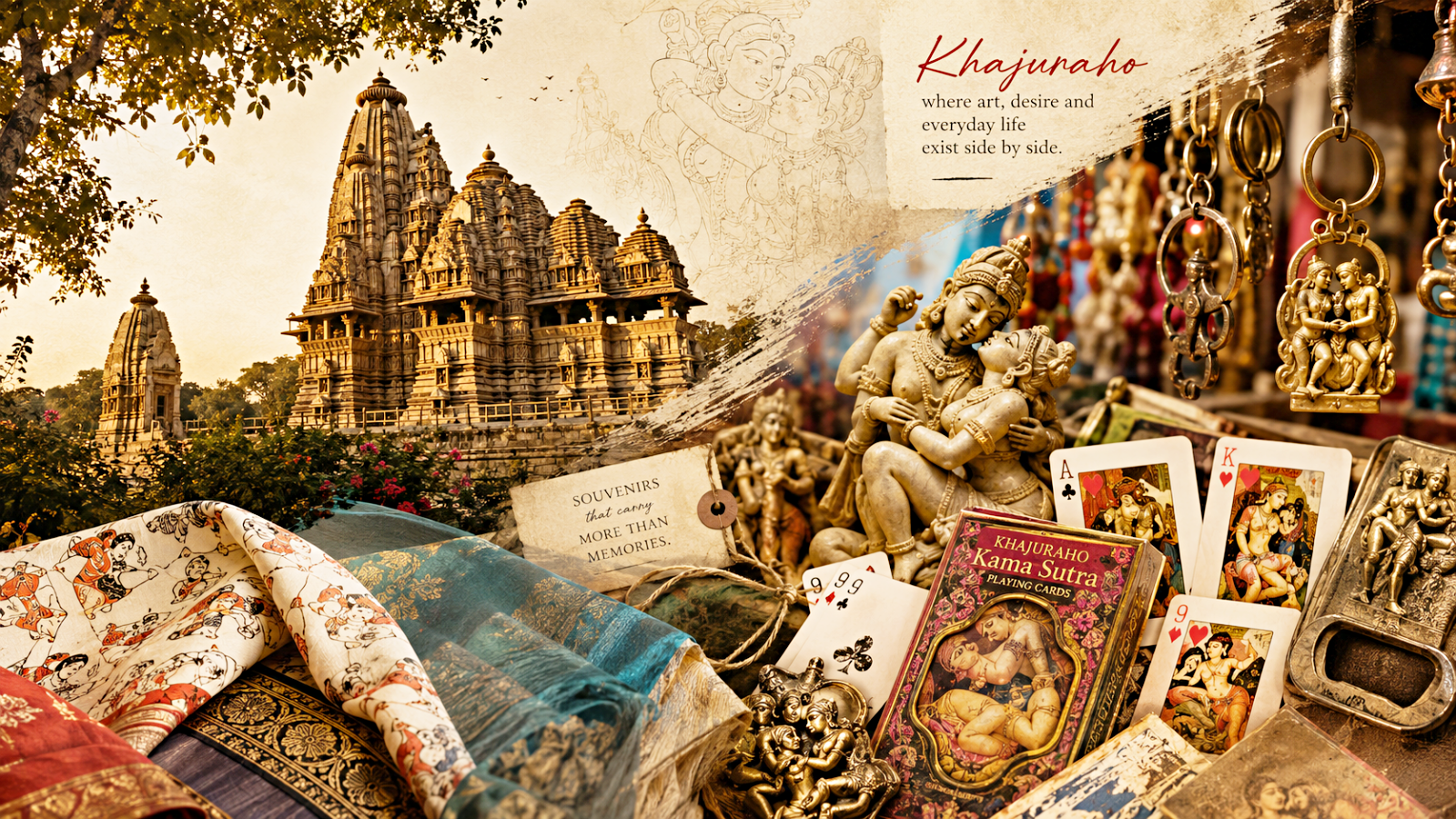
While most travelers visit Khajuraho to marvel at its magnificent UNESCO World Heritage temples, the local bazaars offer a completely different, and often startling, experience. The markets here are unlike any other in India, presenting a surreal juxtaposition of high-end Chanderi sarees, ancient-style metal crafts, and explicit erotic souvenirs inspired by the temple carvings.
A Collision of Tradition and Taboo
In a society where discussions around intimacy are often hushed, the unapologetic display of erotic memorabilia in Khajuraho's markets creates a fascinating cultural tension. From keychains and fridge magnets to playing cards, the items categorized by different 'positions' reflect the temple's art in a commercialized form. However, this is not the only thing on offer.
Ajay Verma, Chief Experience Officer at EaseMyTrip Foundation, notes, "It’s a space where you can buy an authentic Chanderi saree in one shop, a piece of ancient-style metal craft in the next, and a unique temple-inspired souvenir right after all while sipping chai with vendors who double as local history storytellers."
The erotic imagery is a small part of the temple art and should not become the defining identity of the destination.
Why This Matters
BozokMedia analysis shows that the Khajuraho market functions as a complex socio-economic ecosystem. For some, like local resident Ananya Srivastava, the exposure to this art can be an opportunity for age-appropriate sex education, moving away from the misinformation found online. For others, it remains a delicate balancing act of business and social respect.
Nitin Jain, owner of the legacy Kuber Showroom, highlights the global reach of these items, mentioning that even an erotic-themed hotel in Brazil has placed bulk orders for souvenirs. This demonstrates how local art, regardless of its controversial nature, finds a global market.
Navigating the Market Experience
| Product Category | Common Items |
|---|---|
| Traditional Textiles | Chanderi and Bamboo Sarees |
| Artisanal Crafts | Metalwork and Stone Sculptures |
| Souvenirs | Temple-inspired keychains, magnets, and cards |
To maintain decorum, many shopkeepers, including Nitin Jain, ensure that explicit items are not displayed prominently at the front of the shop. This practice helps accommodate families, pilgrims, and women tourists, ensuring that the erotic elements do not overshadow the spiritual and cultural essence of the town.
Hemant Joshi, CEO of Atithi Foundation, emphasizes that once tourists visit the actual temple complex, their perspective shifts. The guides explain the historical and mythological significance behind the carvings, turning what might have seemed like mere provocation into a profound understanding of ancient Indian philosophy.
Frequently Asked Questions
1. Is it awkward for families to shop in Khajuraho?
Not necessarily, as most vendors are careful to keep explicit items out of direct sight to maintain a respectful environment.
2. What else can I buy in Khajuraho besides souvenirs?
The region is famous for its exquisite Chanderi sarees and intricate metal handicrafts.