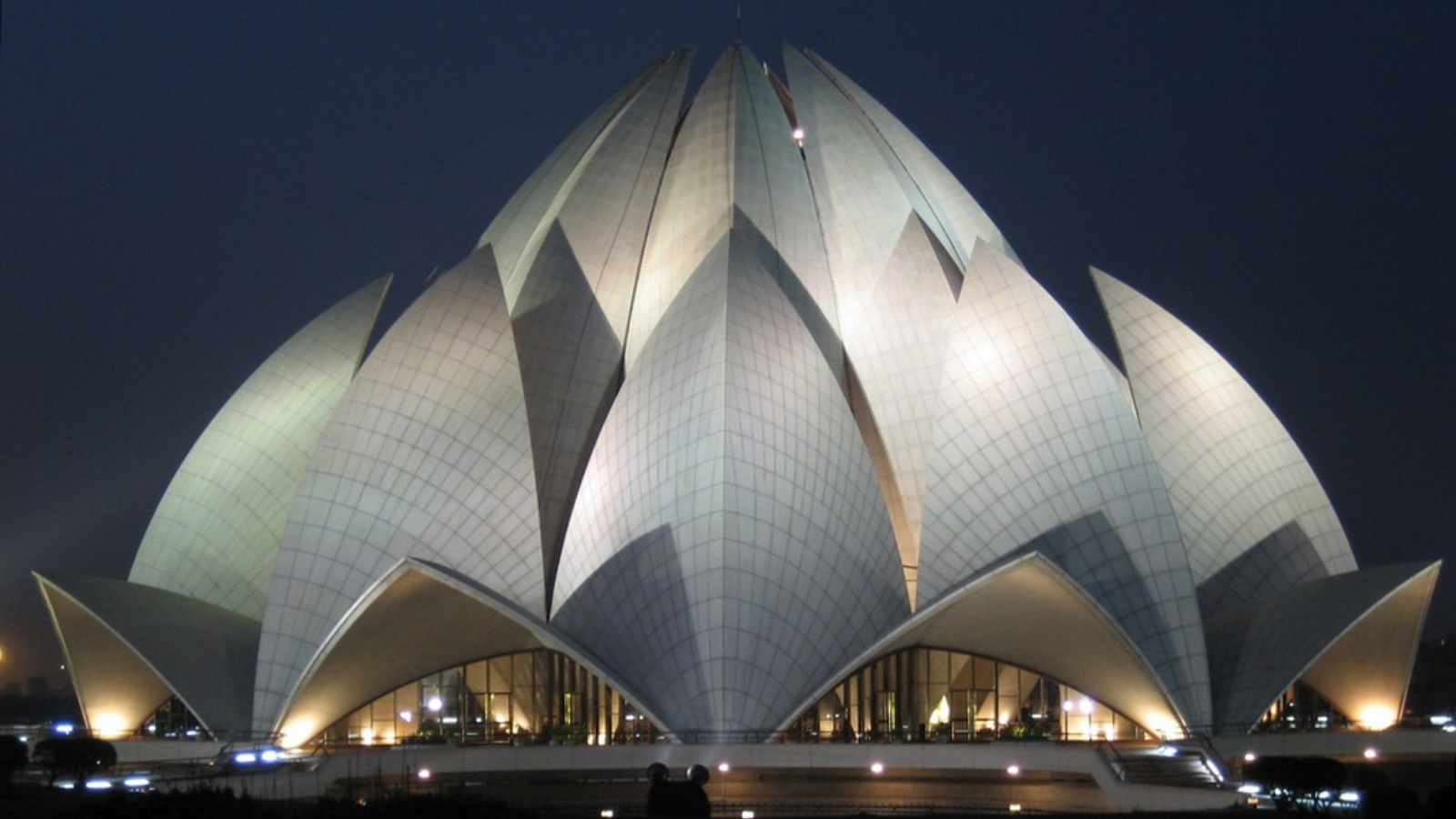
From the serene petals of New Delhi's Lotus Temple to the soaring height of Dubai's Burj Khalifa, discover how nature's floral patterns are redefining global architecture.
- Biomimicry is driving a new era of architecture where nature's forms dictate structural design.
- Floral inspiration is used not just for aesthetics, but for environmental sustainability and wind resistance.
- The Lotus and Spider Lily are among the most influential natural motifs in modern skyscrapers.
The intersection of architecture and nature has always been a fertile ground for innovation. Architects are increasingly moving away from rigid rectangular boxes, instead drawing inspiration from the organic growth patterns, symmetry, and fluid shapes of flowers. This approach, known as biomorphic architecture, transforms cold concrete and steel into living pieces of art.
1. Lotus Temple, New Delhi, India
One of India’s most celebrated landmarks, the Lotus Temple is a Bahá’í House of Worship designed by Fariborz Sahba. Opened in 1986, the structure is a literal interpretation of a blooming lotus—a symbol of purity and peace across Asian cultures.
The building features 27 free-standing marble-clad petals. These are arranged in clusters of three to form nine sides, surrounded by nine ponds that give the illusion of a floating flower, creating a sanctuary of silence amidst the chaos of New Delhi.
2. Wujin Lotus Conference Centre, China
Located in Wujin, China, this conference center is a masterpiece by Melbourne-based Studio505. The building emerges from an artificial lake through three massive petal-like forms, mimicking a lotus rising from the mud.
Beyond the visual spectacle, the building is a feat of sustainable engineering. It utilizes geothermal piles beneath the lake for temperature regulation and evaporative cooling, proving that floral design can be ecologically responsible.
Why This Matters
BozokMedia analysis shows that biophilic design—integrating nature into the built environment—significantly reduces urban stress and improves the psychological well-being of occupants. By mirroring nature, these buildings act as a bridge between the artificial city and the natural world.
3. ArtScience Museum, Singapore
Designed by Moshe Safdie, the ArtScience Museum at Marina Bay Sands resembles an opening lotus or a welcoming hand. Its ten finger-like petals rise above a water base, allowing natural light to flood the galleries through skylights at the tips.
The building also serves as a rainwater collector; the roof channels water into a central vortex, blending functional environmentalism with a striking floral silhouette.
"Nature is the ultimate architect; by studying floral symmetry, we unlock the secrets of both structural strength and aesthetic grace."
4. Colombo Lotus Tower, Sri Lanka
Standing at 356 metres, the Colombo Lotus Tower is a vertical interpretation of the lotus flower. While the tower's shaft represents the stem, the top section is a blooming petal structure housing a revolving restaurant and observation deck, symbolizing renewal and purity in Sri Lankan culture.
5. Burj Khalifa, Dubai
The world’s tallest building, the Burj Khalifa, has a floral inspiration that is subtle yet critical. It is based on the Hymenocallis, or Spider Lily. The building's Y-shaped floor plan mimics the radial symmetry of the flower.
This geometry is essential for its height of 828 metres. The three-wing design provides structural stability and effectively confuses the wind, preventing the tower from swaying excessively during high-altitude gusts.
| Building | Floral Inspiration | Primary Benefit |
|---|---|---|
| Lotus Temple | Lotus | Cultural Symbolism |
| Burj Khalifa | Spider Lily | Aerodynamic Stability |
| ArtScience Museum | Lotus | Natural Lighting/Water Harvesting |
Frequently Asked Questions
Q1: What is biomorphic architecture?
A: It is a style of design that models buildings after naturally occurring patterns and shapes, such as plants, animals, or biological cells.
Q2: Does the floral shape of the Burj Khalifa help it stay up?
A: Yes, the Y-shaped plan based on the Spider Lily reduces wind forces and provides a wider base for structural support.