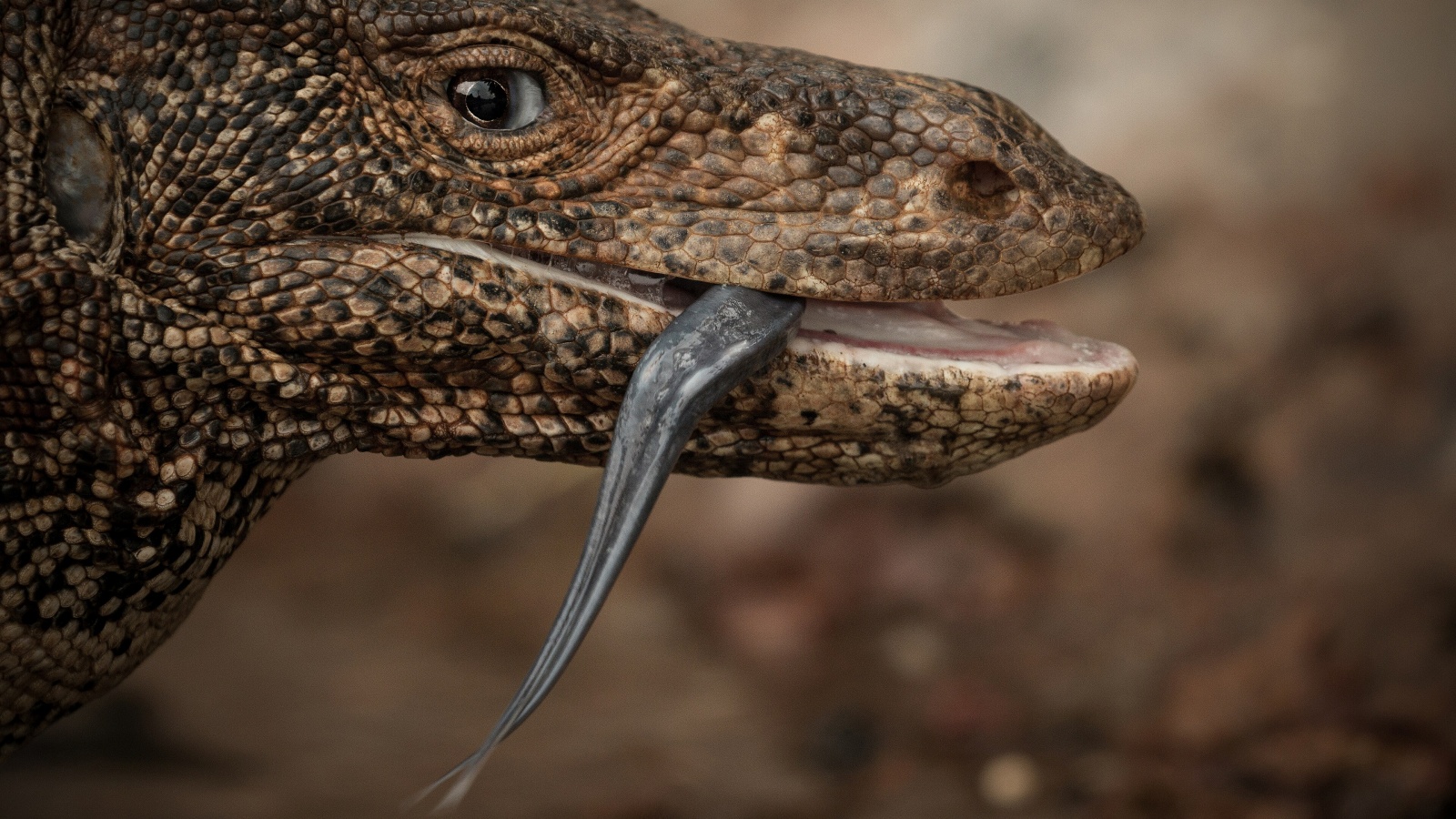
Ever wondered why snakes constantly flick their tongues? It's not a threat—it's a sophisticated sensory superpower. Explore the fascinating world of Indian reptiles and their unique chemical sensing abilities.
- Animals use forked tongues to collect airborne chemical particles.
- The vomeronasal organ (Jacobson’s organ) processes these scents.
- Key species include the Indian Cobra, Krait, and Bengal Monitor Lizard.
If you have ever observed a snake repeatedly flicking its forked tongue, you might suspect it is a defensive display meant to intimidate. However, this behavior is actually a highly sophisticated method of environmental sampling. These animals are not just moving their tongues; they are actively 'tasting' the air to navigate their world.
The process is scientifically remarkable. As the tongue extends, it picks up microscopic chemical particles from the air or surrounding surfaces. Upon retraction, these particles are delivered to the vomeronasal organ, also known as Jacobson’s organ, located in the roof of the mouth. This organ detects the chemicals and sends signals directly to the brain, allowing the animal to identify prey, predators, or mates.
Why This Matters
BozokMedia analysis shows that this chemical-sensing capability is a critical evolutionary advantage. It allows predators to hunt effectively even in low-visibility environments, maintaining the delicate balance of the Indian subcontinent's biodiversity.
The flicking of a tongue is essentially a high-tech biological scanner reading the chemical signature of the environment.
The Specialized List: Indian Species
| Animal Name | Primary Use of Tongue | Sensory Advantage |
|---|---|---|
| Indian Cobra | Detecting prey & predators | Directional chemical tracking |
| Common Krait | Environmental investigation | High-sensitivity chemical sampling |
| Russell’s Viper | Hunting/Tracking | Efficient prey following |
| Indian Rock Python | Searching for hidden prey | Long-range chemical detection |
| Bengal Monitor | Foraging | Advanced chemical sampling |
The Bengal Monitor Lizard proves that this ability isn't exclusive to snakes. Much like their serpentine counterparts, these lizards use their long, forked tongues to forage through complex terrains, making them incredibly efficient hunters in the Indian wilderness.
Frequently Asked Questions
1. Is the tongue the actual organ that smells?
No, the tongue acts as a collection tool; the actual processing happens in the Jacobson’s organ.
2. Do all lizards use this method?
While many do, the efficiency and frequency vary significantly across different species.