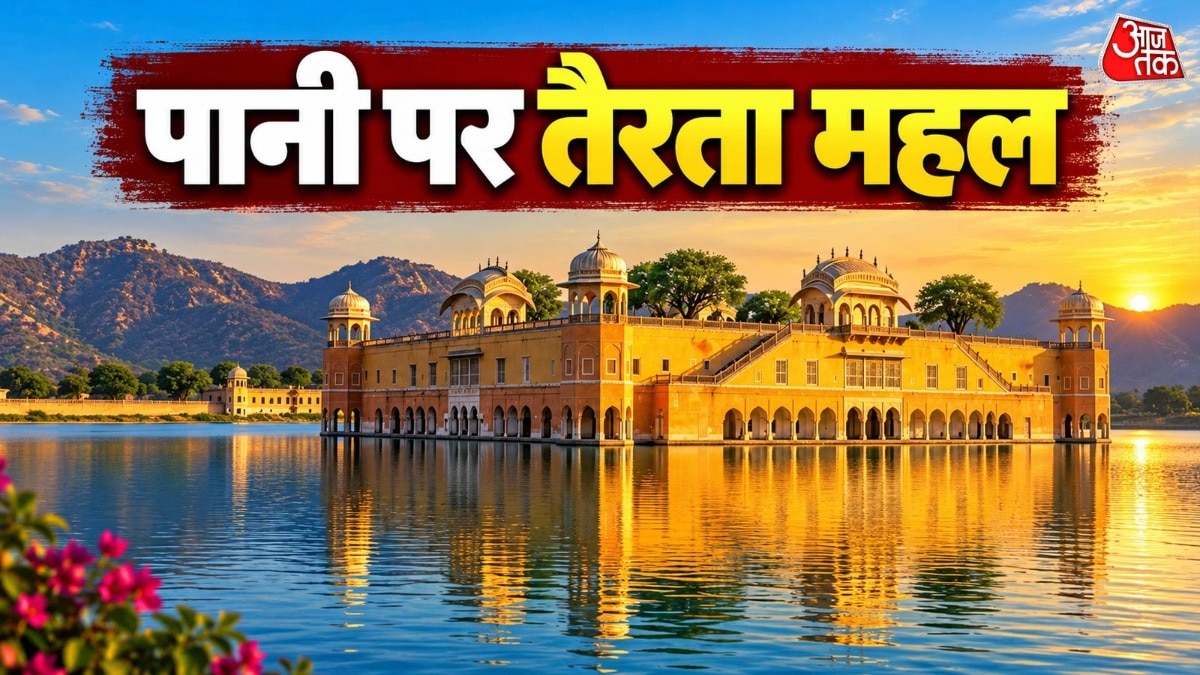
Located in the heart of Man Sagar Lake, Jaipur's Jal Mahal is an architectural marvel that appears to float on water. Discover the history and engineering secrets behind this iconic monument.
- Jal Mahal is a five-story structure, with four stories submerged under water.
- It was built/expanded during the reigns of Maharaja Sawai Pratap Singh and Maharaja Jai Singh II.
- The palace was intended as a leisure retreat rather than a permanent residence.
- Traditional materials like lime, jaggery, and gum were used for waterproofing.
Jaipur, the legendary 'Pink City' of India, is home to numerous architectural wonders. Among them, the Jal Mahal (Water Palace) stands out as one of the most mesmerizing sights. Situated amidst the serene waters of Man Sagar Lake, this red sandstone masterpiece creates an illusion of floating on the waves, captivating travelers from across the globe.
Historical Origins and Purpose
The history of Jal Mahal is intertwined with the royal lineage of Jaipur. While its exact origins are debated, it is largely attributed to Maharaja Sawai Pratap Singh in the late 17th century, with significant expansions and renovations carried out by Maharaja Jai Singh II in the 18th century. Unlike the grand forts of Amer or Nahargarh, Jal Mahal was never meant to be a primary residence for the royals. Instead, it served as a luxurious summer retreat for hunting, relaxation, and enjoying the natural beauty of the Aravalli hills.
Why This Matters
BozokMedia analysis shows that Jal Mahal is a testament to the sophisticated hydraulic engineering of ancient India. The ability to maintain a massive stone structure partially submerged in water for centuries without significant structural decay is a marvel of traditional science.
The architecture of Jal Mahal represents a seamless fusion of Rajput and Mughal styles, showcasing a profound harmony between man-made structures and nature.
The most striking feature of the palace is its unique design. Although it is a five-story building, the rising water levels of Man Sagar Lake submerge four of its floors. Consequently, only the topmost floor remains visible above the waterline, giving it its famous 'floating' appearance.
Engineering and Preservation
A common question among historians is how the palace remains intact despite constant water exposure. The secret lies in the traditional construction techniques used. Instead of modern cement, builders utilized a specialized mixture of lime, jaggery, gum, and fenugreek. This organic waterproofing method has proven remarkably effective in protecting the red sandstone from erosion and water damage over hundreds of years.
Visitor Information and Tourism
For the sake of preservation and security, entry into the Jal Mahal is currently restricted to the general public. However, the palace offers a spectacular view from the banks of Man Sagar Lake. The best time to visit is during the early morning or at sunset, when the reflection of the palace in the lake creates a breathtaking photographic opportunity.
| Feature | Details |
|---|---|
| Location | Man Sagar Lake, Jaipur |
| Total Floors | 5 (4 submerged) |
| Primary Material | Red Sandstone & Traditional Lime Mortar |
| Primary Use | Royal Leisure & Hunting Retreat |
Frequently Asked Questions
1. Can tourists enter the interior of Jal Mahal?
No, currently entry inside the palace is prohibited for tourists to ensure its preservation.
2. Who built the Jal Mahal?
It is associated with Maharaja Sawai Pratap Singh and later expanded by Maharaja Jai Singh II.