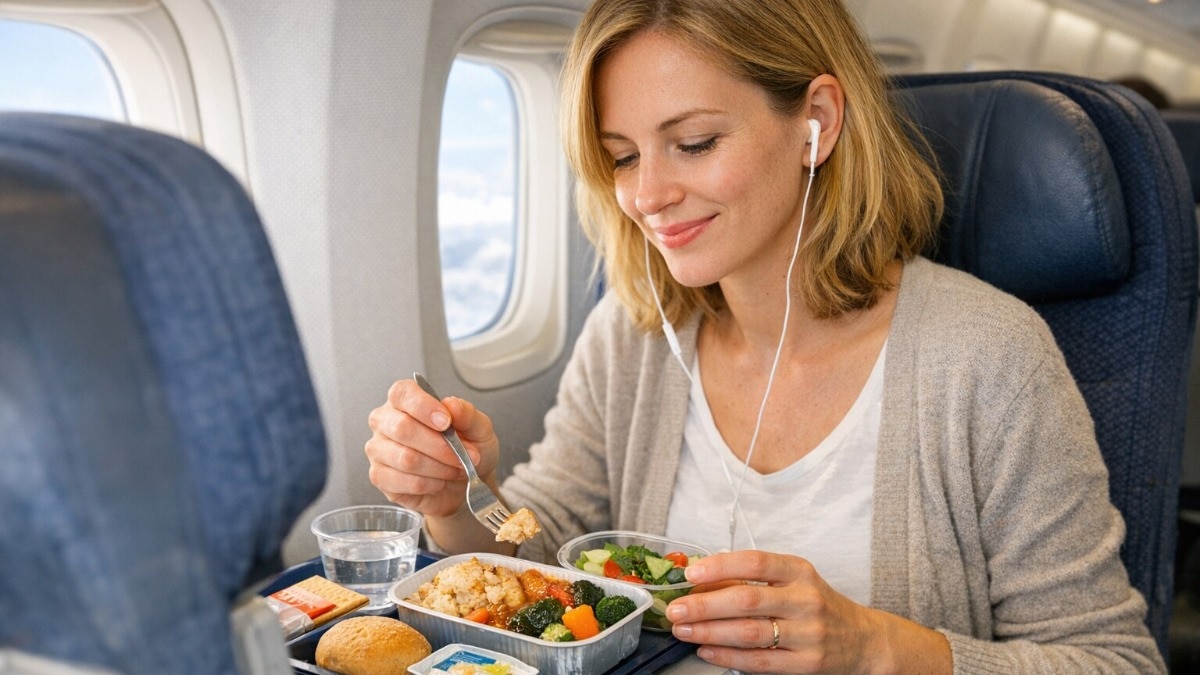
A flight attendant has revealed the grim reality of airplane hygiene, warning passengers that seat tray tables can harbor dangerous levels of bacteria due to improper passenger behavior.
- Airplane tray tables can harbor significant amounts of bacteria and filth.
- Some passengers use tray tables to change dirty diapers.
- Simple disinfectant wipes may not be enough for complete sterilization.
- Maintaining hand hygiene and using protective layers is highly recommended.
Traveling by air has become a routine part of modern life, but the surfaces we interact with most frequently might be far dirtier than we imagine. A recent revelation by a flight attendant has sent shockwaves through the travel community. Jane, a professional air hostess, shared a disturbing truth regarding the hygiene of airplane tray tables, suggesting that placing food directly on them could be a major health risk.
According to the report, the most egregious behavior involves passengers using the tray tables as makeshift changing stations for dirty diapers. This practice exposes the surface to biological waste, making it extremely hazardous for the next passenger who uses it for dining. Jane stated that she personally avoids placing any food or personal items directly on the tray, opting instead to lay down a trash bag if she must use it.
Why This Matters
BozokMedia analysis shows that the enclosed environment of an aircraft, combined with the high turnover of passengers, creates a breeding ground for pathogens. Many travelers assume a quick wipe with a disinfectant sheet is sufficient, but experts warn that most disinfectants require the surface to remain wet for up to 10 minutes to effectively kill all germs.
"The tray table is one of the most neglected surfaces on a plane, often becoming a landing spot for everything from food scraps to biological waste."
The hygiene concerns extend beyond just the tray table. Other cabin crew members, including Cher from Texas, have identified window shades, carpets, overhead bins, and seatbelts as high-risk areas for germ accumulation. Furthermore, Josephine Remo highlighted that toilet handles and door locks are frequently touched and rarely sanitized to the level required for safety.
Historically, aviation hygiene has relied heavily on professional cleaning crews between flights, but the 'human factor'—passenger behavior—remains the weakest link. Experts like Shannina Knight, a research associate professor, advise passengers to be extremely cautious when using aircraft lavatories and to prioritize hand sanitization immediately after.
Frequently Asked Questions
1. How can I ensure my food is safe while flying?
Always use a clean napkin or a disposable cover on the tray table before placing your food, and sanitize your hands frequently.
2. Which parts of the plane are the dirtiest?
Tray tables, lavatory handles, window shades, and seatbelt buckles are considered the most contaminated surfaces.