From upside-down museums to houses carved from rocks, explore five architectural marvels that defy the laws of symmetry and convention.
- Casa Batlló in Spain features a roof resembling a dragon's back.
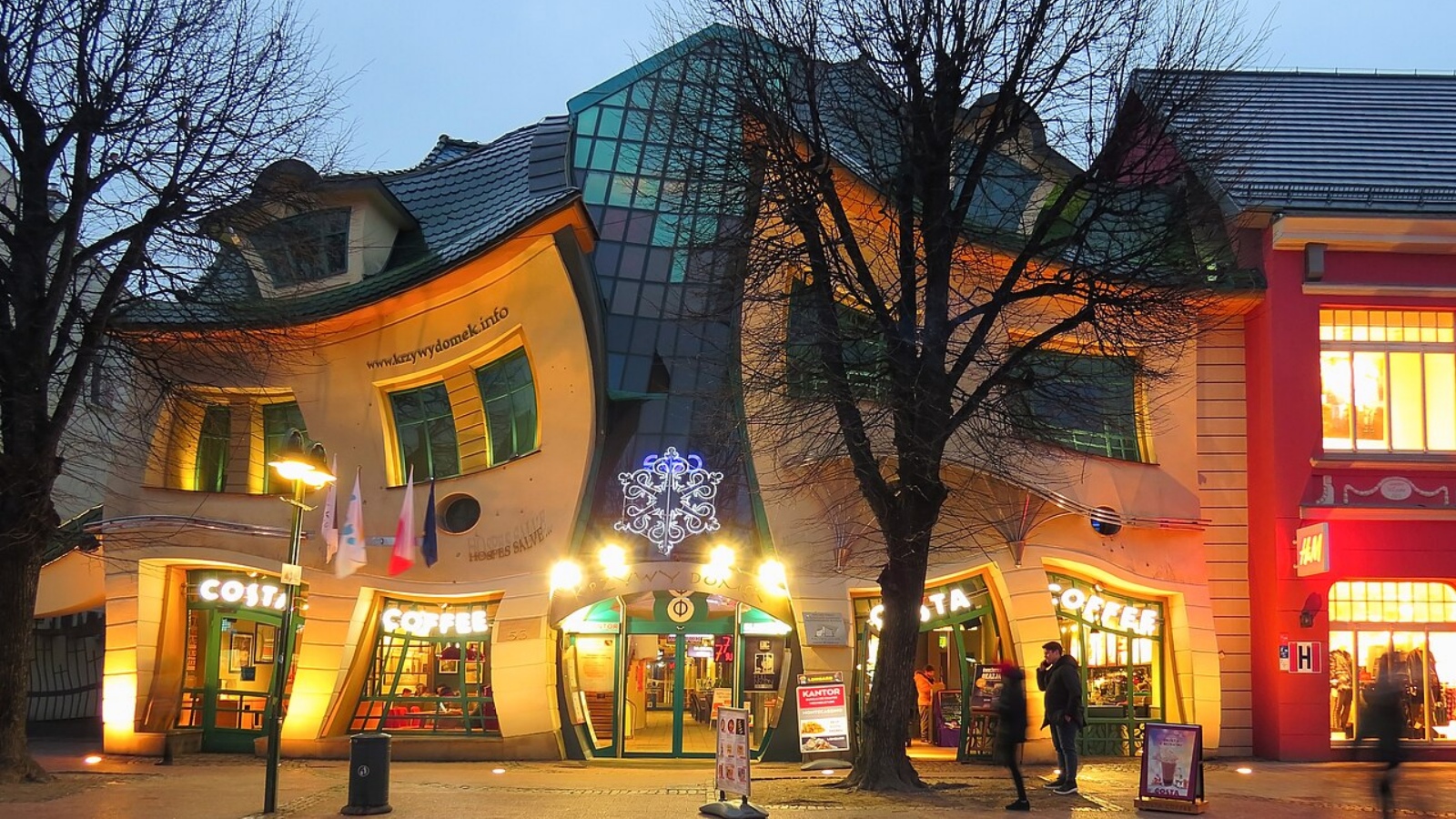
- The Crooked House in Poland looks like it is melting.
- WonderWorks in the US is designed to look completely upside-down.
Architecture is often associated with symmetry, straight lines, and practical design. However, around the globe, certain structures appear to defy these conventions altogether. Their unusual shapes, playful facades, and unconventional designs have transformed them into legendary landmarks.
Global Marvels of Unconventional Design
These buildings do more than just provide shelter; they challenge our perception of space and form. Whether they are inspired by nature or whimsical illustrations, they stand as testaments to human creativity.
1. Casa Batlló, Barcelona, Spain
Designed by the legendary Antoni Gaudí, Casa Batlló on Barcelona’s Passeig de Gràcia is a masterpiece of organic design. Its colorful facade utilizes stone, wrought iron, and broken glass, while the roof uniquely resembles the scaly back of a dragon. This UNESCO World Heritage Site remains a pinnacle of Modernism.
2. Crooked House, Sopot, Poland
The Krzywy Domek, or Crooked House, looks as though its walls have melted and twisted in the wind. Completed in 2004, the building draws its whimsical inspiration from the illustrations of Jan Marcin Szancer and Per Dahlberg, making it a surreal sight in Sopot.
3. Basket Building, Ohio, USA
Located in Newark, Ohio, the Longaberger Basket Building was a stunning example of novelty architecture. Built in 1997 as the headquarters for the Longaberger Basket Company, its massive picnic-basket exterior made it an instant icon of American commercial design.
4. WonderWorks, Orlando, USA
Taking the concept of "unusual" to the extreme, WonderWorks in Orlando appears to have landed upside down. The entire exterior features inverted architectural details, creating a playful environment for its interactive science and entertainment center.
5. Casa do Penedo, Portugal
Often referred to as the "Flintstones House," Casa do Penedo is built directly between massive boulders in northern Portugal. This remote residence looks as if it emerged naturally from the rocky landscape, making it a magnet for photographers worldwide.
Why This Matters
BozokMedia analysis shows that these architectural anomalies serve as powerful drivers for regional tourism and cultural identity. They prove that functional design can coexist with high-concept artistry, pushing the boundaries of what is structurally possible.
Architecture is not merely the science of building, but the art of defying expectations.
Frequently Asked Questions
Question 1: Are these buildings safe to visit?
Answer: Yes, these are professionally engineered structures designed for public interaction and tourism.
Question 2: Which building is the most famous?
Answer: While all are unique, Casa Batlló is perhaps the most internationally recognized due to its UNESCO status.