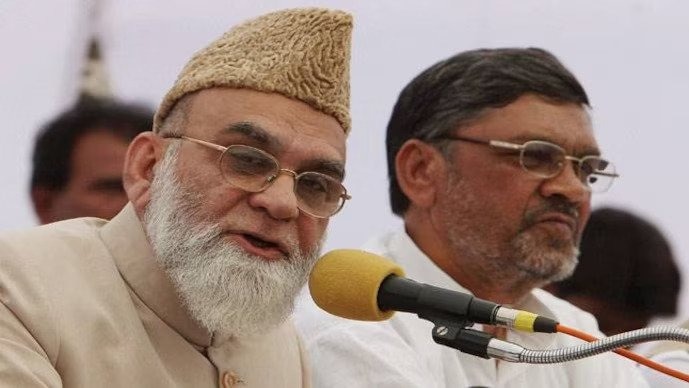
Maulana Ahmed Bukhari, the Shahi Imam of Delhi's Jama Masjid, has surrendered in a Muzaffarnagar court regarding a 2007 election code of conduct violation case.
Key Takeaways
- Shahi Imam Ahmed Bukhari surrendered in a Muzaffarnagar court.
- The case dates back to 2007 regarding election code of conduct violations.
- The court granted bail on a bond of ₹20,000 each.
- Non-appearance in court had led to the issuance of warrants.
In a significant legal development, Maulana Ahmed Bukhari, the Shahi Imam of the renowned Jama Masjid in Delhi, has surrendered before a court in Muzaffarnagar. The surrender pertains to a nearly two-decade-old case involving the violation of the Model Code of Conduct during elections.
The legal battle traces back to April 10, 2007, when a case was registered at the Khatauli police station. According to prosecution officials, the incident occurred when Bukhari arrived in Khatauli via helicopter and addressed a public gathering without obtaining the mandatory permissions, thereby breaching election guidelines.
Legal Details and Charges
The charges were filed under sections 171 (personating a public servant) and 188 (disobedience to order duly promulgated by a public servant) of the then Indian Penal Code (IPC). Due to repeated failures to appear in court following summons, warrants had been issued against him.
The resolution of such long-standing legal matters serves as a testament to the endurance of the judicial process.
Chief Judicial Magistrate Kavita Agarwal granted bail to Bukhari upon him furnishing two bail bonds of ₹20,000 each. Prosecution officer KC Maurya confirmed that the Imam has now complied with the court's requirements after the long delay.
Why This Matters
BozokMedia analysis shows that the surrender of high-profile religious figures in long-pending criminal matters often brings renewed attention to the efficacy of election laws and the judicial system's ability to process legacy cases.
Historical Background
The Model Code of Conduct in India is a set of guidelines issued by the Election Commission to regulate political conduct during elections. Violations involving unauthorized public gatherings or misuse of transport have historically led to significant legal scrutiny in the Indian democratic framework.
Frequently Asked Questions
1. What was the original charge against Ahmed Bukhari?
He was accused of violating the election code of conduct in 2007 by addressing an unauthorized rally.
2. What was the court's decision regarding his bail?
The court granted him bail on two separate bonds of ₹20,000 each.


