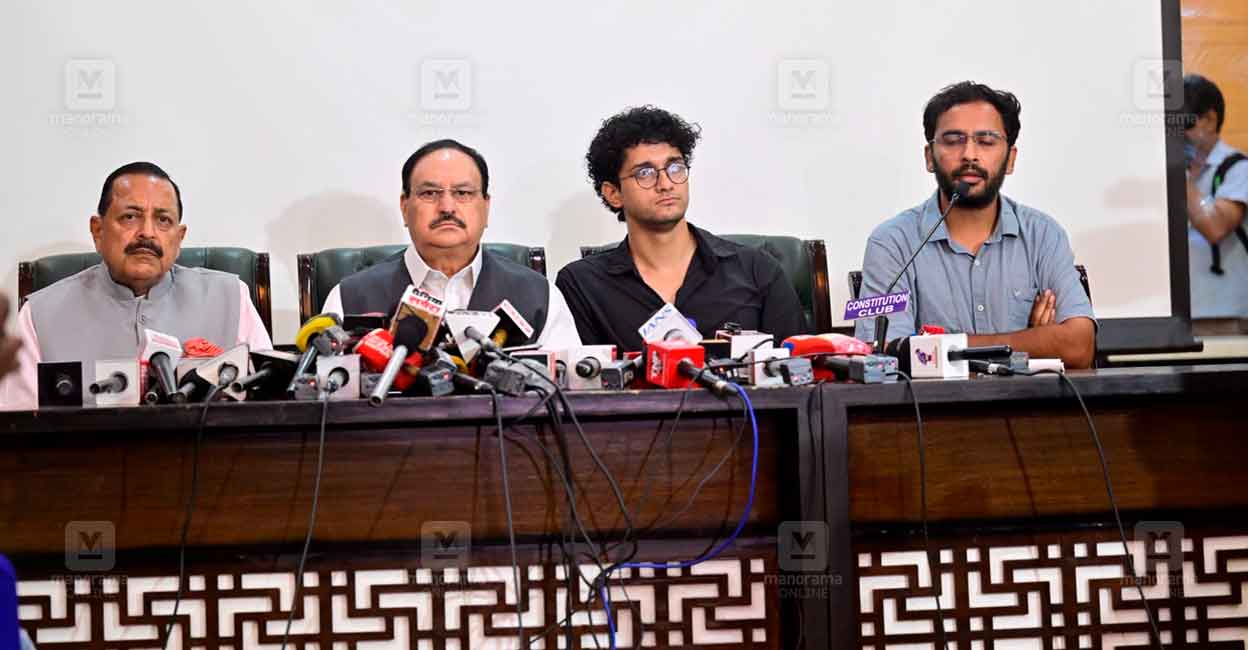
The Cockroach Janta Party (CJP) has called off its protest after the Union Government agreed to withdraw cases against protesting students and provide compensation to families affected by the NEET controversy.
Key Takeaways
- CJP and the Central Government reached a breakthrough in high-level talks.
- Union Ministers J.P. Nadda and Jitendra Singh participated in the negotiations.
- The government promised to withdraw all legal cases against protesting students.
- Compensation for families of students who died by suicide during the NEET controversy was assured.
New Delhi: In a significant political development, the Cockroach Janta Party (CJP) has officially announced the end of its massive protest movement. Following intense negotiations with Union Ministers J.P. Nadda and Jitendra Singh, the party has called upon its workers to disperse peacefully, claiming victory on their core demands.
The breakthrough comes after two previous rounds of failed discussions, which were stalled by the resignation of Union Education Minister Dharmendra Pradhan. With Pradhan's exit, the path was cleared for a productive dialogue between CJP leaders, including spokesperson Sourav Das and national spokesperson Ashutosh Ranga.
Why This Matters
BozokMedia analysis shows that this resolution is crucial for maintaining stability within the national education framework. By addressing the legal vulnerabilities of students and the economic distress of grieving families, the government is attempting to mitigate a growing crisis of confidence in the examination system.
The settlement marks a critical moment in student activism, proving that organized advocacy can force significant policy concessions.
The key outcomes of the meeting include a formal assurance from the government that all criminal cases filed against students involved in the protests will be withdrawn. Furthermore, the government has committed to providing empathetic compensation to the families of students who lost their lives due to the NEET exam controversy.
Historical Background
The protests were fueled by growing concerns over the integrity of the NEET examinations and the immense psychological pressure placed on students. The CJP emerged as a pivotal voice, demanding not just compensation, but systemic reforms in how national-level competitive exams are conducted in India.
Frequently Asked Questions
1. What was the main reason for the previous failed talks?
Previous negotiations failed due to the political deadlock surrounding the resignation of Education Minister Dharmendra Pradhan.
2. Will there be further discussions?
Yes, the government and CJP have agreed to meet again within four weeks to discuss broader educational reforms.
