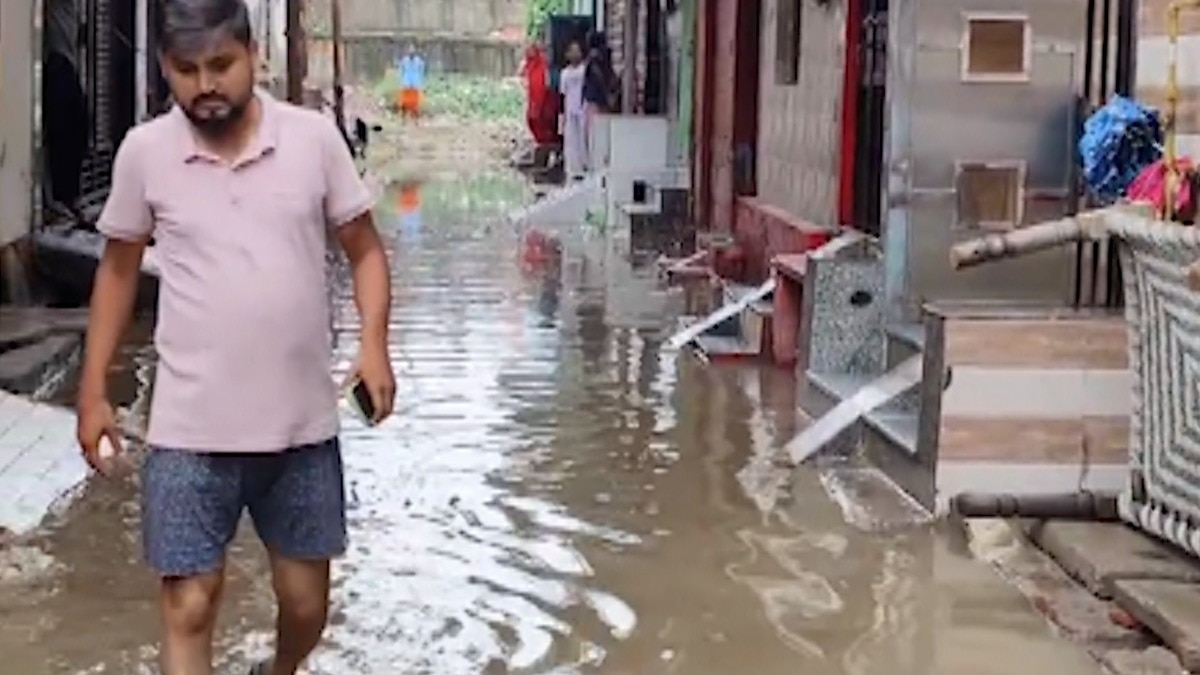
Heavy rain in Ghaziabad caused severe waterlogging, leading to the drowning of a 3‑year‑old girl. Her family staged a protest on National Highway‑9 demanding accountability from the municipal authorities.
Ghaziabad, Uttar Pradesh – On Thursday, relentless monsoon showers turned several neighbourhoods into waterlogged zones, and a three‑year‑old girl tragically lost her life after drowning in a flooded lane outside her home. According to local resident Ram Kumar, the water depth in the lane was nearly three feet (about 90 cm) when the child slipped in, and her body was recovered four hours later.
Details of the Incident
The child's residence lies adjacent to National Highway‑9 (NH‑9), where ongoing road‑widening works have disrupted the natural drainage pattern. The accumulation of water was exacerbated by inadequate storm‑water channels, a problem that residents claim has persisted for years despite repeated complaints to the municipal corporation.
Family’s Roadside Protest
Following the tragedy, the grieving family placed the child's body on the shoulder of NH‑9 and joined a spontaneous protest. Passers‑by and local residents chanted slogans such as "Stop municipal negligence" and "Demand strict action," turning the scene into a powerful call for accountability and better flood‑management policies.
Wider Flooding Across the NCR
The incident mirrors a larger pattern of waterlogging across the National Capital Region (NCR). In nearby Noida, Shastri Nagar and Vasundhara Sector‑13, streets were submerged, traffic snarled, and an under‑construction basement caused a road collapse that sent a parked car and a scooter into a pit, resulting in extensive property damage.
Authorities’ Response and Responsibility
The India Meteorological Department (IMD) has issued a heavy‑rain alert for the Delhi‑NCR belt, warning of continued intense showers. Yet, the municipal corporation has yet to implement a comprehensive drainage upgrade or enforce construction safety standards, despite multiple formal representations from residents over the past years.
Future Outlook and Potential Solutions
Experts argue that climate‑change‑driven extreme weather events demand urgent infrastructural adaptations. Recommendations include expanding storm‑water networks, introducing real‑time water‑level monitoring, and launching community awareness campaigns. Only a decisive, two‑pronged approach—immediate relief measures coupled with a long‑term urban‑water management plan—can prevent further loss of life.