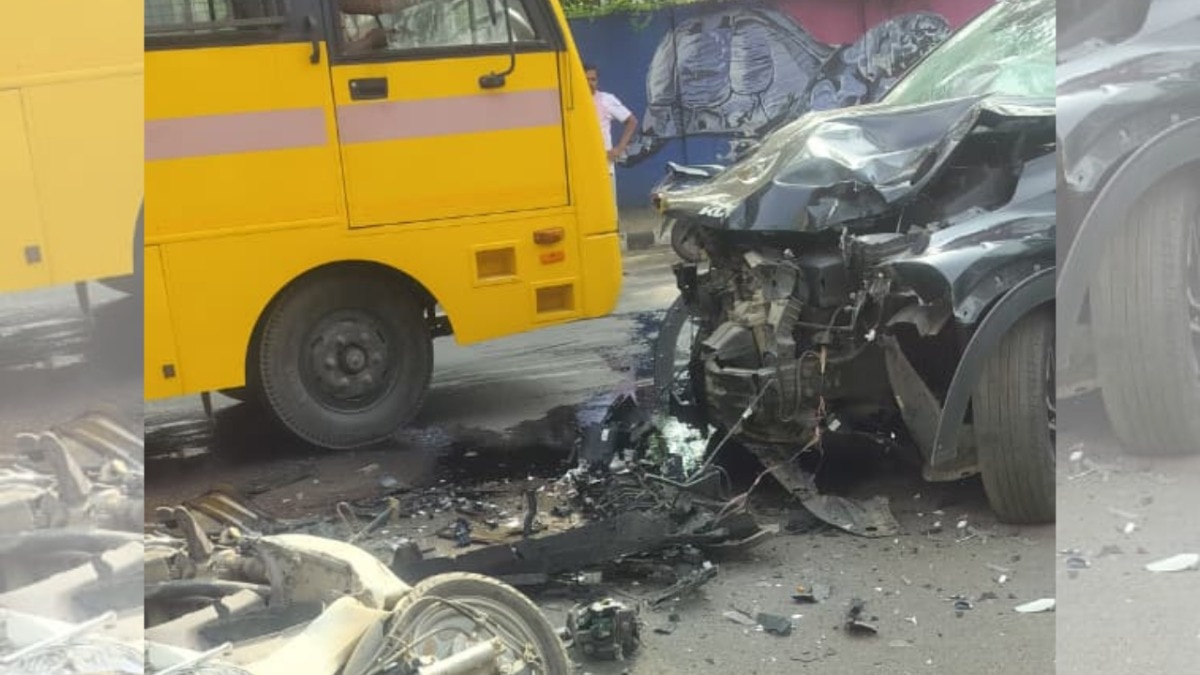
A speeding car struck a scooter, then a bus, resulting in the death of a child. The harrowing video has gone viral, reigniting fierce debate over road safety in India.
मुख्य बिंदु (Key Takeaways)
- Speeding car hit a scooter first, then a bus
- Child lost his life in the collision
- Footage highlights ongoing road‑safety challenges
On Friday evening, a high‑speed collision on a busy urban thoroughfare shocked the nation. A car traveling well beyond the legal limit slammed into a scooter, catapulting the rider into the air, before ramming a bus that was crossing the lane. The impact caused a child seated near the bus window to be thrown onto the pavement, where he later succumbed to his injuries. The incident was captured on a smartphone, and the video has since amassed millions of views across social platforms.
Incident Details and Video Breakdown
The footage shows the vehicle moving at an estimated 80 km/h (≈50 mph). Upon striking the scooter, both the car and the two‑wheeler are seen airborne, with the scooter rider momentarily suspended before crashing to the ground. Almost immediately, the car collides with a city bus, crushing the front window area. A child, seated near the impact zone, is seen falling and lying motionless on the street. Emergency services arrived within minutes, but the child could not be revived.
Context: Road Fatalities in India
India records roughly 150,000 road‑related deaths each year, the highest in the world. Speeding, overloading, and inadequate following distances are the primary culprits, according to the Ministry of Road Transport and Highways. This tragedy underscores the persistent gap between traffic regulations and on‑ground compliance.
Reactions and Policy Implications
Safety experts, NGOs, and political leaders have called for harsher penalties for reckless driving, accelerated deployment of speed‑monitoring radars, and comprehensive public‑awareness campaigns. Several states have already introduced automated fine systems for speed violations, yet the recurrence of such incidents suggests that enforcement alone is insufficient without cultural change among drivers.
Looking Ahead
To curb future loss of life, authorities must combine stricter enforcement with infrastructure upgrades—especially around schools and densely populated zones. Lower speed limits, mandatory driver re‑training, and real‑time traffic monitoring could collectively reduce the frequency of such catastrophic events. Until these measures become the norm, the specter of preventable road deaths will linger.