The Gujarat High Court confirmed death penalties for 38 Indian Mujahideen operatives and life sentences for 11 others in the 2008 Ahmedabad serial blasts case, labeling the attacks as an assault on India's sovereignty aimed at toppling the elected government.
Key Takeaways (मुख्य बिंदु)
- 38 Indian Mujahideen members sentenced to death
- 11 convicts receive life imprisonment
- Blasts deemed an attack on India's sovereignty
On July 7, a division bench of Justices A.Y. Kogje and Samir Dave of the Gujarat High Court upheld the earlier verdicts in the 2008 Ahmedabad serial bomb blasts case. The court described the coordinated attacks as "an attack on the sovereignty of India" whose ultimate goal was to destabilise a democratically elected government.
Background of the 2008 Attacks
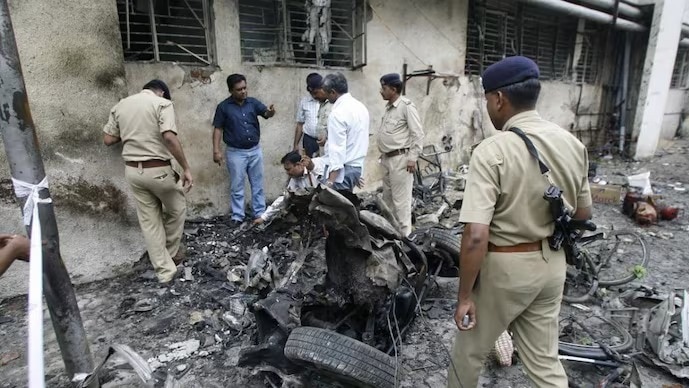
On July 26, 2008, a series of 21 bombs detonated across Ahmedabad within a span of 70 minutes, killing 56 people and injuring more than 240. For the first time in Indian history, hospitals were also targeted as victims were rushed for emergency care, amplifying the terror impact.
Judicial Proceedings and Verdict
After years of exhaustive investigations, a special court in February 2022 sentenced 38 Indian Mujahideen operatives to death and 11 others to life imprisonment. The High Court classified the case as "rarest of the rare," drawing parallels with the Ajmal Kasab judgment, citing the massive loss of life, the scale of the conspiracy, and the brutal intent to create widespread fear.
Compensation for Victims
The judgment also ordered the state to pay Rs 10 lakh to families of the deceased and Rs 5 lakh to those seriously injured. The court criticised the government for not consulting victims on legal‑aid representation, warning against a trend that favours the accused over the silent victims.
Implications for Counter‑Terrorism Policy
Legal experts view the decision as a reinforcement of India’s zero‑tolerance stance on terrorism. By affirming capital punishment in a case of such magnitude, the judiciary sends a clear deterrent signal while also emphasizing the need for transparent processes that honour victims' rights.