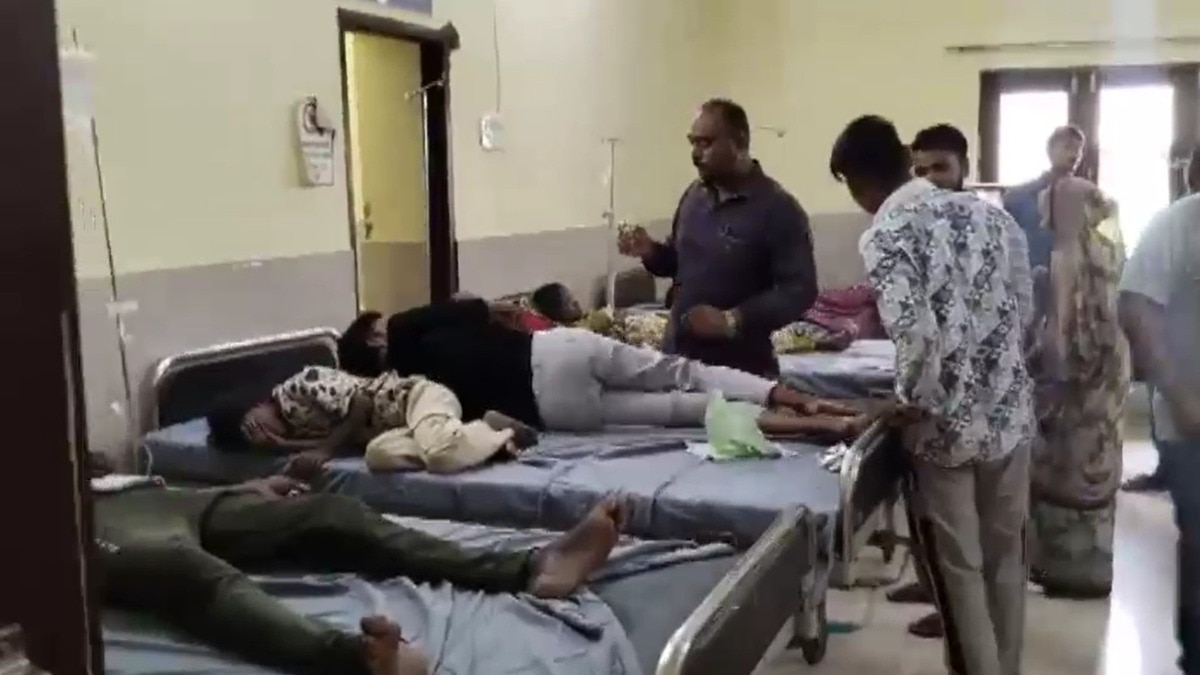
Around 115 children in Rajasthan's Kota district fell ill after consuming 'pani-patasi', a popular local street snack, with 12 requiring hospitalization. Health officials have launched an investigation, collecting food and water samples to determine the cause of the suspected food poisoning.
Key Takeaways
- 115 children reported sick after eating 'pani-patasi' in Polai Khurd, Kota.
- 12 children hospitalized; medical camps set up for others in the village.
- Food safety officials have seized samples for lab analysis to trace contamination.
A festive treat turned into a public health crisis in Polai Khurd village within Rajasthan's Kota district, where approximately 115 children fell ill after consuming a popular local street food known as 'pani-patasi' (water balls). The incident, reported on Tuesday night, saw a wave of young patients complaining of severe vomiting, diarrhea, and abdominal pain, triggering panic among local residents. As the scale of the medical emergency became apparent, the district administration and health department mobilized rapid response teams to contain the situation.
Swift Medical Response Deployed
Authorities acted quickly to manage the outbreak. Sub-Divisional Officer Deepak Mahawar and Block Chief Medical and Health Officer (BCMO) Dr. Rajesh Samar oversaw the relief operations on the ground. Two dedicated medical teams, supported by 108 ambulance services, were dispatched to the village to triage patients. While twelve children in critical condition were admitted to the Community Health Centre (CHC) in Simliya, a special medical camp was established in Polai Khurd itself to treat the remaining 103 children, ensuring that medical access was not a barrier during the crisis.
Investigation and Sampling Underway
Preliminary investigations have traced the vendor to the nearby Sholi village. In a bid to ascertain the exact cause of the mass illness, a team from the Food Safety Department collected samples of the ingredients, chutneys, and water used by the vendor. Water sources accessed by the vendor have also been sealed and samples sent for detailed laboratory analysis. Kota Chief Medical and Health Officer (CMHO) Dr. Narendra Nagar visited the site to review the arrangements, emphasizing that uninterrupted treatment must be provided to all affected children until they recover fully.
Community Surveillance Measures
Beyond immediate treatment, the health machinery has activated grassroots surveillance. Auxiliary Nurse Midwives (ANMs) and Accredited Social Health Activists (ASHAs) are conducting door-to-door surveys in Polai Khurd to identify any hidden cases or children who may have developed symptoms later. According to Dr. Samar, most patients are now stable, but the final report from the laboratory is pending. This report will be crucial in determining the nature of the contamination—whether it was bacterial, chemical, or water-borne—and will guide future administrative action against the negligent parties.
Context and Implications
This incident highlights the perennial risks associated with unregulated street food vending in rural areas, where hygiene standards are often overlooked. While 'pani-patasi' is a beloved delicacy, the use of untreated water or unclean ingredients poses severe hazards. As the villagers breathe a sigh of relief with the stabilizing conditions of the children, this event serves as a stark reminder of the urgent need for stricter enforcement of food safety norms in India's hinterlands.