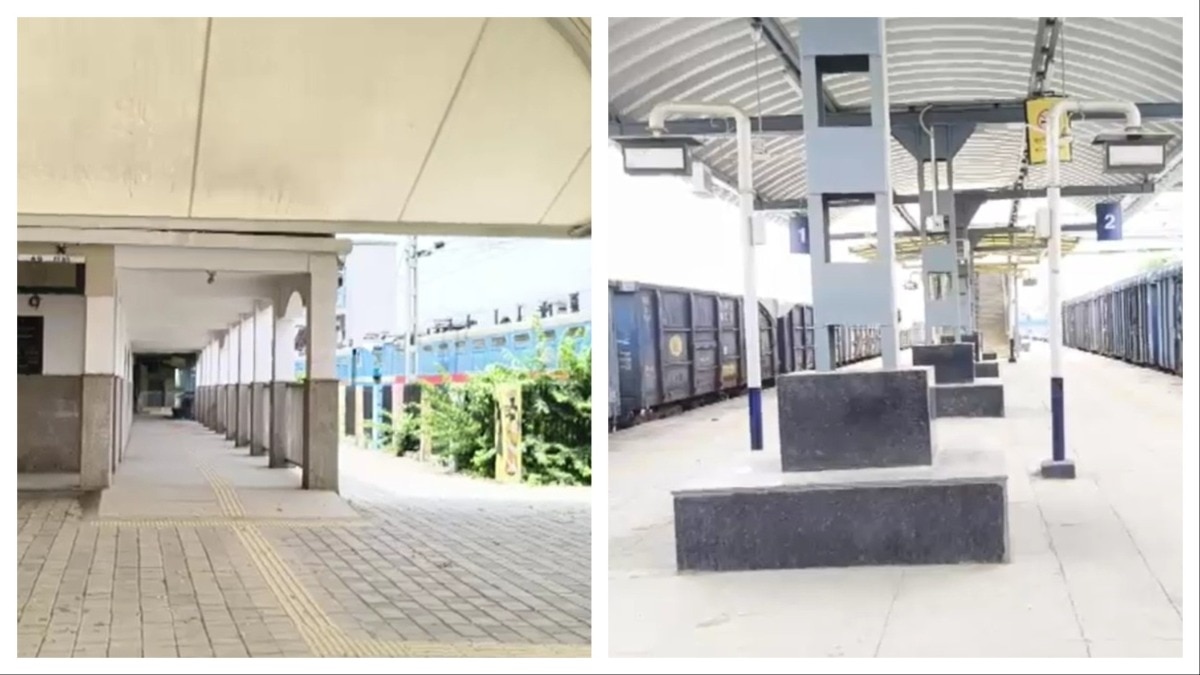
Despite being completed in 2023 at a cost of ₹6 crore, Bhopal's Nishatpura Railway Station remains non-operational, with empty platforms and locked ticket counters.
Key Takeaways
- Nishatpura Railway Station in Bhopal, built at a cost of ₹6 crore, has been non-operational for nearly three years.
- The station was designed to decongest the busy Bhopal Junction and streamline train reversals.
- Despite modern amenities, no passenger trains have been allotted a stoppage at the facility so far.
- Delays are attributed to pending safety inspections, staff deployment, and incomplete approach roads.
In the heart of Madhya Pradesh's capital, Bhopal, a massive infrastructure project stands as a silent monument to bureaucratic delay. The Nishatpura Railway Station, a facility constructed at an estimated cost of ₹6 crore, has been fully built for nearly three years, yet it remains eerily deserted. Instead of the bustling activity of commuters and the announcements of arriving trains, the station is characterized by locked ticket counters, empty waiting halls, and a haunting silence.
The Paradox of Modernity and Neglect
The visual contrast at Nishatpura is striking. While the platforms are structurally sound and the lighting is intact, the lack of human presence gives the station a 'ghostly' appearance. Foot-over bridges, seating areas, and passenger amenities stand unused, slowly accumulating dust. While freight wagons can be seen on adjacent tracks, express and long-distance passenger trains continue to thunder past the station without a single halt, rendering the entire facility a redundant asset.
The Strategic Objective Unfulfilled
The Nishatpura project was not merely an expansion; it was a strategic necessity. Bhopal Junction, the city's primary rail hub, frequently faces operational bottlenecks due to engine changes and reversal procedures required for trains entering from the Western Railway network. Nishatpura was envisioned to handle these technical maneuvers, thereby reducing turnaround time and easing the congestion at the main junction. However, this vision remains unfulfilled as the station waits for its very first passenger stop.
Administrative Hurdles and Infrastructure Gaps
According to officials from the West Central Railway, the delay is not due to a lack of construction but a lack of operational clearance. Mandatory safety inspections, the deployment of essential railway staff, and various administrative formalities are still in the pipeline. Furthermore, critical 'last-mile' connectivity issues, such as the completion of approach roads and adequate drainage infrastructure, have been cited as major roadblocks to the commencement of services.
Expert Analysis: A Waste of Public Resources
The situation at Nishatpura raises profound questions regarding urban planning and the utilization of public funds. When high-value infrastructure is completed but remains idle due to procedural lapses, it represents a significant loss to the exchequer. For Nishatpura to transition from a 'ghost station' to a functional transport hub, the railway administration must move beyond mere construction and focus on the holistic integration of the station into the regional rail network.